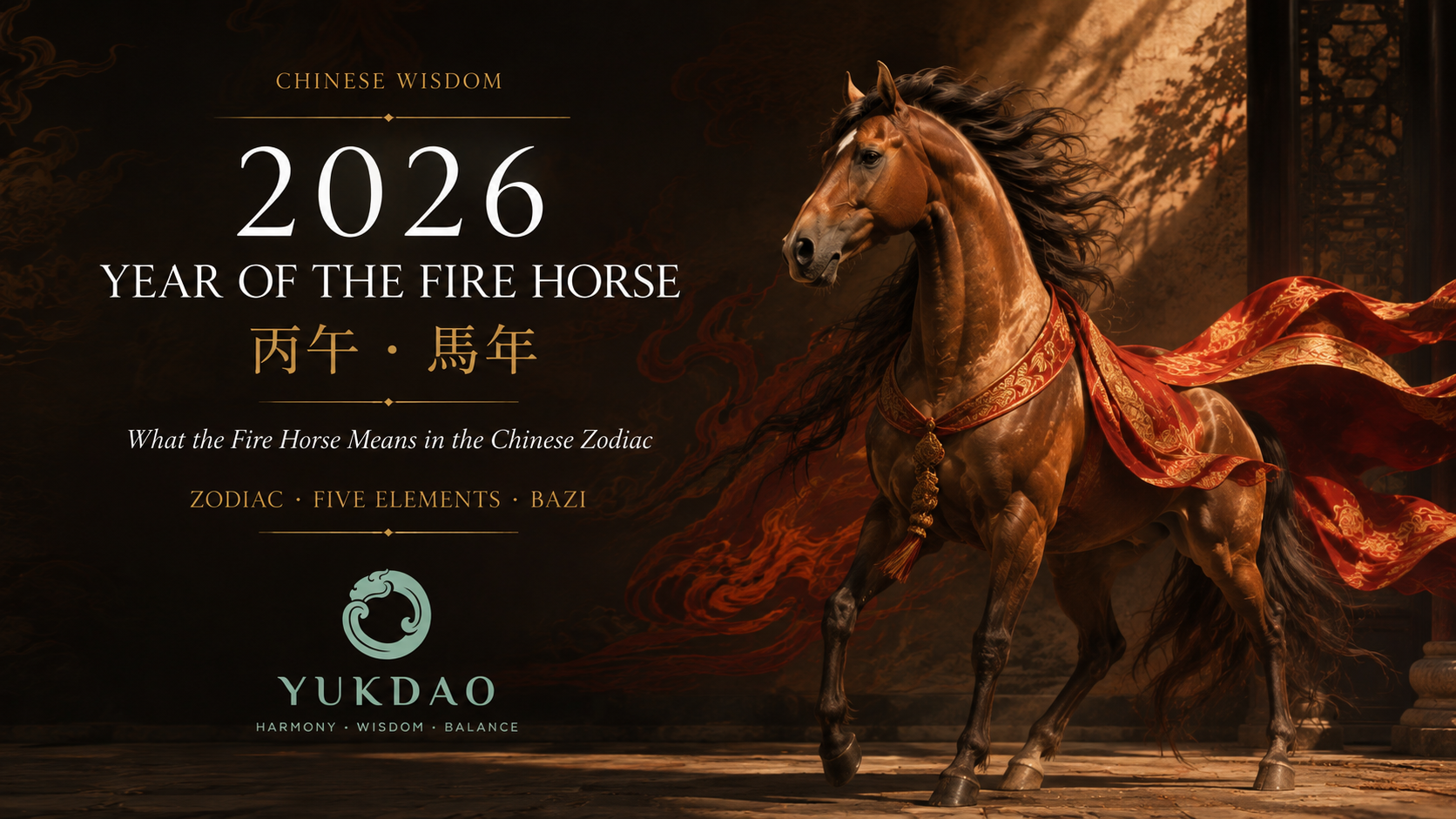
2026 Year of the Fire Horse: What 丙午 Means in the Chinese Zodiac
If you know even a little about the Chinese zodiac, you may already know that 2026 is the Year of the Horse. But that description is only half the story.
In the traditional Chinese calendar, a year is not identified by an animal alone. It is formed through the combination of a Heavenly Stem (天干) and an Earthly Branch (地支). For 2026, that combination is 丙午, Bǐng Wǔ.
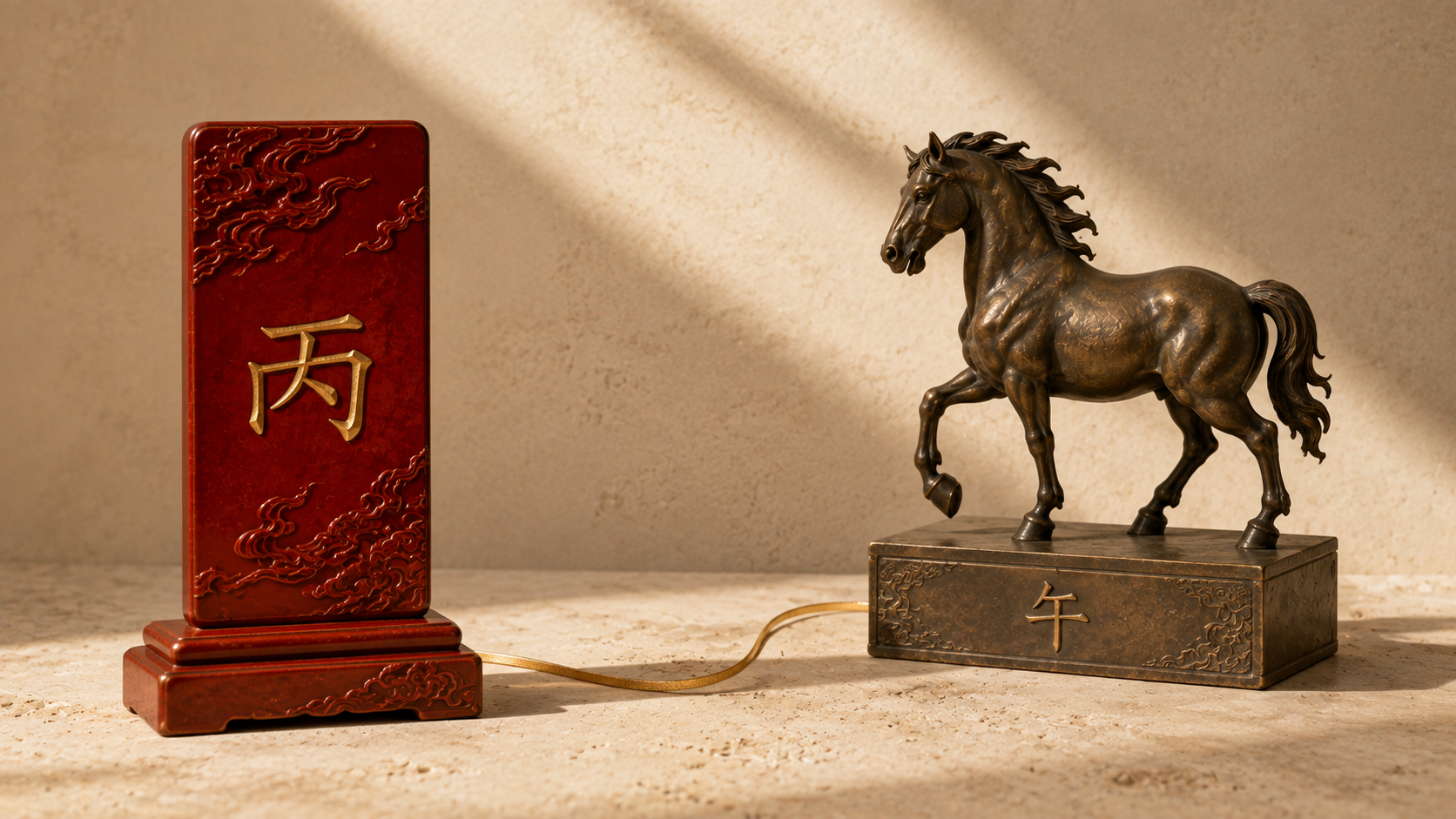
丙 (Bǐng) corresponds to Yang Fire. 午 (Wǔ) corresponds to the Horse. Together, they make 2026 a Fire Horse year, a combination that returns only once in the traditional sixty-year cycle.
Understanding that distinction opens a much richer view of the Chinese zodiac. The familiar twelve animals are only one layer of a calendar system involving time, cycles, yin and yang, and the Five Elements.
And there is another distinction worth making from the beginning: your zodiac animal is not your entire Chinese astrological profile. To understand why, we first need to look at what a Chinese zodiac year actually is.
Is 2026 the Year of the Horse?
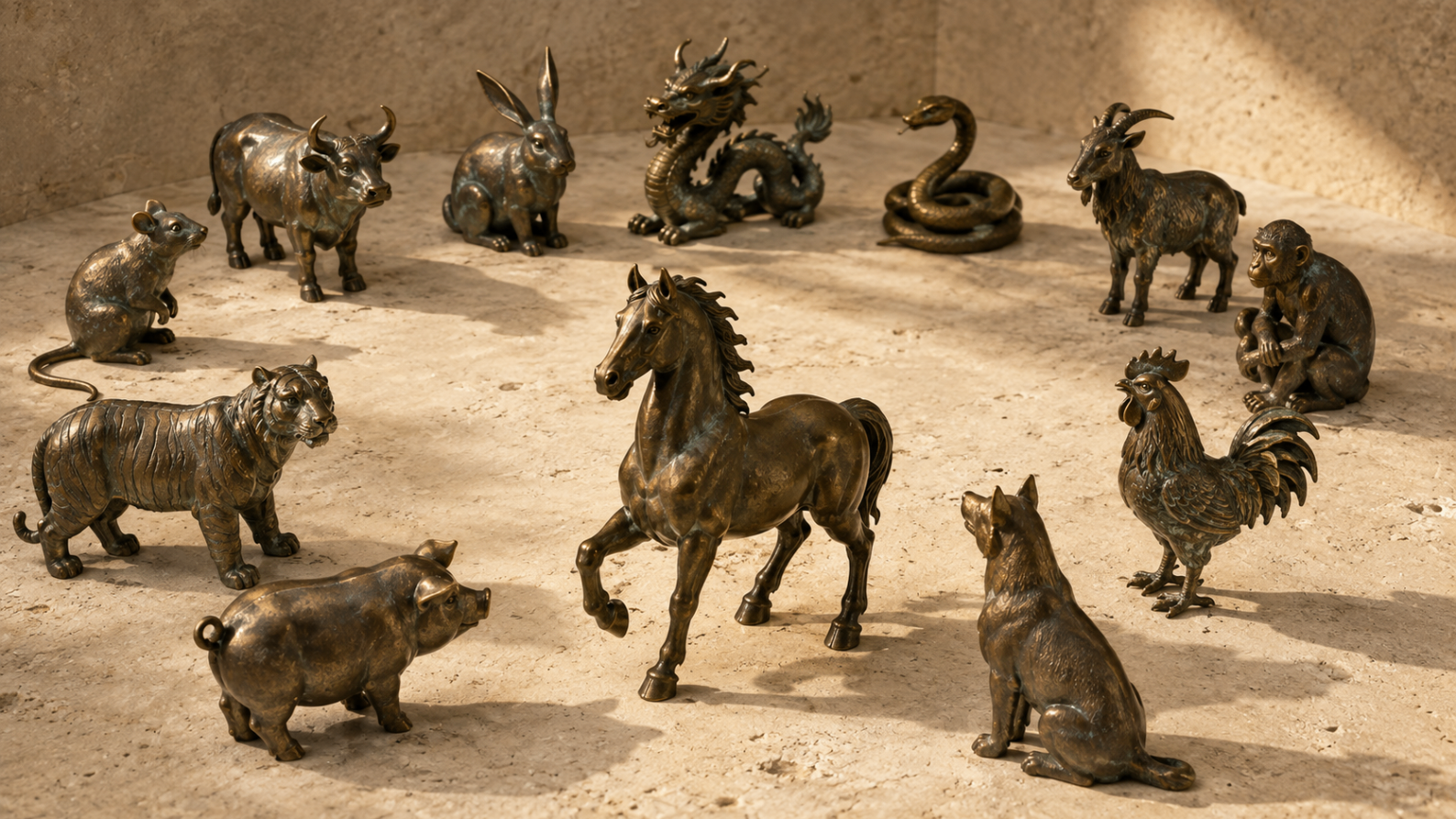
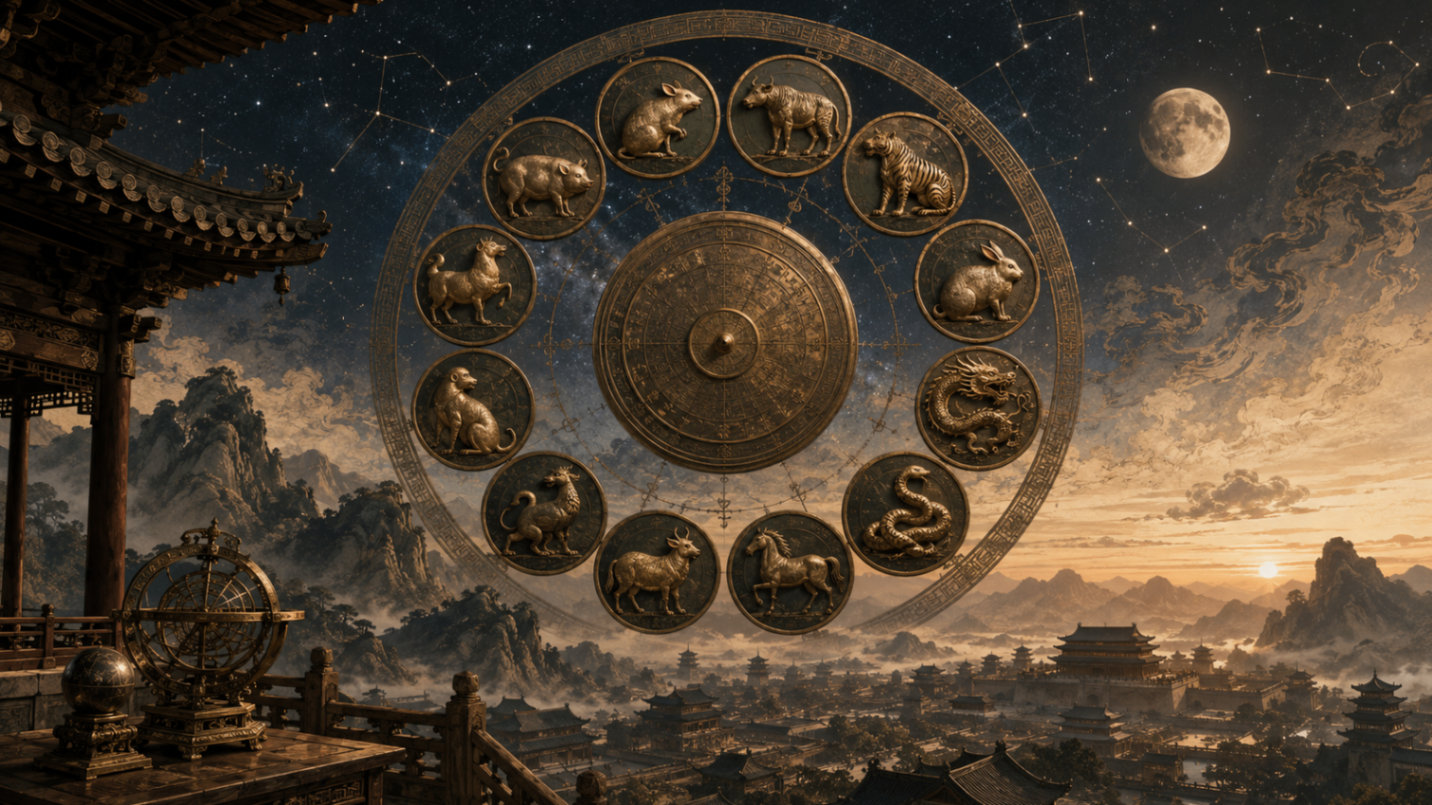
Yes. 2026 corresponds to the Horse, the seventh animal in the familiar twelve-animal Chinese zodiac sequence: Rat, Ox, Tiger, Rabbit, Dragon, Snake, Horse, Goat, Monkey, Rooster, Dog and Pig.
Each animal corresponds to one of the twelve Earthly Branches. The Horse corresponds to 午 (Wǔ).
This is why calling 2026 simply “the Year of the Horse” is correct, but incomplete. The Earthly Branch tells us the animal. The Heavenly Stem adds another layer. For 2026, that stem is 丙 (Bǐng), associated with Yang Fire.
That gives us the full designation: 丙午, the Yang Fire Horse.
When Does the 2026 Year of the Horse Begin?
This question is more complicated than many zodiac guides suggest, because different traditional contexts use different boundaries.
Chinese New Year in 2026 fell on February 17, marking the beginning of the lunar new-year celebrations and the Year of the Horse in the commonly used Chinese zodiac calendar.
However, Chinese metaphysical systems such as BaZi commonly calculate the transition of the year according to Lìchūn (立春), the Beginning of Spring solar term, rather than Lunar New Year. Lìchūn normally occurs around February 3 or 4.
This distinction matters especially for people born near the beginning of a calendar year. Someone born in January or early February should therefore avoid identifying their zodiac or BaZi year solely by subtracting years or using a simple January-to-December table. The calendar system being used matters.
This is one reason a birth-date calculator is more reliable than assuming that everyone born in the same Gregorian year automatically shares the same Chinese zodiac designation.
Why Is 2026 a Fire Horse Year?
The answer comes from one of the foundations of the traditional Chinese calendar: the Sexagenary Cycle, or sixty stem-branch combinations.
There are ten Heavenly Stems: 甲 乙 丙 丁 戊 己 庚 辛 壬 癸
And twelve Earthly Branches: 子 丑 寅 卯 辰 巳 午 未 申 酉 戌 亥
The stems and branches advance together in sequence. Because one cycle contains ten stems and the other twelve branches, the same stem-branch pairing returns every sixty years.
In 2026: 丙 = Yang Fire and 午 = Horse. Therefore 丙午 = Yang Fire Horse.
The animal is not independently assigned an element every year. The element comes through the Heavenly Stem. This is why there can be Wood Horses, Fire Horses, Earth Horses, Metal Horses and Water Horses across different cycles.
Understanding the Five Elements
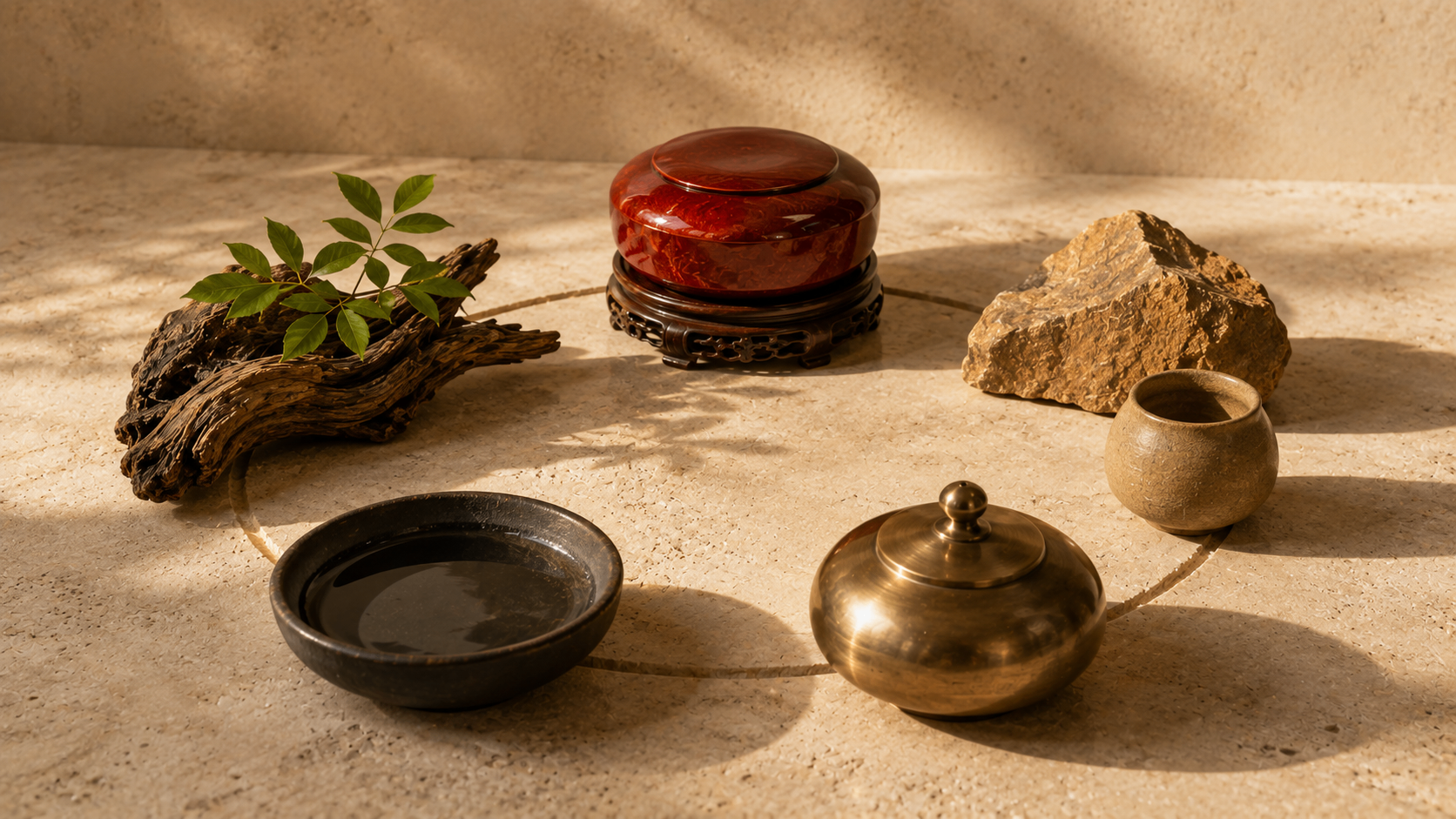
The Chinese Five Elements, or Wǔxíng (五行), are Wood 木, Fire 火, Earth 土, Metal 金 and Water 水.
“Elements” is the familiar English translation, although Wuxing is better understood as a system of dynamic phases, processes or modes of change rather than five static substances. They are used throughout different areas of traditional Chinese thought to describe relationships, transformations and recurring patterns.
Each Heavenly Stem corresponds to one of these Five Elements and also carries a yin or yang quality. 丙 is associated with Yang Fire. That is what supplies the Fire component of the 2026 Fire Horse.
What Does the Horse Represent in Chinese Culture?
Long before the Horse became a zodiac personality type, horses occupied an important place in Chinese history. They were connected with travel, communication, warfare, trade, status and the movement of people across enormous distances.
That historical importance helped the horse develop a rich symbolic vocabulary. In traditional and popular Chinese symbolism, the Horse can be associated with qualities such as movement, vitality, independence, endurance, speed, confidence and forward momentum.
One well-known expression is 馬到成功 (mǎ dào chéng gōng), literally suggesting success arriving with the horse. It has long been used as an auspicious wish for swift success.
But cultural symbolism should not be confused with a prediction about every person born in a Horse year. The zodiac Horse is a symbolic category within a much larger traditional system, not a psychological diagnosis.
What Does Fire Add to the Horse?
Within Five Element symbolism, Fire is associated with qualities such as warmth, illumination, expression, activity and expansion. Yang Fire, represented by 丙, is traditionally compared with something expansive and visible, often metaphorically associated with the sun or strong illumination.
Combine that with the Horse’s established symbolism of movement and vitality and it becomes easy to understand why Fire Horse years are often described in popular interpretations using words such as energetic, dynamic, independent, expressive, fast-moving and intense.
These are symbolic correspondences. They should not be read as a guarantee that the global events of 2026, or the lives of everyone born during the year, must exhibit those qualities.
Why Is the Fire Horse Unusual?
The Fire Horse attracts particular attention because the exact 丙午 combination appears only once every sixty years. The previous Fire Horse year was 1966. Before that came 1906. After 2026, the next will arrive in 2086.
This sixty-year recurrence is not unique to the Fire Horse. Every complete Heavenly Stem and Earthly Branch combination repeats according to the same sexagenary cycle.
What makes the Fire Horse culturally noticeable is the strong symbolism attached to both components and the additional folklore that accumulated around the combination in parts of East Asia. Some of those beliefs became particularly pronounced in later popular culture. They should be understood as cultural and historical beliefs rather than objective descriptions of people born in Fire Horse years.
What Does 2026 Mean for People Born in a Horse Year?
People born in a Horse year will often encounter the term Běnmìngnián (本命年) in 2026. Benmingnian refers to the year in which the zodiac animal of the current year matches a person’s birth-year animal. So for people whose birth-year branch is Horse, 2026 is their Benmingnian.
Popular tradition sometimes describes Benmingnian as a particularly significant or sensitive year, and customs involving red clothing, accessories or protective symbols have become associated with it. But this should not be interpreted as proof that Horse-born people are destined for either good or bad fortune in 2026.
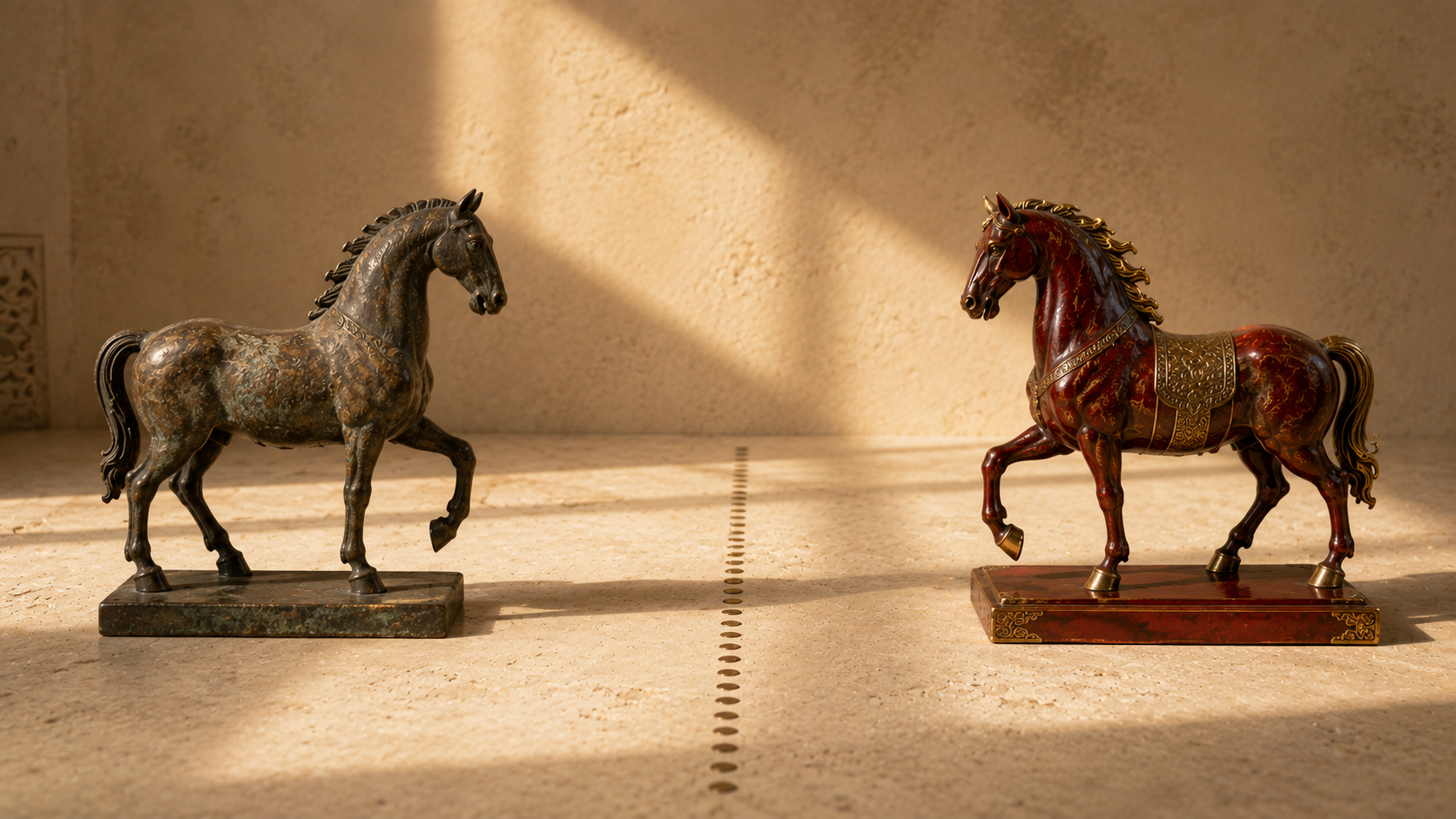
From a BaZi perspective, two people born in Horse years can have substantially different charts. Their month, day and hour of birth may differ completely. Even their Horse years may belong to different elements. A person born in a Metal Horse year and another born in a Water Horse year share the Horse branch, but they do not have identical birth charts.
This is where the limits of animal-only zodiac readings become clear.
Horse Compatibility: 六合 (Liùhé) and the Three Harmonies
In traditional Chinese zodiac study, the twelve Earthly Branches are not treated as isolated signs. They form specific relationships, and the most celebrated pairing is the 六合 (Liùhé), the Six Harmonies. Each branch has one natural partner that it is said to complete.
For the Horse, represented by 午 (Wǔ), the Liùhé partner is 未 (Wèi), the Goat. In the traditional reading, Horse and Goat are the complementary pair: movement meets steadiness, warmth meets gentleness. If your birth year is a Horse year, a Goat year is the sign most commonly identified as your natural Liùhé match.
Zodiac signs traditionally considered compatible with the Horse
- 羊Goat — the natural partner of the Horse
- 虎Tiger — forms the Fire trio with Horse
- 狗Dog — completes the Fire trio with Horse
The Horse also belongs to a 三合 (Sānhé) trio: Tiger, Horse and Dog. These three branches are traditionally grouped together as the Fire frame, a set of signs said to share a common energetic root.
The branch opposite the Horse is 子 (Zǐ), the Rat, forming the traditional clash 子午冲. In popular zodiac guides, this is often read as the least naturally harmonious pairing. Yet in a complete BaZi reading, the meaning of a clash depends on the whole chart, and a clash can sometimes activate change, growth or correction rather than simply conflict.
Think of these pairings as symbolic notes, not verdicts. They describe the traditional relationships between branches, not the outcome of any real relationship.
What Are the Lucky Colors for the 2026 Fire Horse?
Search for the Fire Horse online and you will quickly encounter lists of “lucky colors.” Different sources frequently give different answers. There is a reason.
Chinese color symbolism can be approached through several traditions, while Five Element relationships depend on context. Fire is commonly associated with red and related warm tones. Wood, which generates Fire within the Wuxing generating cycle, is commonly associated with green.
But turning those general correspondences into a universal instruction that everyone should wear a specific color in 2026 is an oversimplification. A color associated with the year’s element is not automatically a person’s individually supportive color. In a personalized BaZi interpretation, the relevant elemental relationships depend on the individual’s chart.
So it is useful to distinguish between cultural color symbolism and personalized elemental interpretation. Red can symbolize Fire without being a universal prescription for every person in a Fire year.
Your Zodiac Animal Is Only One Part of the Picture
This is perhaps the most important distinction to understand. When someone says “I’m a Horse,” they are usually referring to the animal associated with their year of birth.
BaZi looks further. BaZi is commonly known as the Four Pillars of Destiny (四柱) because a birth chart is organized into four pillars: Year, Month, Day and Hour. Each pillar contains a Heavenly Stem and an Earthly Branch. Four pillars therefore produce eight characters: 八字, Bāzì, literally “Eight Characters.”
Your familiar zodiac animal comes from the Earthly Branch of the Year Pillar. That means the animal sign people usually identify with represents only one character within an eight-character BaZi structure.
This does not make the Chinese zodiac meaningless. It simply places it in context. The zodiac is an accessible doorway into a much larger traditional system.
What Is Your Chinese Zodiac Sign?
Your zodiac animal depends on the traditional Chinese calendar, not simply January through December. Enter your birth date to discover your Chinese zodiac sign and element.
Find Your SignFrom Zodiac to BaZi
For many people, the twelve animals are their first encounter with traditional Chinese birth symbolism. That makes them useful. They are memorable, visual and culturally familiar. But they are the beginning of the story rather than the end.
The moment we ask why one Horse year is Fire while another is Metal, or why two people born under the same animal can have very different traditional readings, we have already moved beyond the twelve-animal cycle.
The Heavenly Stems appear. The Five Elements appear. Yin and yang appear. Month, day and hour appear. And eventually we arrive at the Four Pillars.
Understanding 2026 as 丙午 rather than simply “the Horse year” is therefore a small but important shift. Instead of treating Chinese zodiac culture as twelve personality labels, we begin to see the underlying system of cycles and relationships.
Your Birth Year Is Only One Pillar
BaZi looks at the Year, Month, Day and Hour of birth to build a more complete picture of the elemental relationships within your chart.
Explore Your BaZiSo, What Does the 2026 Fire Horse Really Mean?
2026 gives us a useful opportunity to look beyond the animal printed on a zodiac chart. Yes, it is a Horse year. More precisely, it is 丙午, Bǐng Wǔ, a Yang Fire Horse year.
The Horse contributes one part of the symbolism. The Fire Heavenly Stem contributes another. Together they occupy one position in a sixty-year calendar cycle that has been used to organize time for centuries.
The traditional associations surrounding Fire and Horse can tell us something about the cultural language through which the year has been interpreted. They cannot tell every individual what will happen next. That requires an important distinction between symbolism and prediction.
For YukDao, that distinction matters. Chinese zodiac traditions become more interesting, not less, when we move beyond simplified promises of luck and begin understanding the system behind the symbols.
The Horse is a doorway. 丙午 takes us one step further. And the Four Pillars reveal how much more lies beyond the animal sign alone.
“The zodiac animal is the beginning of the story, not the whole chart.”
- Chinese Zodiac
- Year Of The Horse
- Fire Horse
- 2026
- Five Elements
- Wu Xing
- BaZi
- Chinese Calendar
- Chinese Wisdom
Related Articles
Shengxiao: A Serious Introduction to the Chinese Zodiac
Most people could tell you their Chinese zodiac animal. Far fewer could tell you where the system actually came from, how it works in full, or why it continues to shape social dynamics, birth planning, and commercial culture across Asia today.
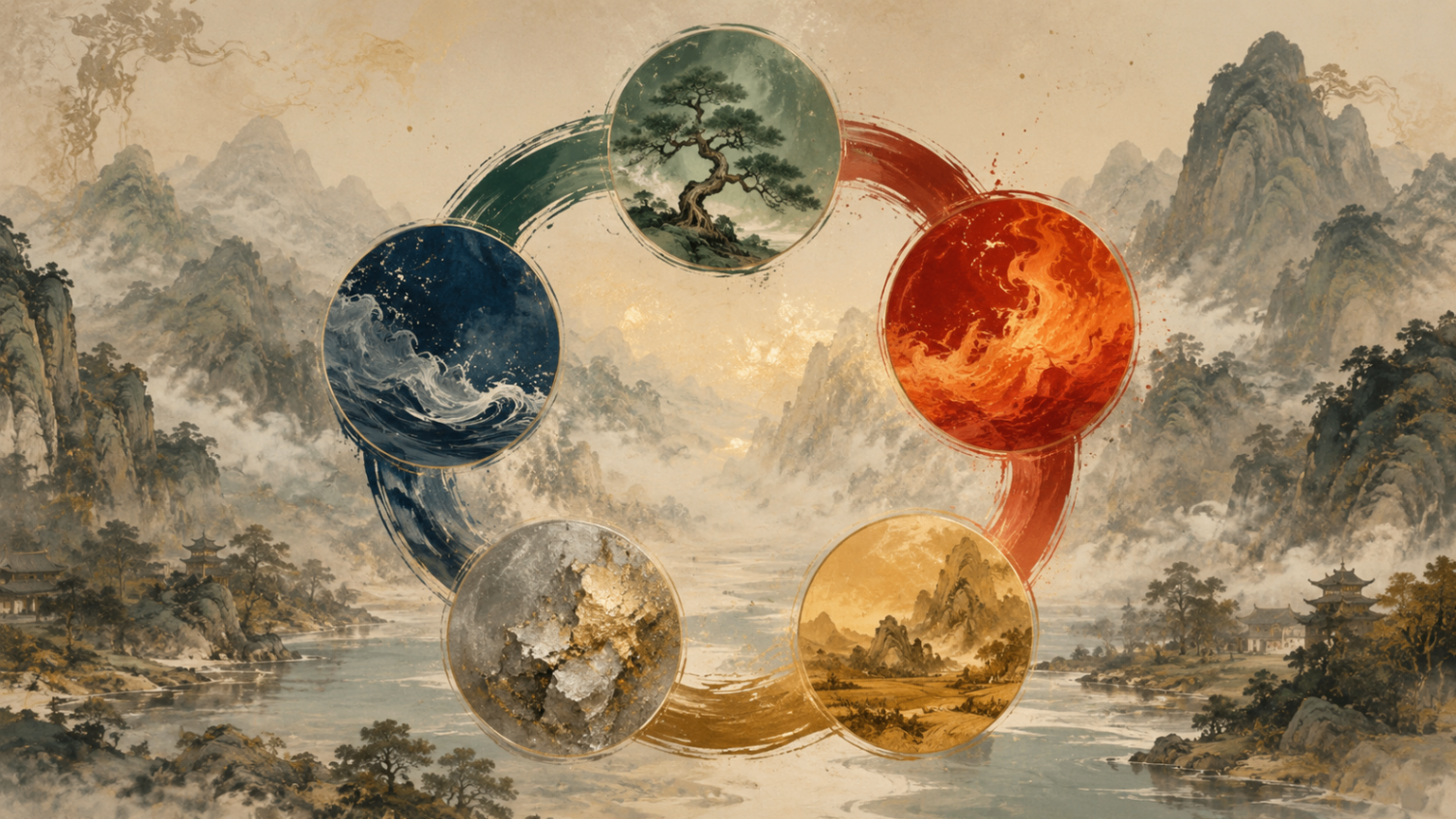
The Five Phases: What Ancient China Understood About Change That the Modern World Forgot
Wu Xing is not mysticism. It is one of history's most practical frameworks — used by emperors, physicians, and farmers for over two thousand years to understand the patterns that govern everything.
Lucky Colors in Chinese Culture: Your Element's Palette
In Chinese thought, color is not decoration. It is a structured language — a way of describing the natural forces that shape a season, a direction, a temperament, or a home.