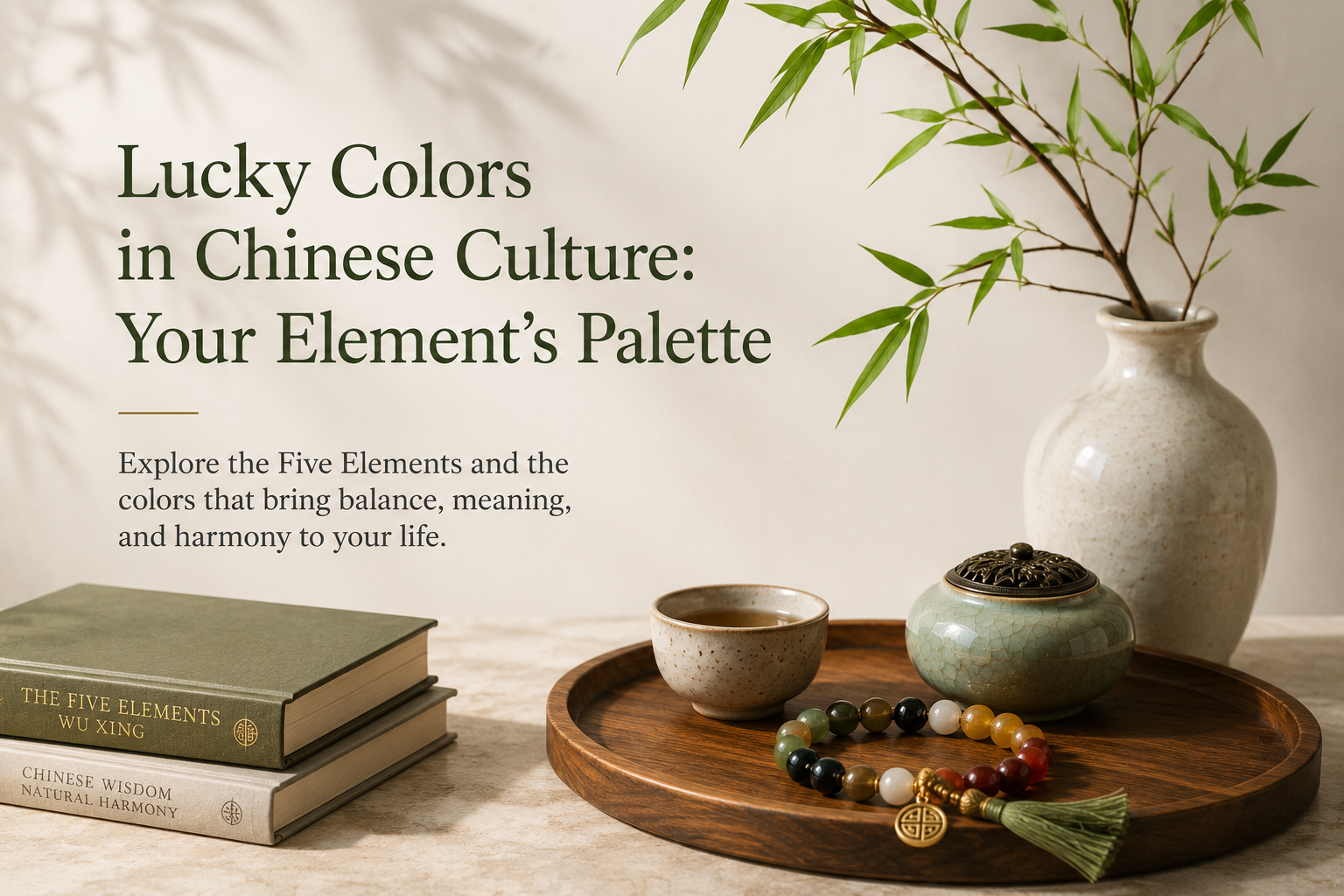
Lucky Colors in Chinese Culture: Your Element's Palette
Explore the Five Elements and the colors that bring balance, meaning, and harmony to your life.
In Chinese thought, color is not decoration. It is a structured language — a way of describing the natural forces that shape a season, a direction, a temperament, or a home. Long before "lucky colors" became a phrase borrowed casually by Western lifestyle culture, Chinese philosophers had already built a coherent cosmology in which color, element, direction, and season were understood as expressions of the same underlying pattern.
That pattern is Wu Xing — the Five Elements.
Understanding Wu Xing
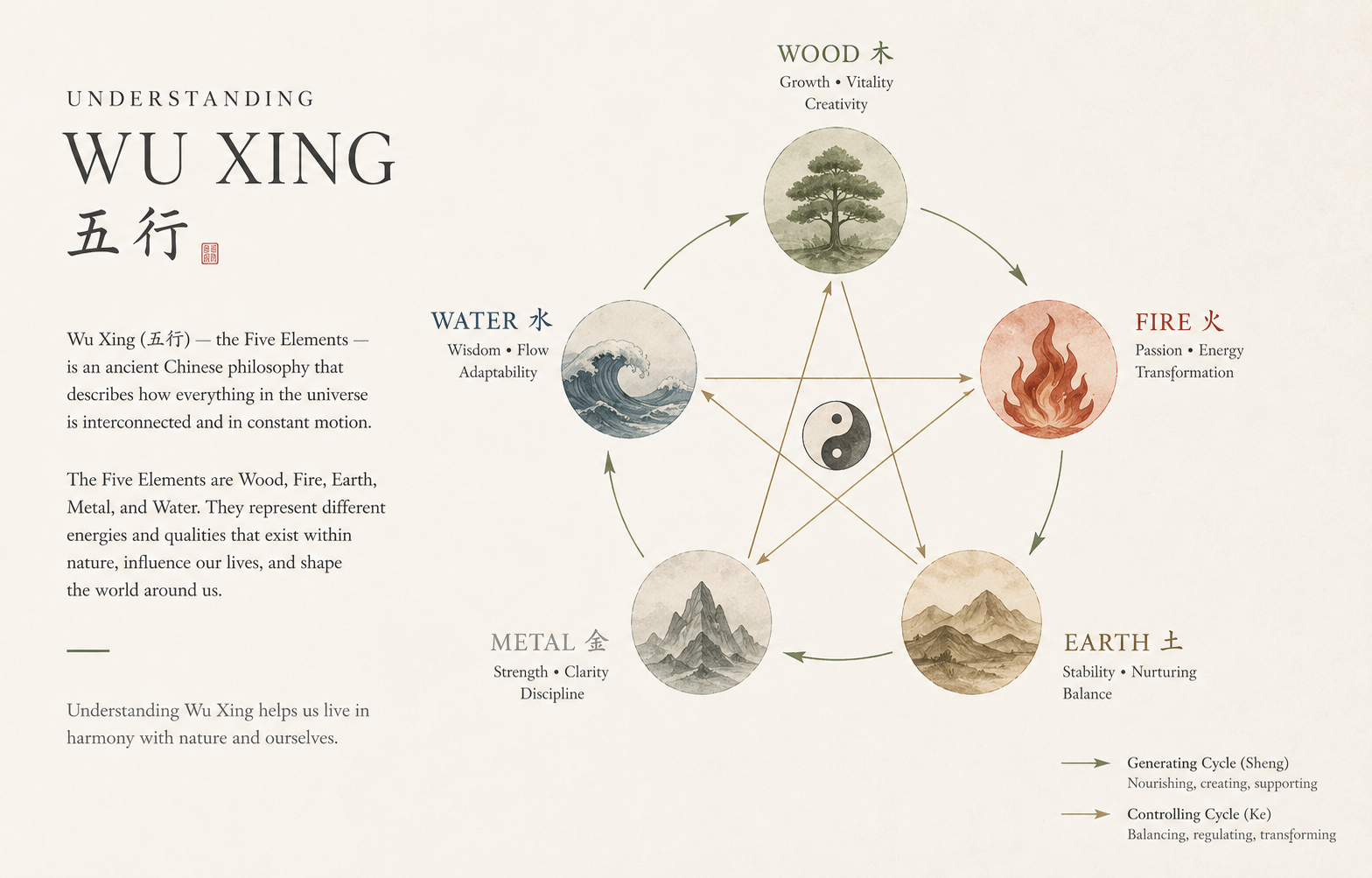
Wu Xing (五行) describes five phases of energy — Wood, Fire, Earth, Metal, and Water — that continuously generate and regulate one another. The system dates back more than two thousand years, systematized during the Warring States period and later formalized under the Han dynasty, when each element was assigned an "orthodox color" believed to correspond to its essential nature.
The five elements move through a generating cycle: Wood feeds Fire, Fire's ash forms Earth, Earth compresses into Metal, Metal liquefies into Water, and Water nourishes Wood again. This is not a metaphor invented for convenience — it mirrors observable processes in the natural world, and it became the framework through which classical China organized medicine, architecture, statecraft, and the calendar itself.
Color entered this system as a way of marking which phase was in effect — in a season, a direction, or a ritual. Below is how each element's palette was understood, and why.
Wood 木 — Green, Teal, Blue
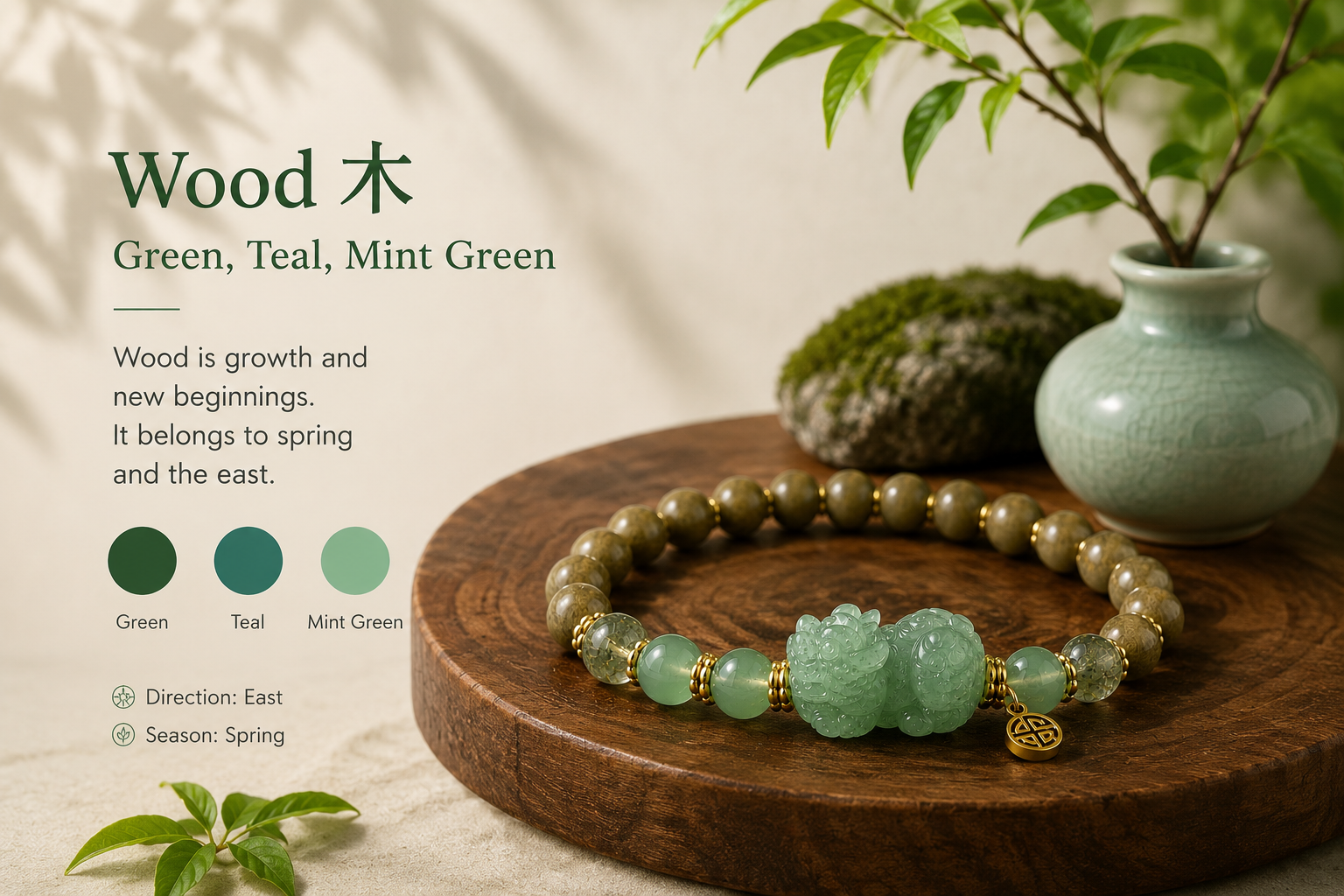
Wood's color, qing (青), is one of the oldest color terms in the Chinese language — a broad category that in its classical usage spanned what English speakers would separate into blue and green. It described the color of new growth breaking through soil: the visual signature of spring.
Wood is associated with the east, the direction of sunrise, and with spring, the season of renewal. In the generating cycle, Wood is fed by Water and in turn feeds Fire — which is why, when a Wood-dominant space or temperament needs support rather than more growth, a touch of Water's darker tones is traditionally introduced rather than more green.
Fire 火 — Red, Orange, Purple, Pink
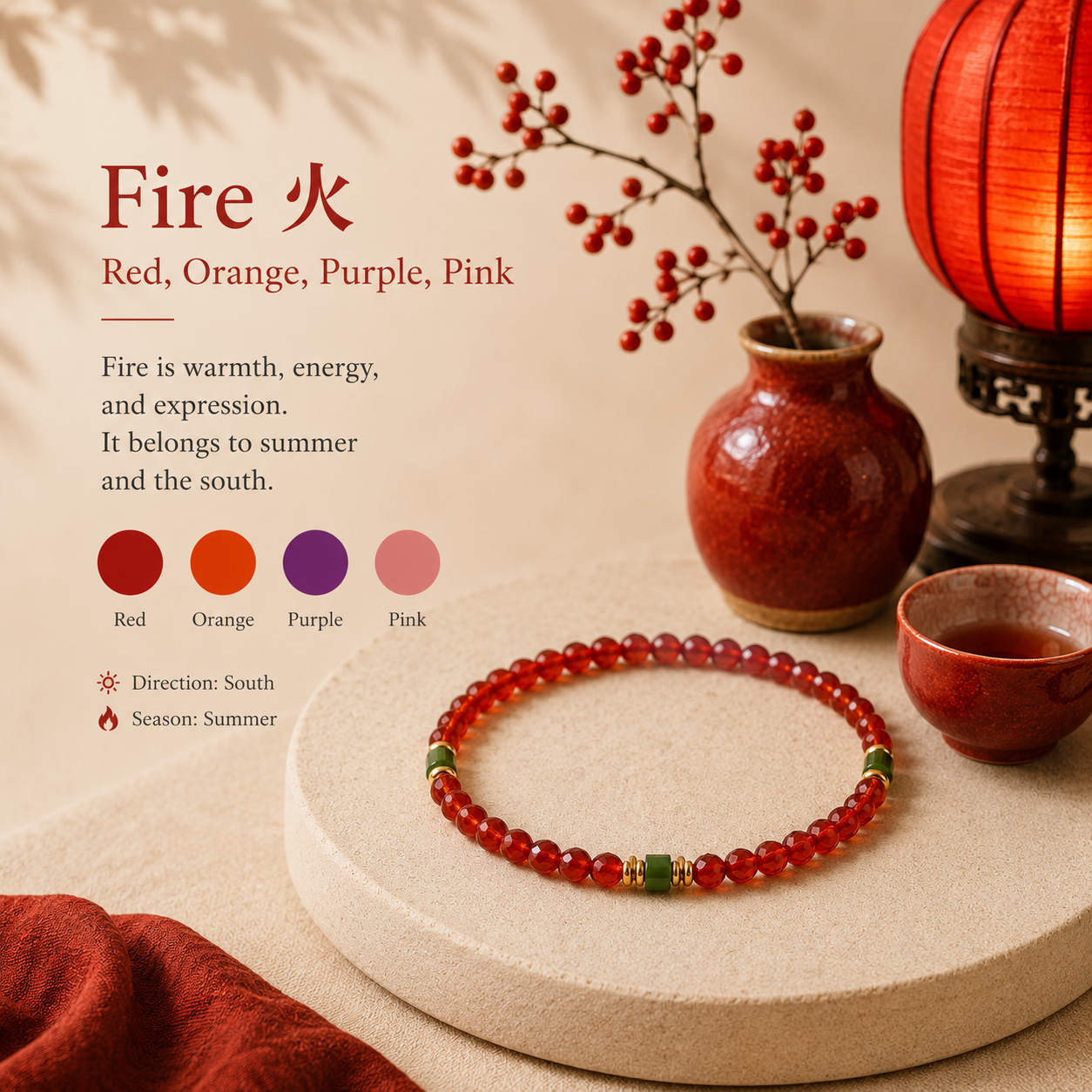
Fire's primary color, chi (赤), is a deep vermilion — the color most closely tied to Yang energy at its peak: heat, illumination, and upward motion. Red carried enormous political weight in imperial China; several dynasties, including the Han, formally adopted it as a marker of ruling legitimacy, which is part of why red remains bound up with celebration and vitality in Chinese culture today. Orange, purple, and pink extend from that same warm register in contemporary usage, even though classical ritual texts treated red itself as the single "pure" Fire color.
Fire belongs to summer and the south. Because Fire is an expressive, outward-moving energy, it is traditionally balanced — not extinguished — by the stillness of Water's black or deep blue when a space or a temperament runs toward excess.
Earth 土 — Yellow, Gold, Brown, Beige
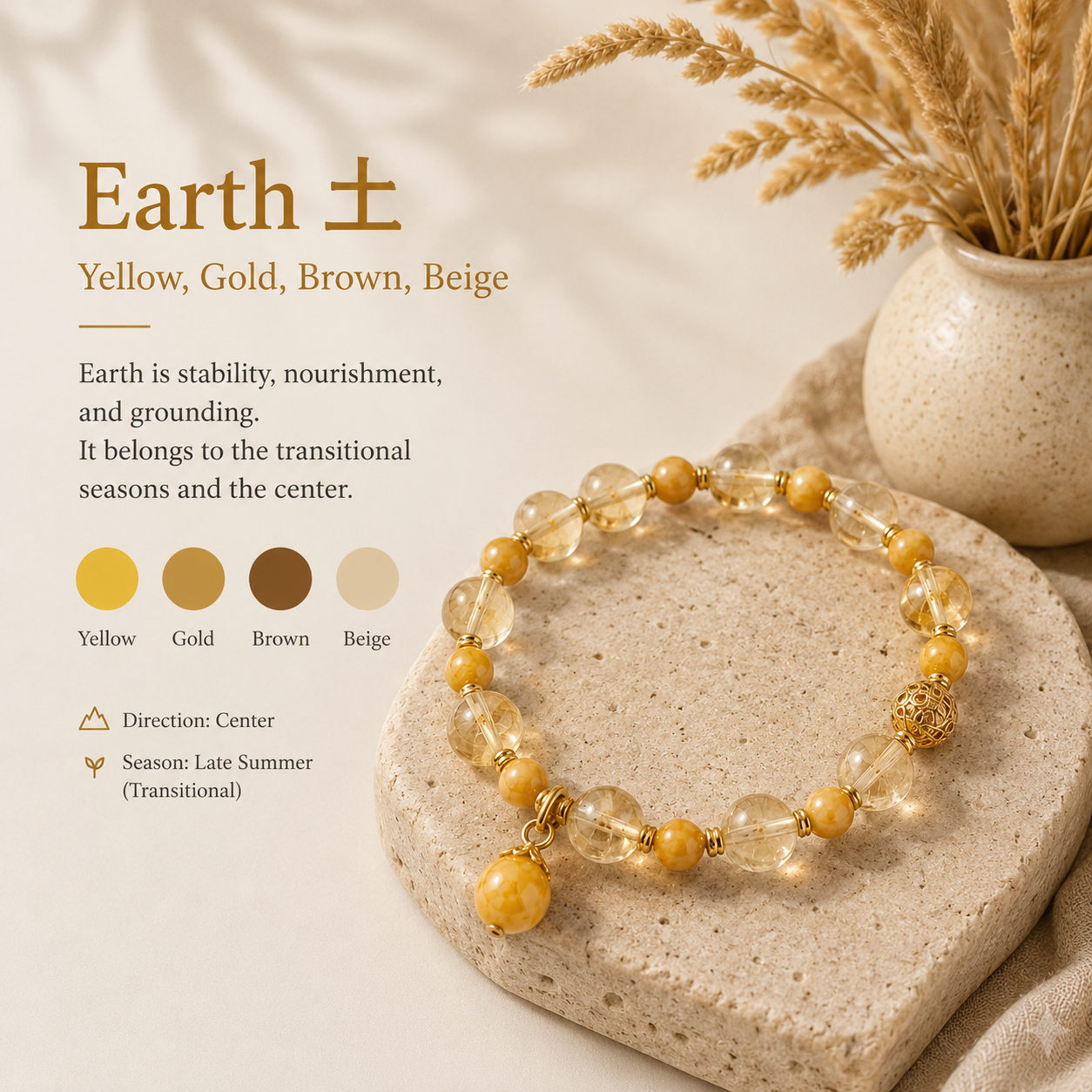
Earth's color, huang (黄), takes its name from the loess soil of China's Central Plains — the ground from which early Chinese civilization grew. Earth sits at the center of the Wu Xing arrangement, not tied to a single season but to the transitional periods between them, representing stability, nourishment, and the quiet work of grounding.
Yellow's association with Earth became so absolute that, by the Han dynasty, it was reserved for the emperor alone — the roof tiles of the Forbidden City remain a visible record of that rule. In practice, Earth is generated by Fire and gives rise to Metal, so a Wood-green accent is often used to bring gentle renewal to an Earth-heavy palette without overwhelming its steadiness.
Metal 金 — White, Silver, Grey, Gold
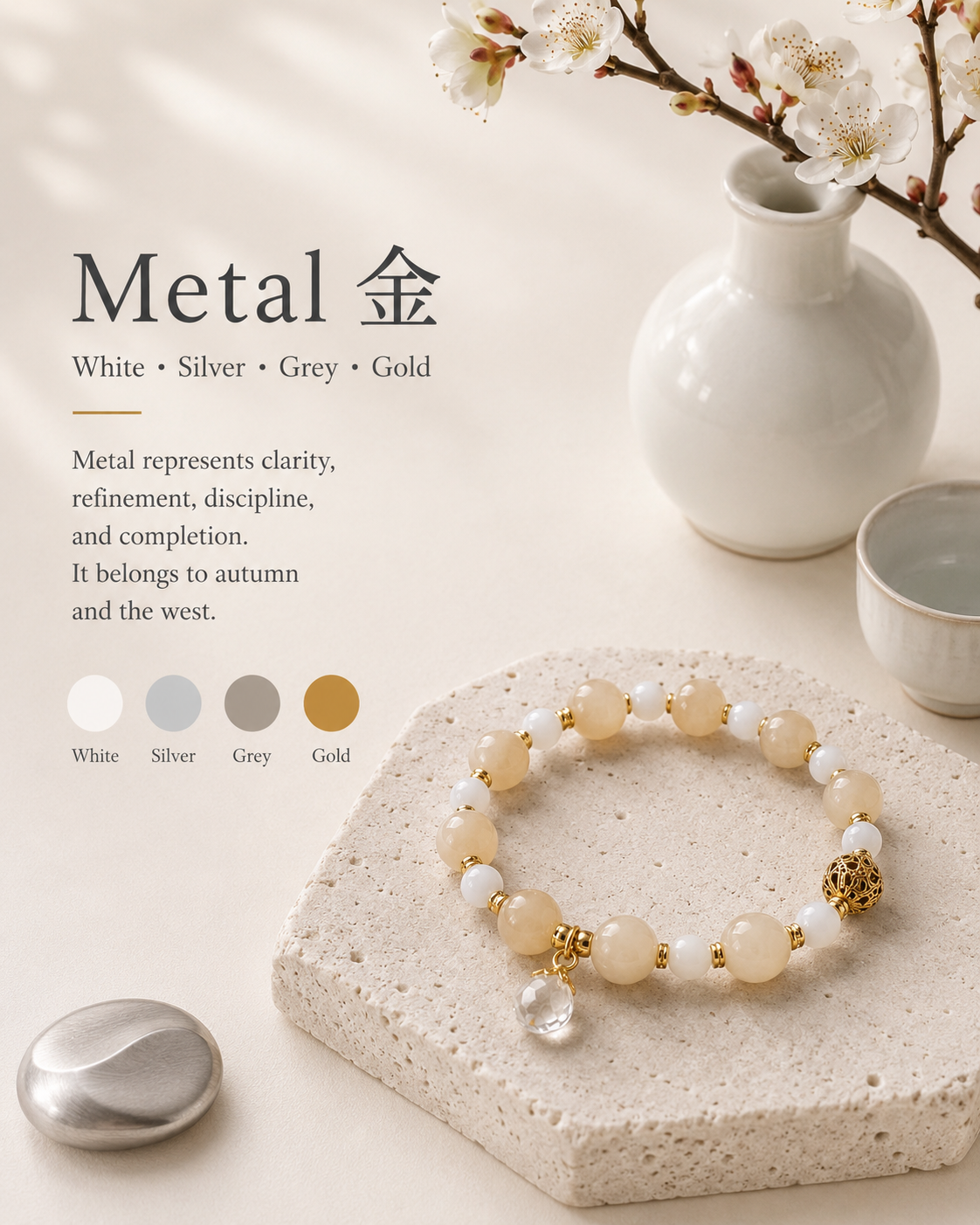
Metal's color, bai (白), is unblemished white — the clarity of polished blade or fresh frost. Metal governs autumn and the west, marking the point in the yearly cycle where growth contracts and harvest gives way to rest. This is also why white carries associations with mourning in Chinese tradition: not as something ominous, but as the natural, dignified close of a cycle.
Metal is produced by Earth and produces Water. Where Metal's precision and clarity tip toward coldness, the warmth of Fire's red or orange is traditionally introduced to soften its edge without dulling its focus.
Water 水 — Black, Deep Blue, Dark Grey, Navy
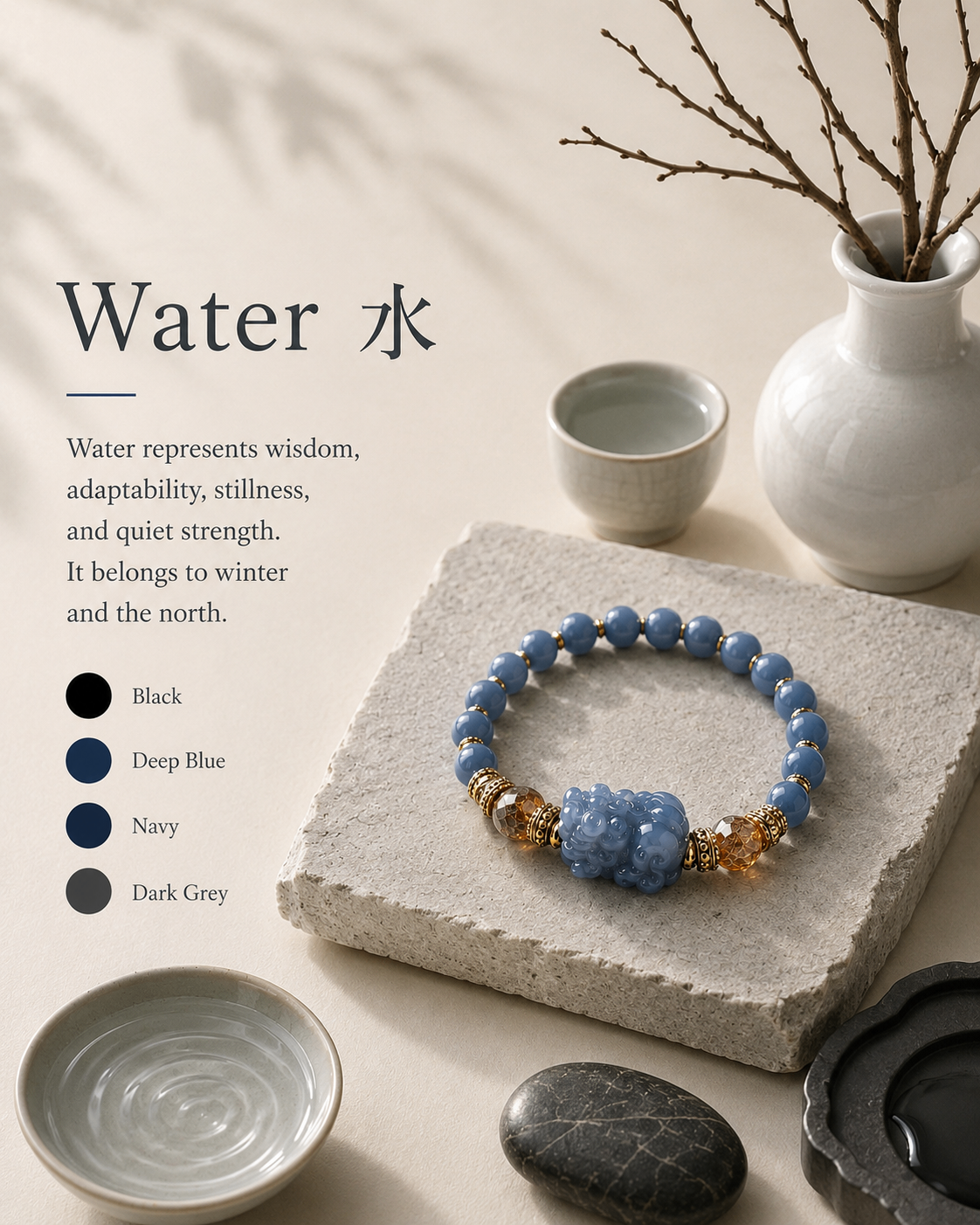
Water's color, hei (黑), is the black of unlit depths — still water at night, viewed by a civilization without artificial light. Water represents winter, stillness, and the internal, restorative energy of the north. It is the most Yin of the five elements: not passive, but quietly accumulating.
Deep blue and navy have long served as culturally acceptable extensions of black in dress and object, since pure black was frequently reserved for solemn ritual contexts. Water gives rise to Wood, so when Water's introspective energy needs lifting, a small note of Earth's yellow or gold is traditionally used to provide gentle ground.
Color as Reflection, Not Formula
It's worth being honest about how this system was traditionally used. In classical China, Wu Xing color correspondences governed architecture, state ritual, and court dress far more than personal wardrobe choices — an emperor's yellow, a mourning family's white, a dynasty's chosen banner. The idea of an individual dressing daily in their "personal element color" for a desired outcome is a modern adaptation of the system, not a direct inheritance of it.
That doesn't make the modern version meaningless — it means it's worth using thoughtfully. Choosing a color because it reflects your element, or the balance you're seeking, is a small act of intention: a way of noticing where your energy sits and what might steady or lift it. It might show up in what you wear on a demanding day, an object you choose for your desk, or a color you reach for when giving a gift. The value isn't in a guarantee — it's in the pause to consider why a color feels right, grounded in a framework people have refined for over two thousand years.
If you're curious which element's palette speaks to you, YukDao's element quiz is a simple way to start — a short, reflective tool that connects you to a palette, and the reasoning behind it, worth understanding on its own terms. Find your zodiac sign and element.
Discover Your Element's Palette
A short, reflective reading that connects your birth data to your Five Elements profile — and the colors, seasons, and directions that balance it.
- Five Elements
- Wu Xing
- Lucky Colors
Related Articles
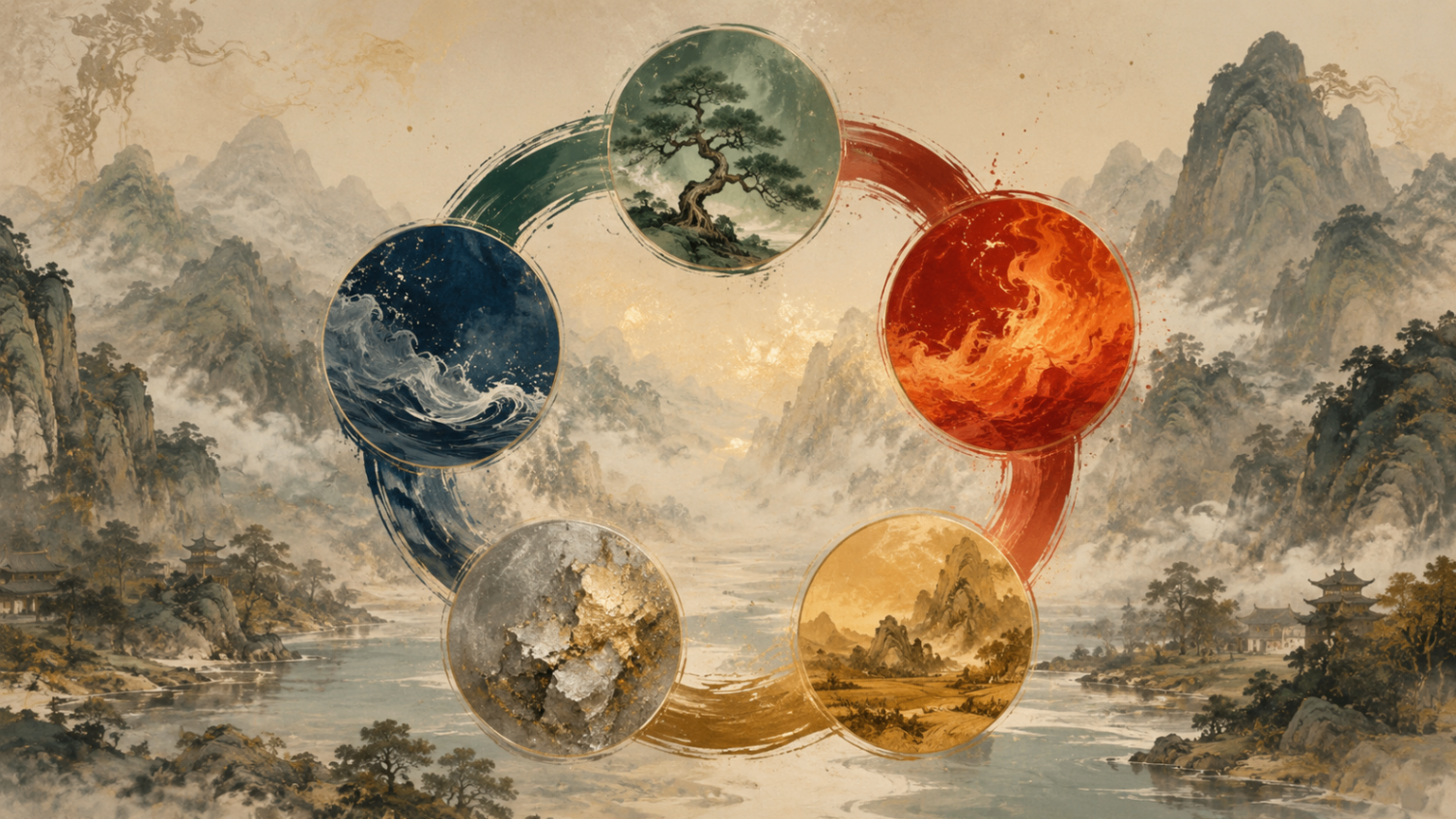
The Five Phases: What Ancient China Understood About Change That the Modern World Forgot
Wu Xing is not mysticism. It is one of history's most practical frameworks — used by emperors, physicians, and farmers for over two thousand years to understand the patterns that govern everything.
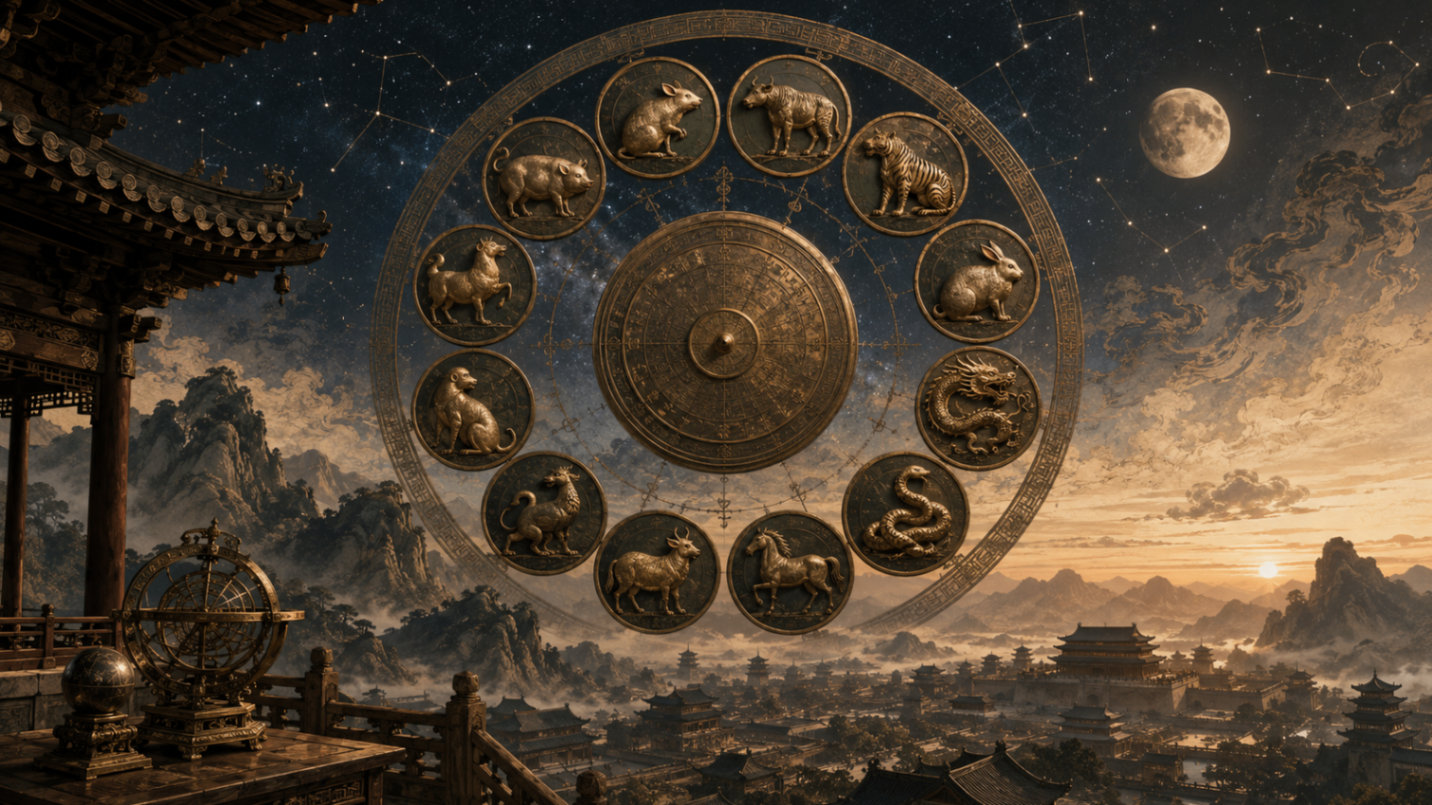
Shengxiao: A Serious Introduction to the Chinese Zodiac
Most people could tell you their Chinese zodiac animal. Far fewer could tell you where the system actually came from, how it works in full, or why it continues to shape social dynamics, birth planning, and commercial culture across Asia today.
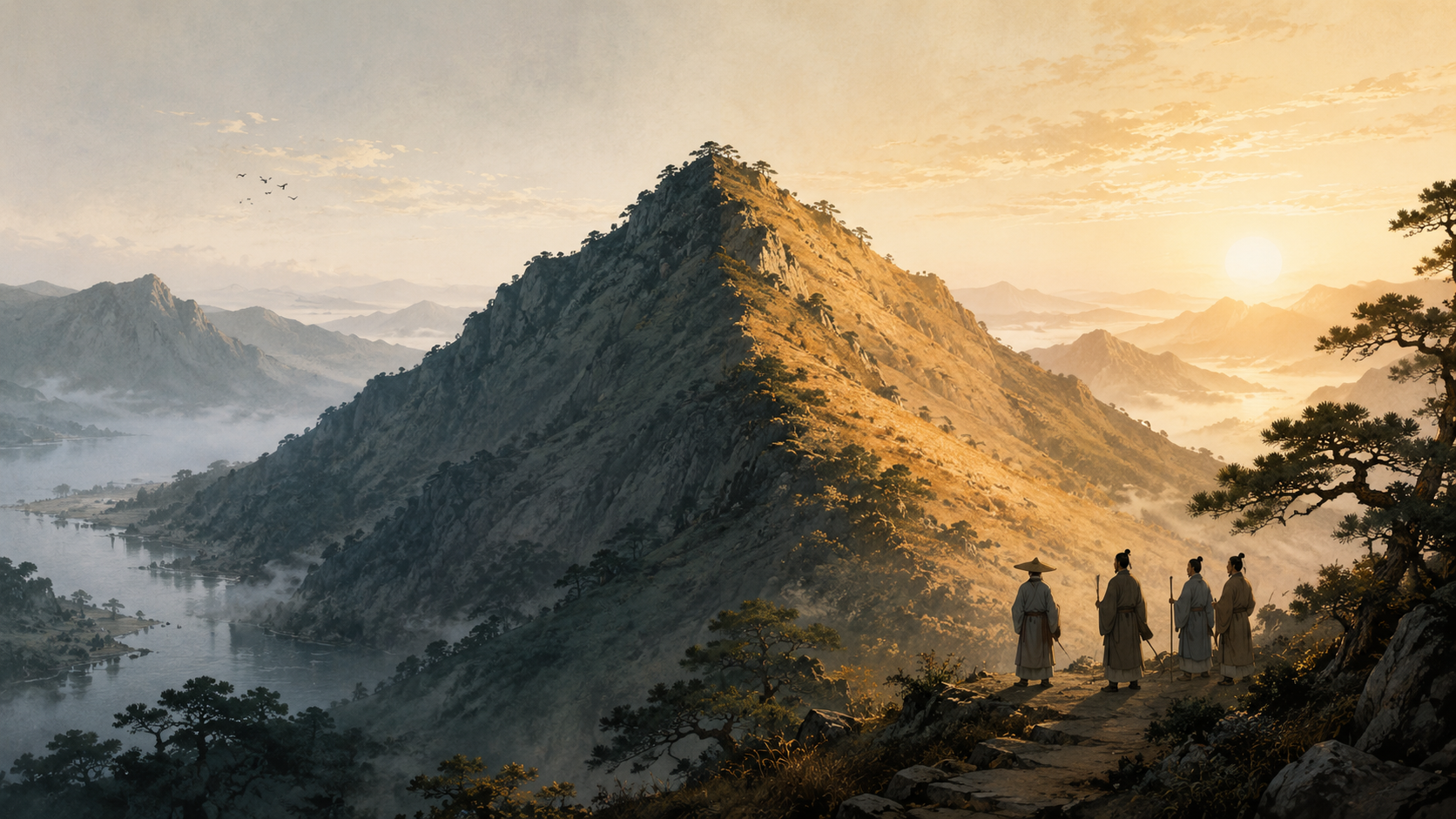
The Hill With Two Sides: What Yin and Yang Actually Mean
Most people have encountered the symbol their entire lives — but few have been told where it actually comes from.