Shengxiao: A Serious Introduction to the Chinese Zodiac
Most people could tell you their Chinese zodiac animal. Far fewer could tell you where the system actually came from, how it works in full, or why it continues to shape social dynamics, birth planning, and commercial culture across Asia today.
- 1. Introduction
- 2. Where the Zodiac Actually Came From
- 3. The 12 Animals: Four Ways of Moving Through the World
- 4. Three Things Most Western Readers Get Wrong
- 5. The 60-Year Picture: Where the Zodiac Meets the Five Phases
- 6. How the Zodiac Functions in Modern Life
- 7. What the Shengxiao Actually Offers
- 8. Discover Your Chinese Zodiac & 2026 Focus Report
Introduction
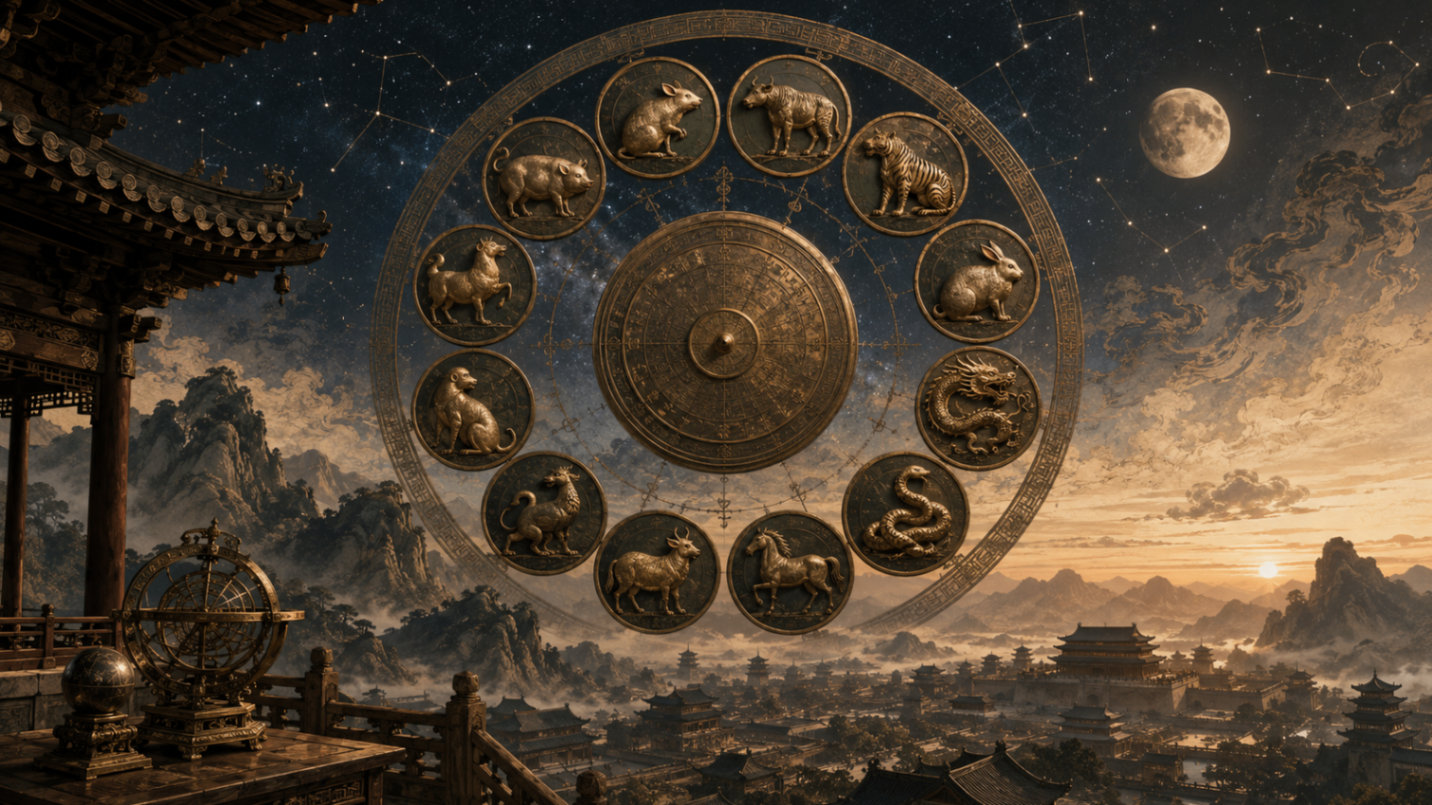
The Shengxiao — the word translates literally as “birth likeness” — is a 12-year cycle of animal archetypes used for centuries to map human temperament, navigate relationships, and mark the passage of time. It is one of the most widely recognized expressions of Chinese culture in the world, and one of the most widely misunderstood. What follows is an attempt to correct that — calmly, accurately, and with the seriousness the system deserves.
Where the Zodiac Actually Came From
The origins of the Chinese Zodiac are astronomical, not mythological. That distinction matters, and it is where most popular accounts go wrong by starting with the story rather than the observation that preceded it.
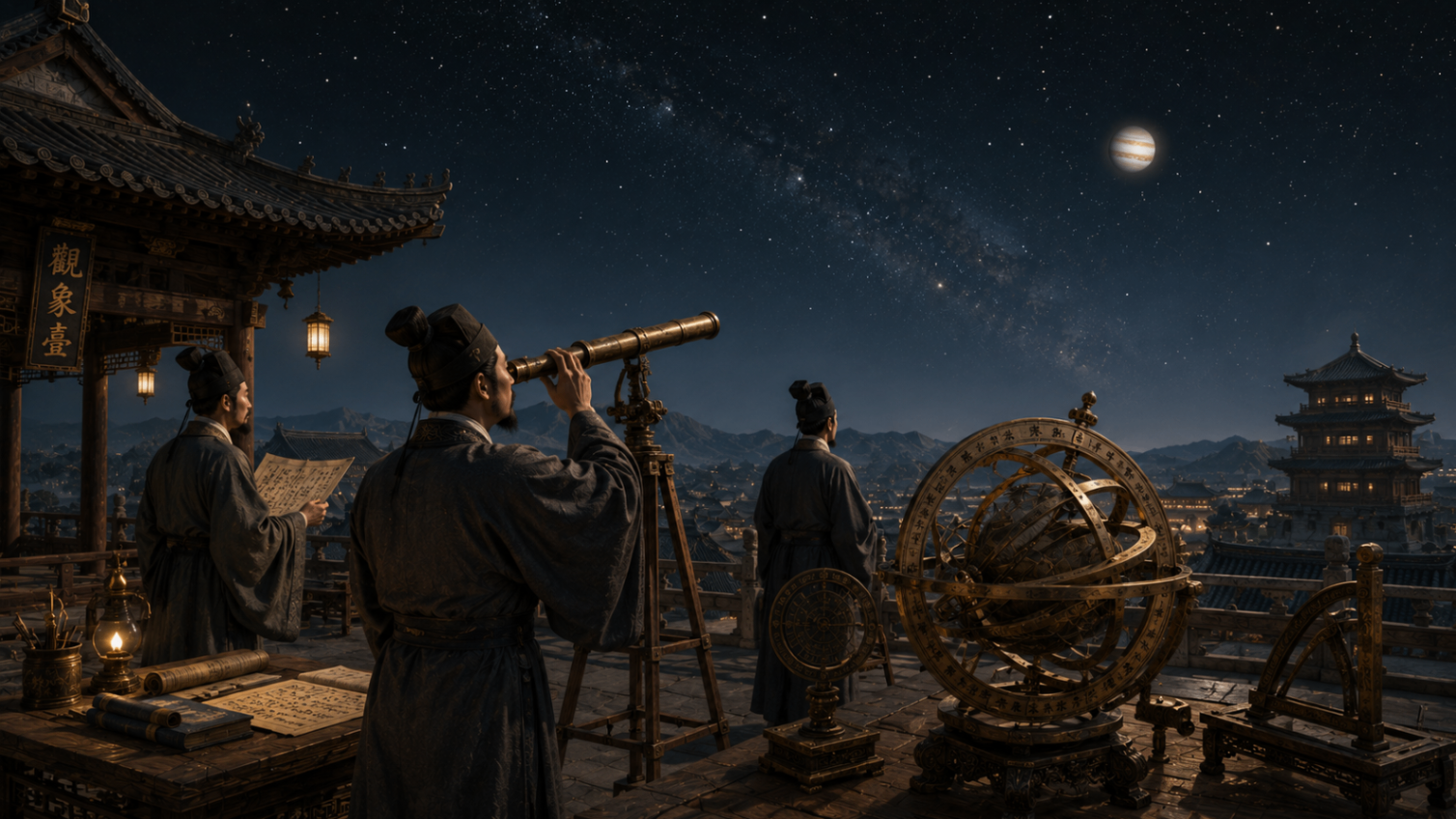
Ancient Chinese astronomers noted that Jupiter — known in classical texts as the “Year Star,” or Sui Xing — takes approximately 12 years to complete its orbit around the sun. To track this cycle, they divided the celestial equator into 12 equal sections. Those sections became the framework for a system of timekeeping that was, at its foundation, a practical tool for coordinating agricultural life, governance, and record-keeping.
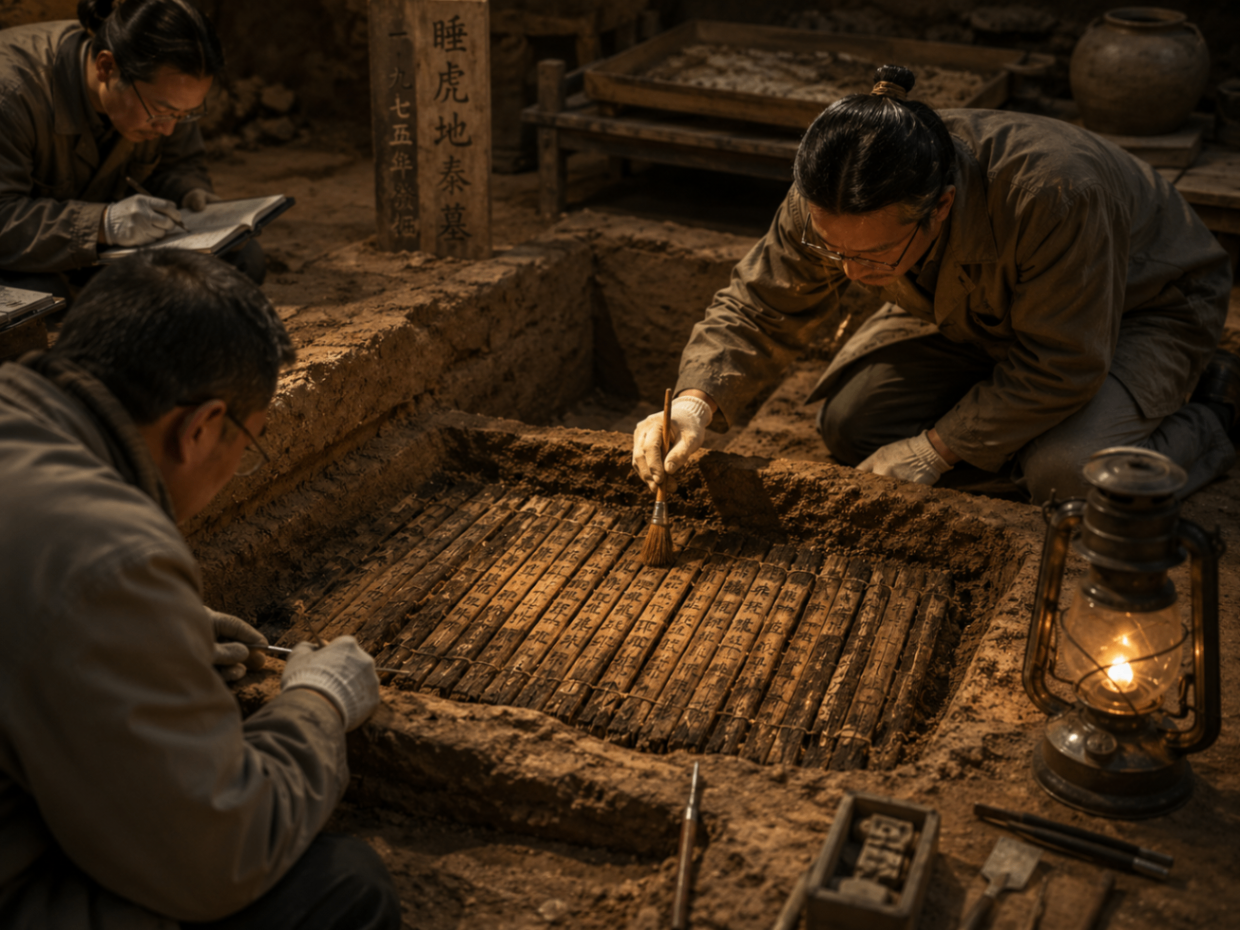
The system was already in documented use during the Qin dynasty. In the 1970s, archaeologists excavating a tomb at Shuihudi uncovered bamboo slips dating to the third century BCE that link animals to this 12-part cycle — physical evidence of the system being used for behavioral observation and record-keeping more than two millennia ago. By the Han dynasty, the philosopher Wang Chong had described the 12 animals systematically in his Lunheng, written around 80 CE.
“The myth followed the map. The animals were chosen first, through centuries of observation; the story arrived to explain them afterward.”
The “Great Race” legend — in which the Jade Emperor summons all animals to compete for their place in the calendar — came later. It is a vivid and culturally significant story, and it served an important function: it made an astronomical system legible and memorable to ordinary people across an agrarian civilization. But the myth followed the map. The animals were chosen first, through centuries of observation; the story arrived to explain them afterward.
The 12 Animals: Four Ways of Moving Through the World
In classical Chinese thought, the 12 zodiac animals function as cultural archetypes — a shorthand vocabulary for recognizing fundamental human temperaments, behavioral tendencies, and social strategies. This is closer in spirit to a personality typology than to a daily horoscope. The question the system is designed to answer is not “what will happen to you?” but “what kind of person are you, and how do you characteristically engage with the world?”
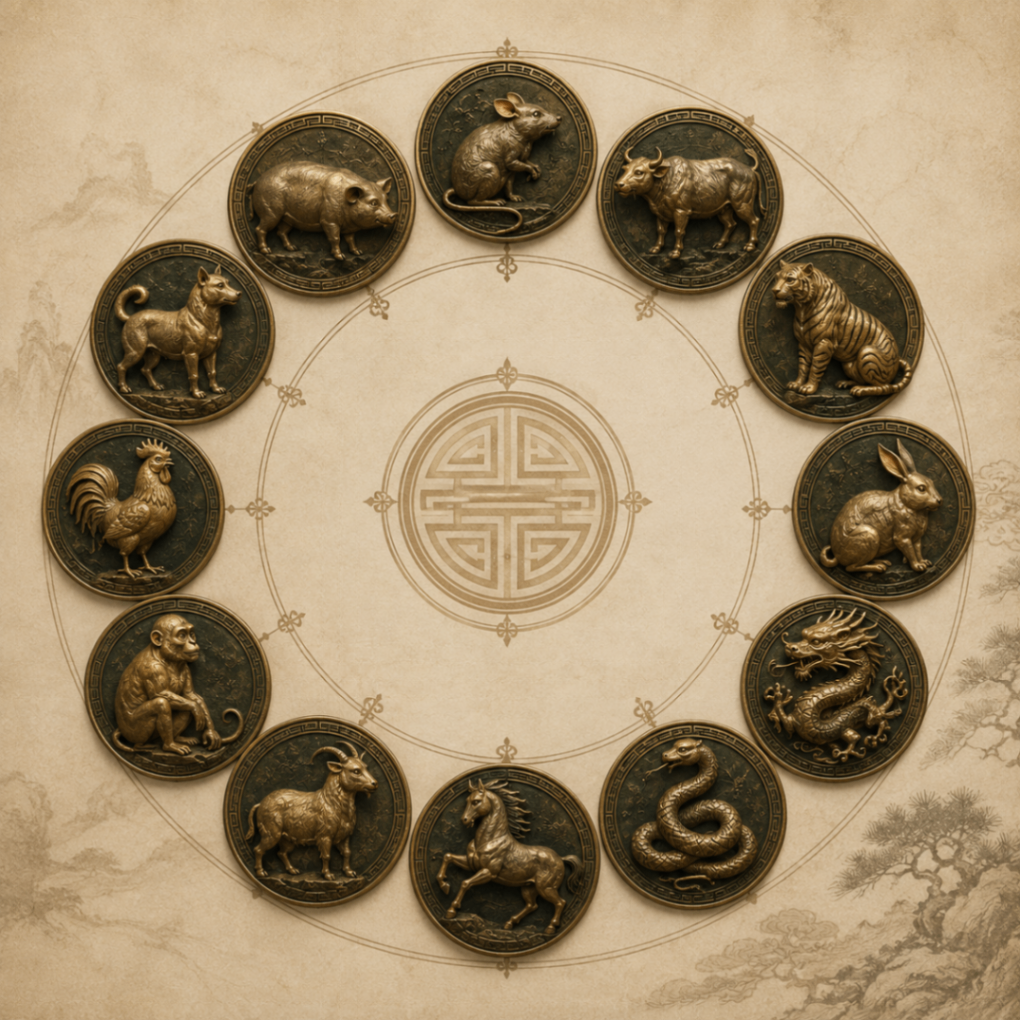
The 12 animals are not 12 arbitrary categories. They are organized into four triads — groups of three signs, each four years apart — that share a fundamental orientation toward life. Understanding the triads is more useful than memorizing the animals individually, because it reveals the underlying logic of how the system categorizes human nature.
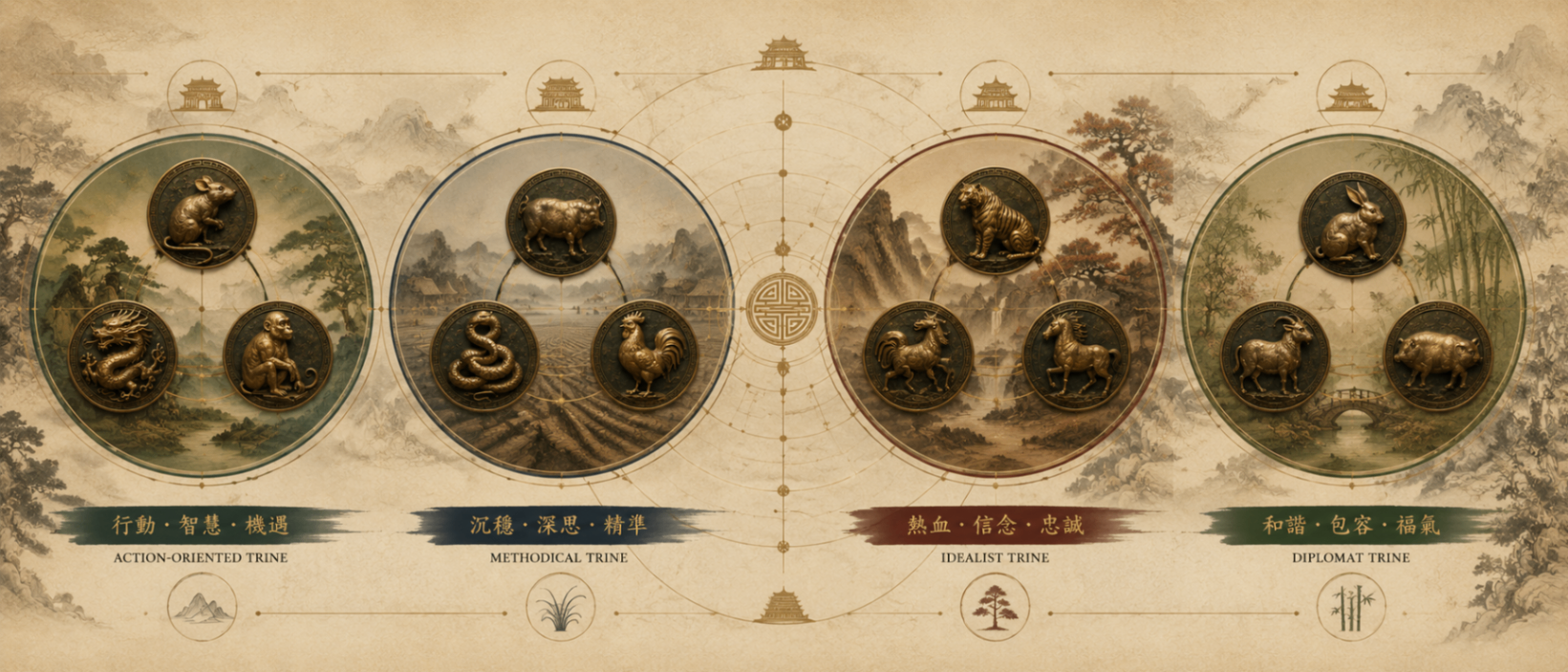
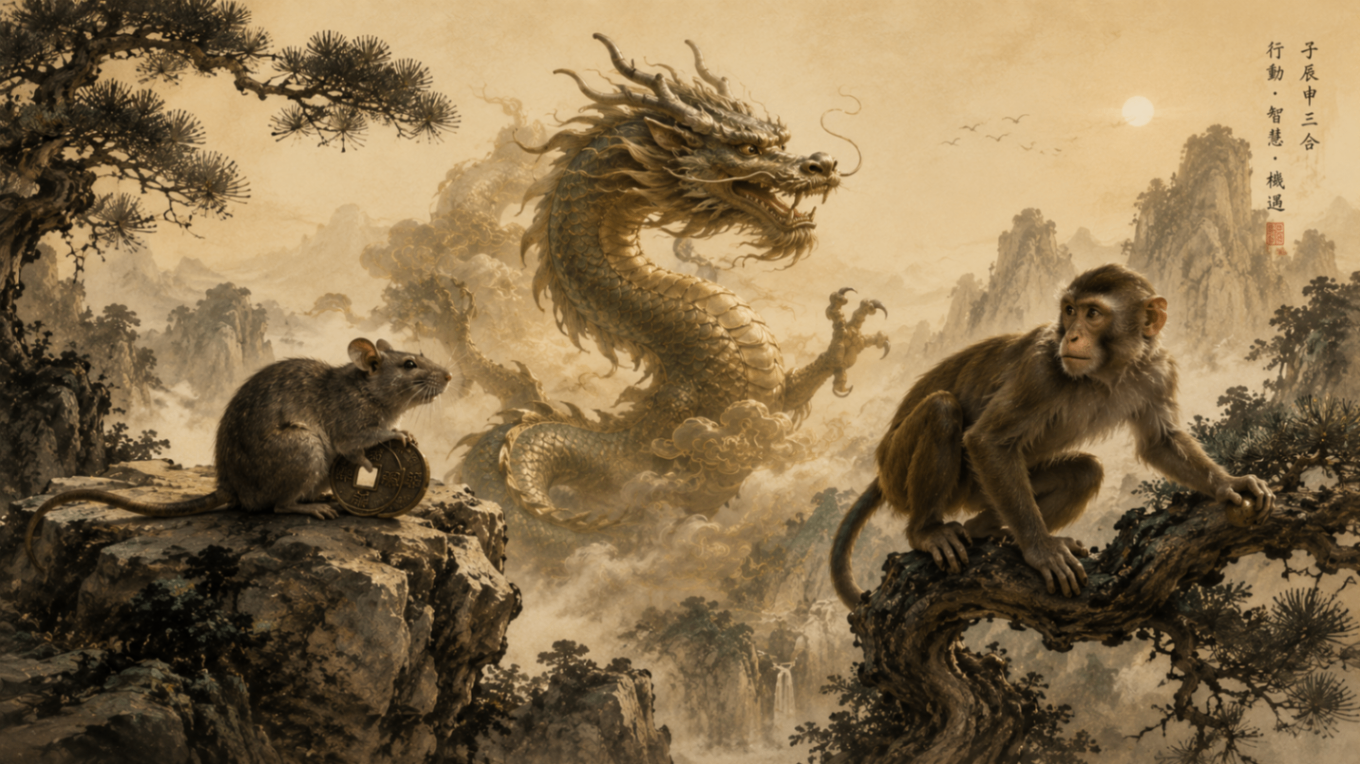
The Action-Oriented Trine: Rat, Dragon, Monkey. These three signs share a dynamic, initiative-taking instinct. They are drawn to movement, innovation, and the rapid reading of opportunity. The Rat expresses this through resourcefulness and adaptability — historically, the animal that survives by observation and cleverness. The Dragon expresses it through vision and force of will, the only mythical creature in the zodiac and long associated with imperial ambition and natural authority. The Monkey channels the same energy through wit and unconventional thinking, finding solutions where more methodical minds see only obstacles.
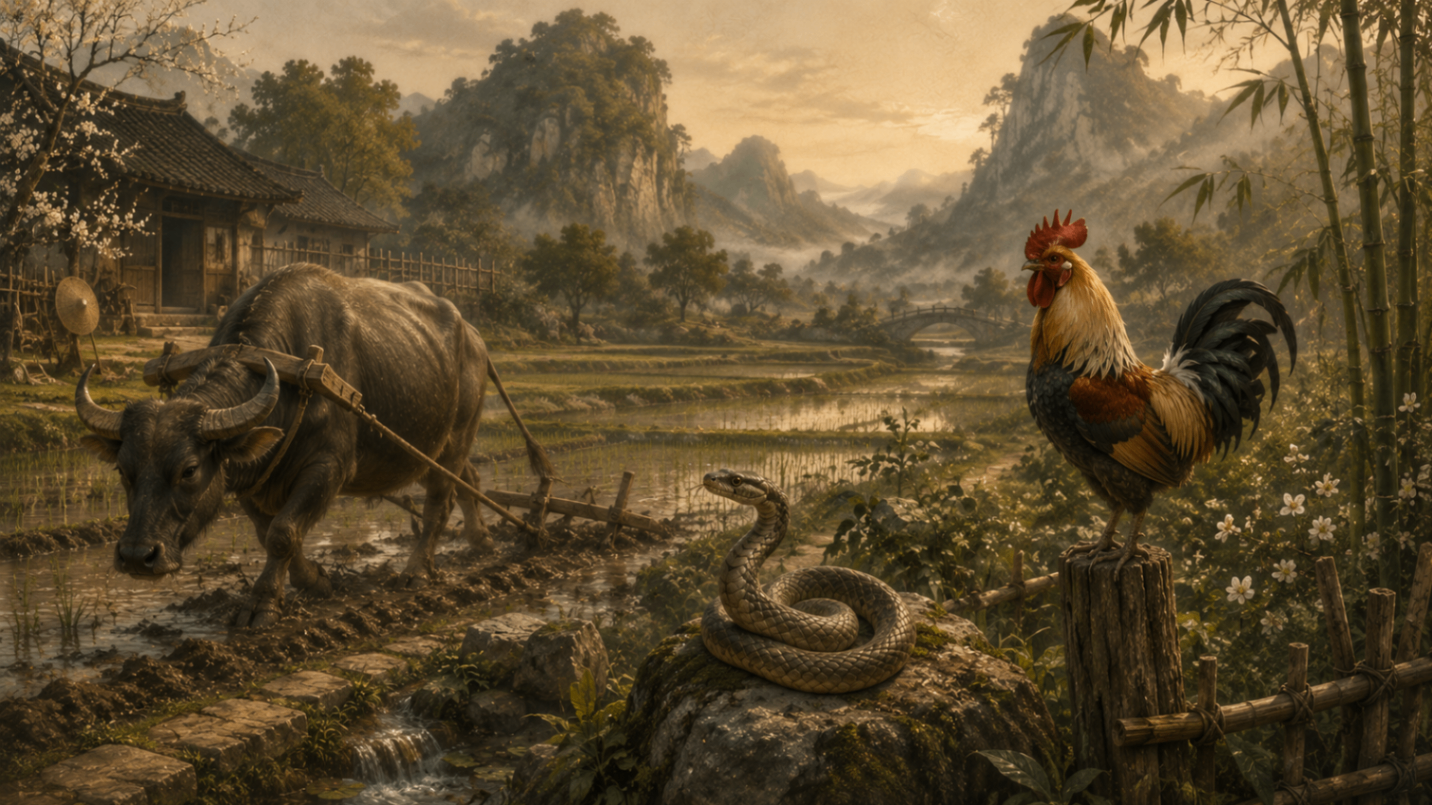
The Methodical Trine: Ox, Snake, Rooster. These three signs share a preference for depth, patience, and purposeful effort over speed. The Ox represents the steady, uncomplaining work that built Chinese agrarian civilization — diligent, reliable, slow to anger, and difficult to move once committed. The Snake works differently but from the same orientation: observing quietly, thinking carefully, moving precisely. In Chinese tradition, the Snake is sometimes called the “little dragon” — a sign associated with intuition and philosophical depth. The Rooster brings the same methodical quality to the surface level of life: organized, observant, direct, and precise about how things are done and how they appear.
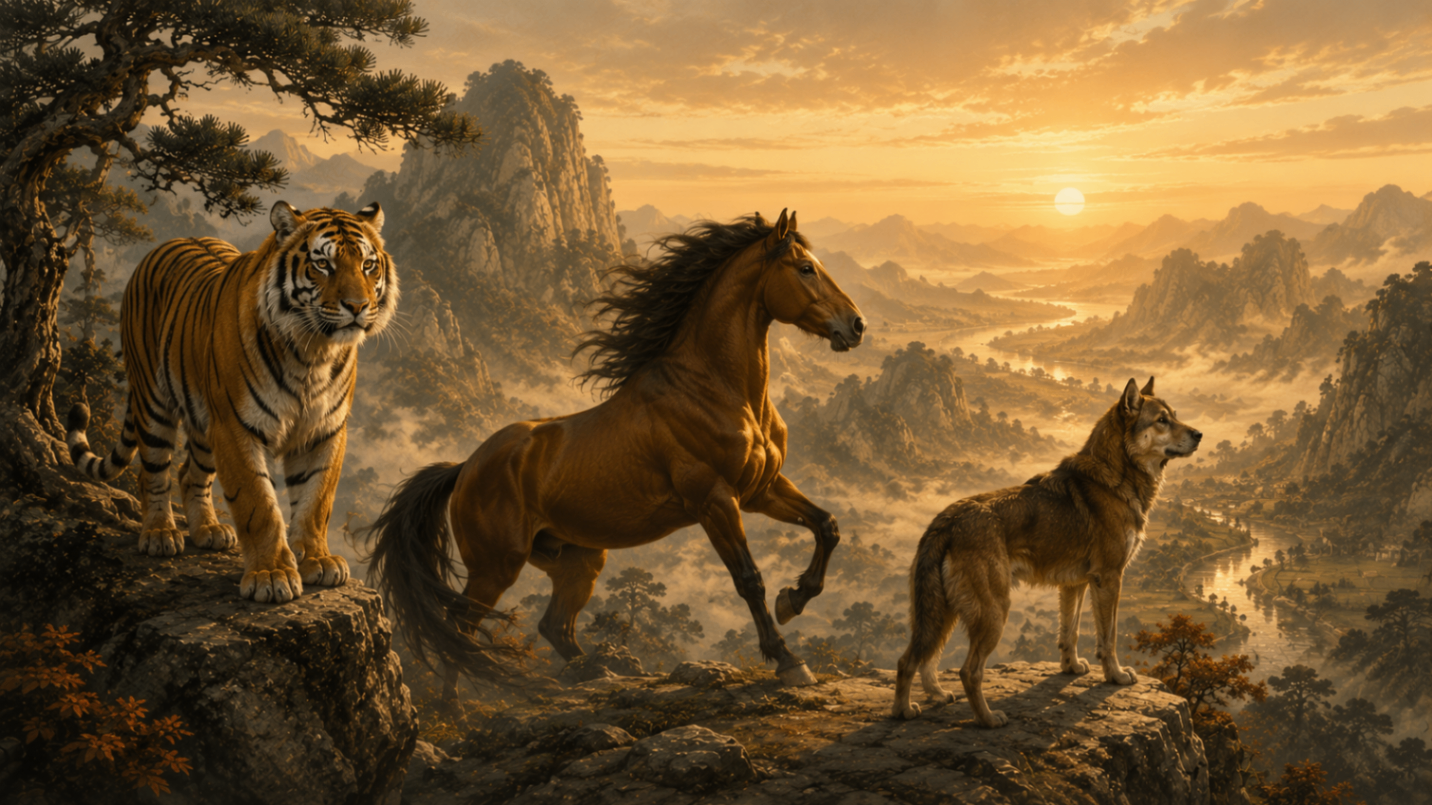
The Idealist Trine: Tiger, Horse, Dog. These three signs are driven by emotion, principle, and the strength of their convictions. The Tiger is the king of beasts in Chinese mythology — courageous, intense, and fiercely independent, a natural force of change. The Horse carries this idealism into motion: energetic, freedom-seeking, and impatient with constraint. The Dog channels the same emotional intensity into loyalty and justice, oriented toward protecting those it cares about and maintaining a strong personal moral code.
The Diplomat Trine: Rabbit, Goat, Pig. These three signs share a sensitivity to environment, a preference for harmony, and a collaborative rather than competitive instinct. The Rabbit is gentle, conflict-averse, and highly attuned to social grace — strategic in a quiet way, choosing diplomacy over force. The Goat brings a creative and compassionate quality to the same orientation, thriving in supportive environments and struggling in harshly competitive ones. The Pig completes the trine with generosity and sincerity, combining a genuine warmth toward others with a pragmatic appreciation for the pleasures of a well-lived life.
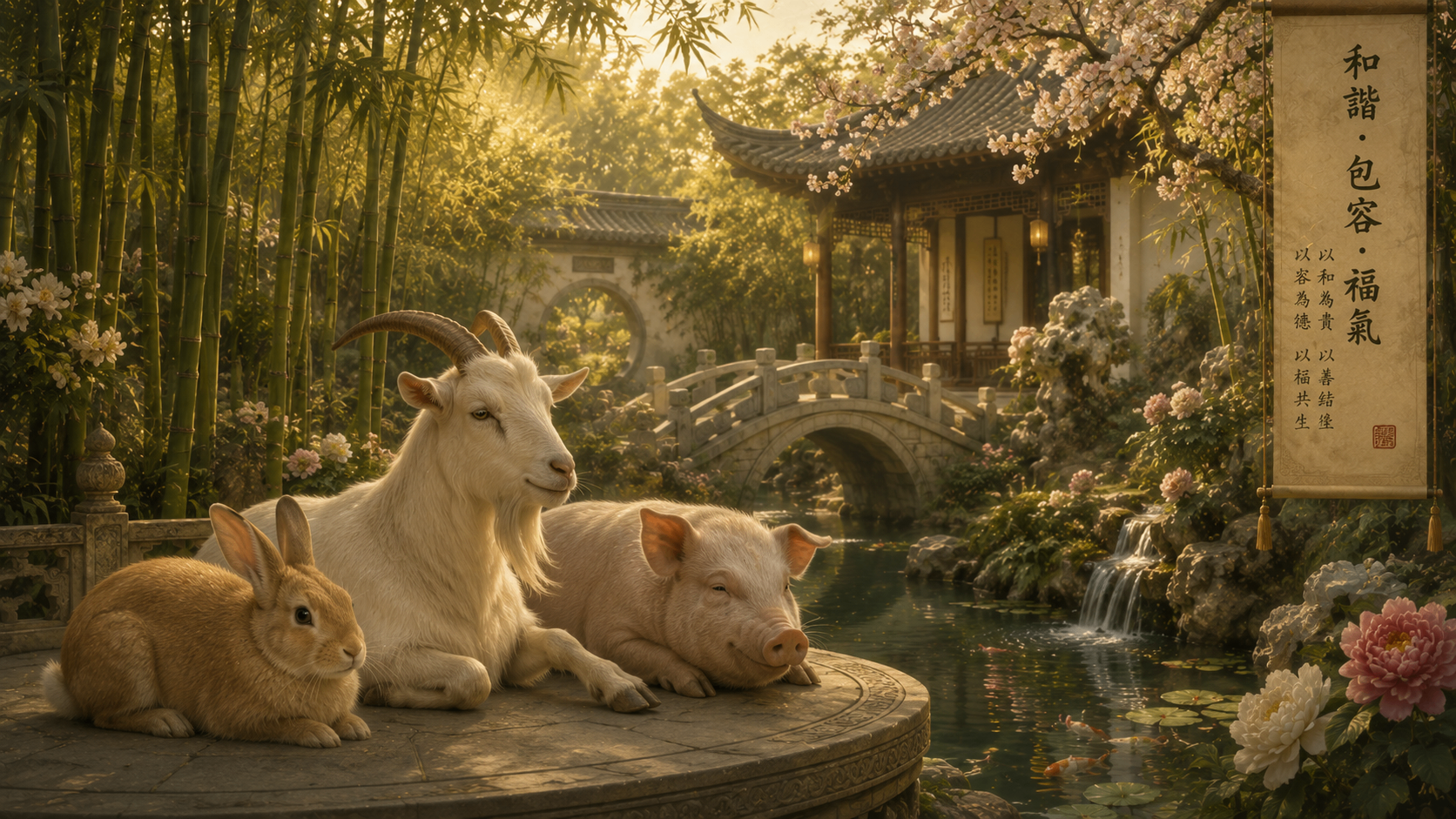
“No trine is superior to any other. Each represents a genuine and valuable way of engaging with the world, and each carries its characteristic strengths alongside its characteristic difficulties. The system assumes all four orientations are present in any healthy community.”
Three Things Most Western Readers Get Wrong
The first: your birth year animal is not your complete zodiac profile. Western readers typically know one animal — the one associated with their birth year — and assume that is the whole picture. In the classical system, the 12-year cycle operates as a single layer of a more complex structure. A person carries animal signs for their birth year, birth month, birth day, and birth hour, each describing a different dimension of character. The birth year is the most publicly legible layer, associated with how others perceive you in the world. It is an important piece of the picture, but it is not the whole picture.
The second: your zodiac year is not your lucky year. This is perhaps the most widespread misconception in Western popular culture, and it reverses the classical meaning. When your animal year returns — called Benmingnian (本命年) in Chinese — traditional thought considers this a time of heightened vulnerability, not celebration. You are in a state of tension with Tai Sui, the celestial force governing that year. The custom of wearing red during your zodiac year — red underwear, red bracelets, red accessories — is a protective tradition, not a festive one. It is a form of cultural armor, not a birthday ribbon.
The third: this is not daily astrology with a Chinese aesthetic. Western sun-sign astrology focuses on monthly and daily shifts, and is oriented toward forecasting events: what will happen to you this week, this month, this year. The Shengxiao operates on an entirely different premise. It is an annual system focused on baseline temperament and long-term behavioral tendencies. It does not attempt to predict what will happen to you; it describes what kind of person you are and how you characteristically navigate what happens to you. That is a meaningful distinction, and it is the one that makes the system worth taking seriously.
The 60-Year Picture: Where the Zodiac Meets the Five Phases
The 12-animal cycle does not operate alone. It is half of a larger structure — one that explains why the Shengxiao offers more individual precision than a simple 12-category system would suggest.
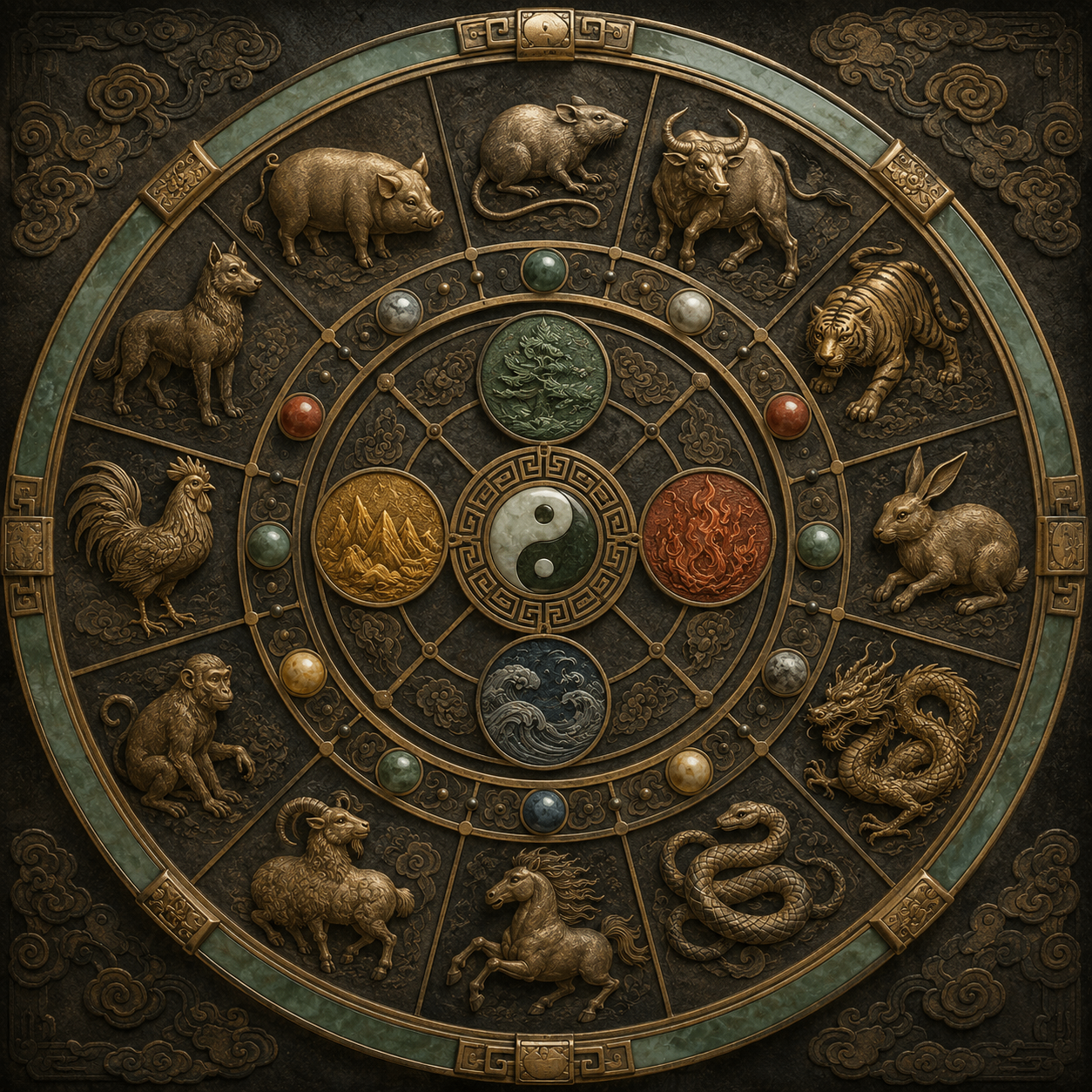
Combined with the Five Phases (Wu Xing — Wood, Fire, Earth, Metal, Water), the 12 animals form a 60-year cycle known as the Sexagenary or Stem-Branch system. The mechanics are straightforward: the five elemental phases, each appearing in both Yin and Yang form, rotate through the 12 animal signs over a 60-year span. The result is that no two years within a 60-year period share both the same animal and the same elemental quality. 2024 was the Year of the Yang Wood Dragon. The Yang Wood Dragon will not return for another 60 years.
What this means in practice is that your birth year carries not just an animal archetype but an elemental quality that shapes how that archetype expresses itself. A Fire Dragon and a Water Dragon share the same fundamental ambition and force of character — but they act from different instincts and in different registers. The Fire Dragon’s energy is outward, magnetic, and radiating; the Water Dragon’s is deeper, more strategic, and more attuned to currents moving beneath the surface. Two people born in Dragon years a decade apart may recognize something in common immediately and still find themselves quite different in orientation.
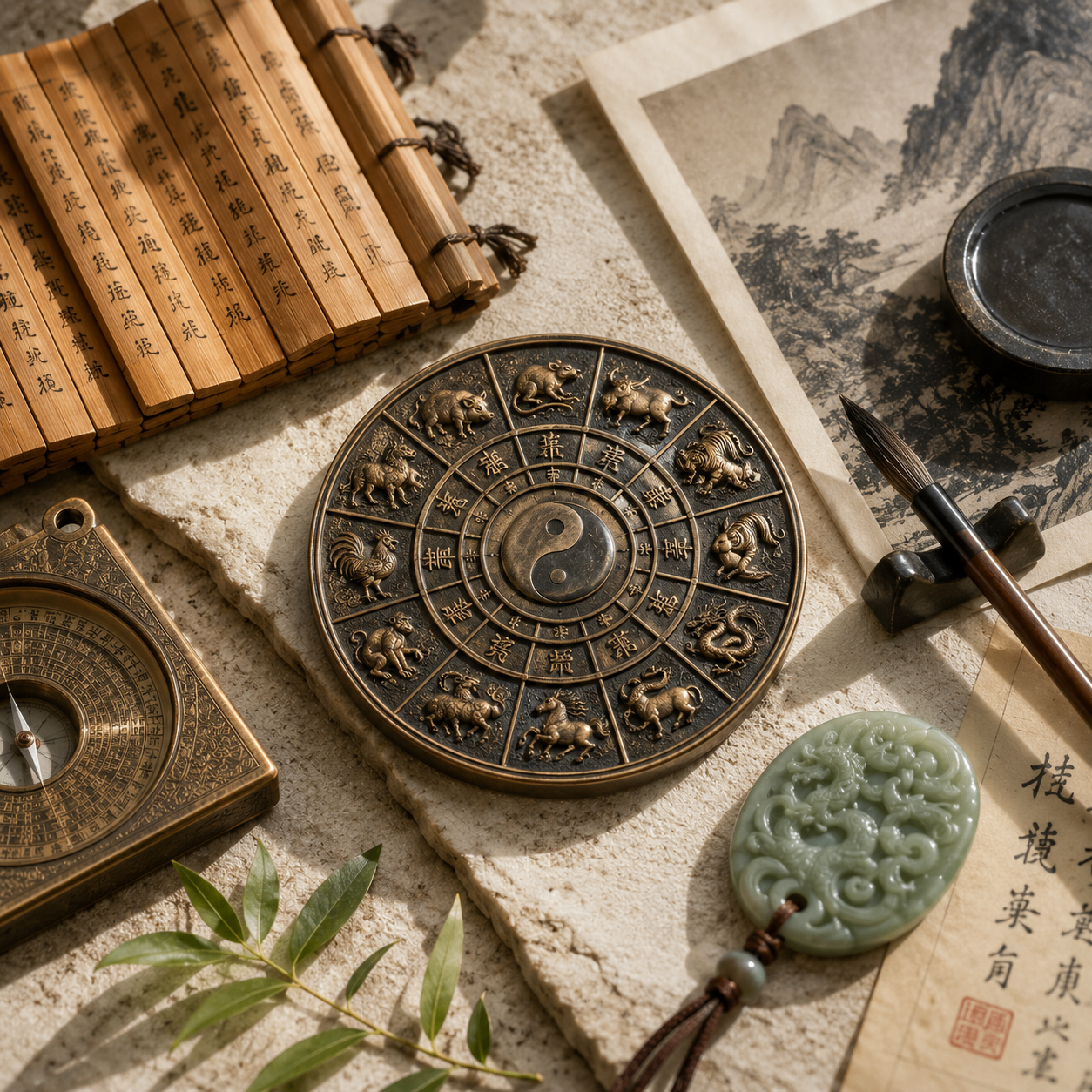
“Your birth year carries not just an animal archetype but an elemental quality that shapes how that archetype expresses itself. A Fire Dragon and a Water Dragon share the same fundamental ambition — but they act from different instincts and in different registers.”
How the Zodiac Functions in Modern Life
The Shengxiao is not an artifact. It is a living cultural framework that continues to shape behavior, demographics, and global commerce in ways that are observable and significant.

The clearest demographic example is the Year of the Dragon. Across several East and Southeast Asian countries, Dragon years reliably produce a measurable increase in birth rates, as families seek the archetype’s longstanding associations with ambition, vitality, and natural authority. The Year of the Goat, by contrast, has sometimes seen a modest dip — driven not by classical teaching but by a folk belief that Goat-year births carry particular hardship, an example of how popular interpretation and classical tradition can diverge over centuries.

Among younger professionals across Asia, zodiac profiles function much as MBTI or Enneagram frameworks do in Western professional contexts: as shared vocabulary for discussing working styles, complementary strengths, and sources of friction in collaboration. To say that someone “works like an Ox” or “thinks like a Monkey” is to invoke a recognized cultural shorthand that carries real descriptive content — without the weight of prediction or fate.
And commercially, the Shengxiao drives significant global activity that becomes more visible once you know to look for it. Luxury fashion houses produce annual Lunar New Year capsule collections built around the governing animal. Hospitality brands, consumer goods companies, and financial institutions worldwide tailor campaigns to the year’s sign. The zodiac is not a niche cultural curiosity; it is one of the most commercially active symbolic systems in the modern world.
What the Shengxiao Actually Offers
The Chinese Zodiac, taken seriously, is something different from what most Western readers have encountered. It is not a personality quiz, not a fortune-telling system, and not a simplified cousin of Western astrology. It is a set of carefully observed archetypes, developed over more than two thousand years, that describe fundamental human temperaments and behavioral orientations with a precision that rewards genuine engagement.
It does not tell you what will happen. It describes tendencies. It offers a language for understanding your own characteristic patterns — and for recognizing the genuinely different patterns in the people around you. Used that way, it is less a system of prediction than a framework for self-awareness: a form of cultural wisdom that has remained legible and useful across centuries precisely because it is grounded in honest observation of how people actually are.
That depth is worth sitting with. The placemat was just the beginning.
“The Shengxiao is less a system of prediction than a framework for self-awareness: a form of cultural wisdom that has remained legible and useful across centuries precisely because it is grounded in honest observation of how people actually are.”
Discover Your Chinese Zodiac & 2026 Focus Report
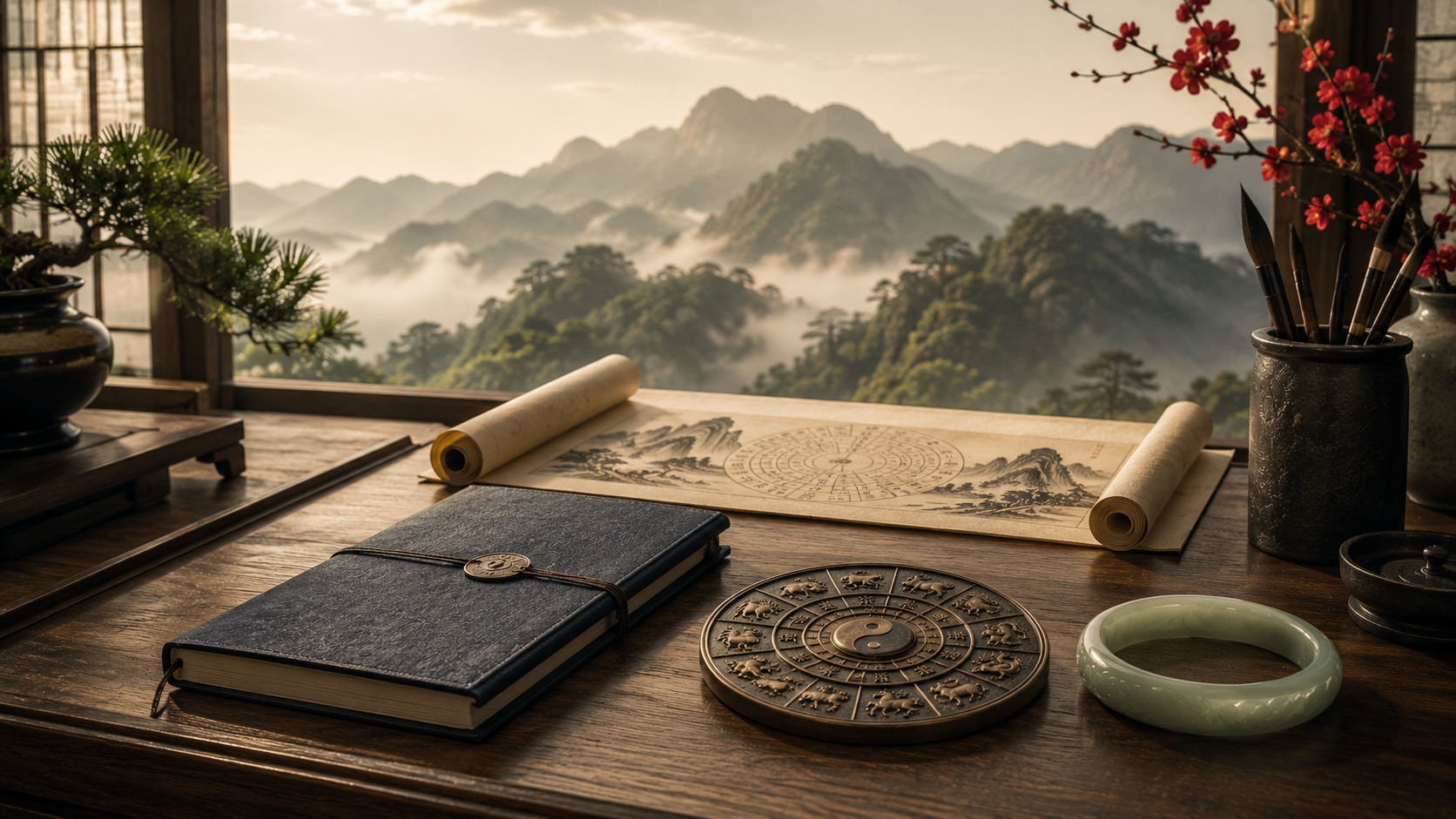
Your birth date reveals far more than your Chinese zodiac animal.
Explore your complete Shengxiao profile, Five Elements analysis, lucky colours, and annual Feng Shui guidance — all drawn from more than two thousand years of classical Chinese wisdom, and personalized to you.
Discover Your Chinese Zodiac & 2026 Focus Report
Learn your Chinese Zodiac, Five Elements profile, lucky colours, and annual Feng Shui guidance through our personalized Chinese Zodiac & 2026 Focus Report.
Find your zodiac sign and element →Receive monthly Chinese zodiac guidance, seasonal Feng Shui insights, classical Chinese wisdom, and early access to new YukDao collections.
Recommended Products
A small selection of pieces from the YukDao house that read alongside this essay.
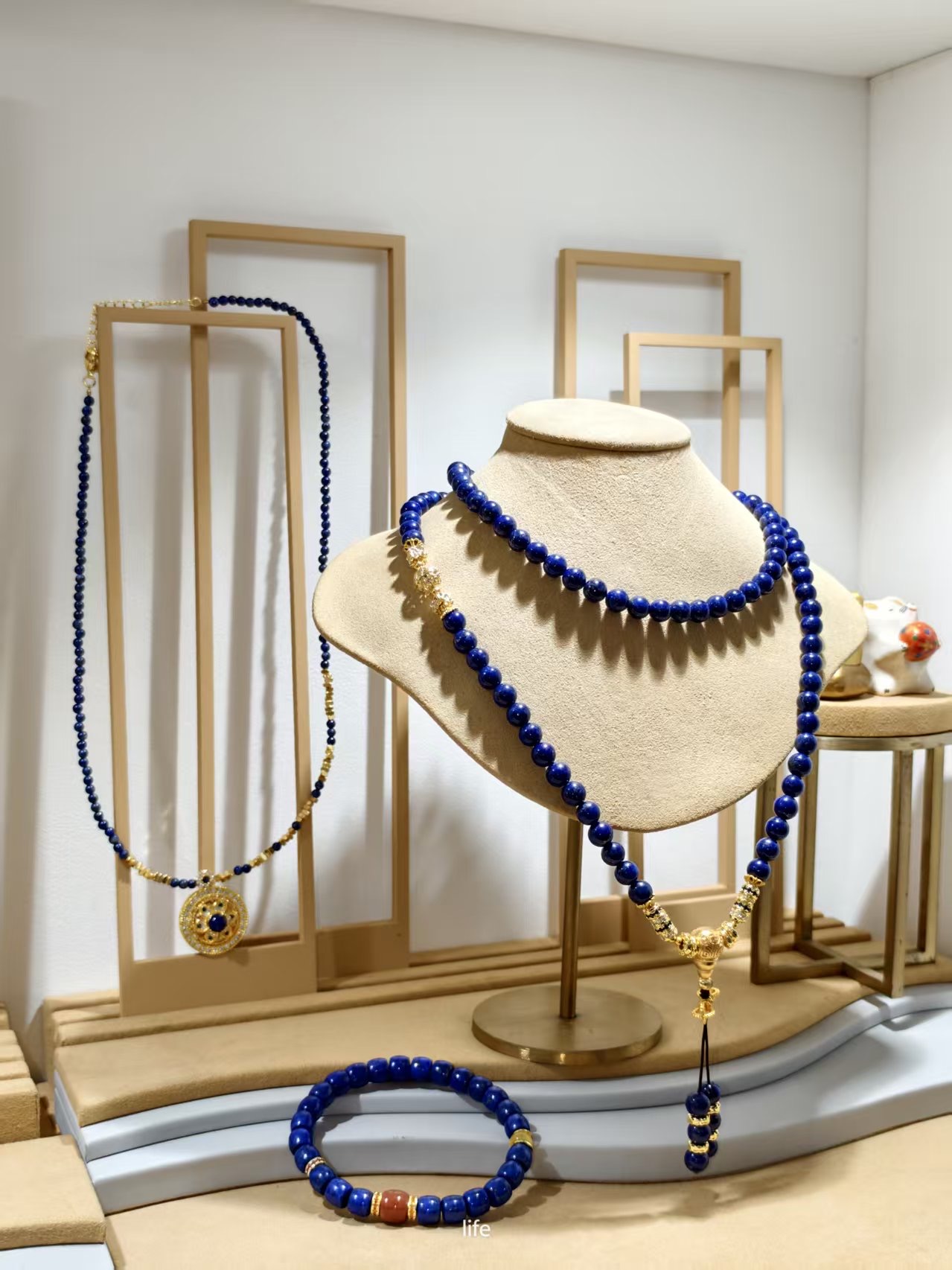
Lapis Wisdom Bracelet
A long mala-form necklace in deep Afghan lapis, anchored by a hand-chased gold counter-bead.
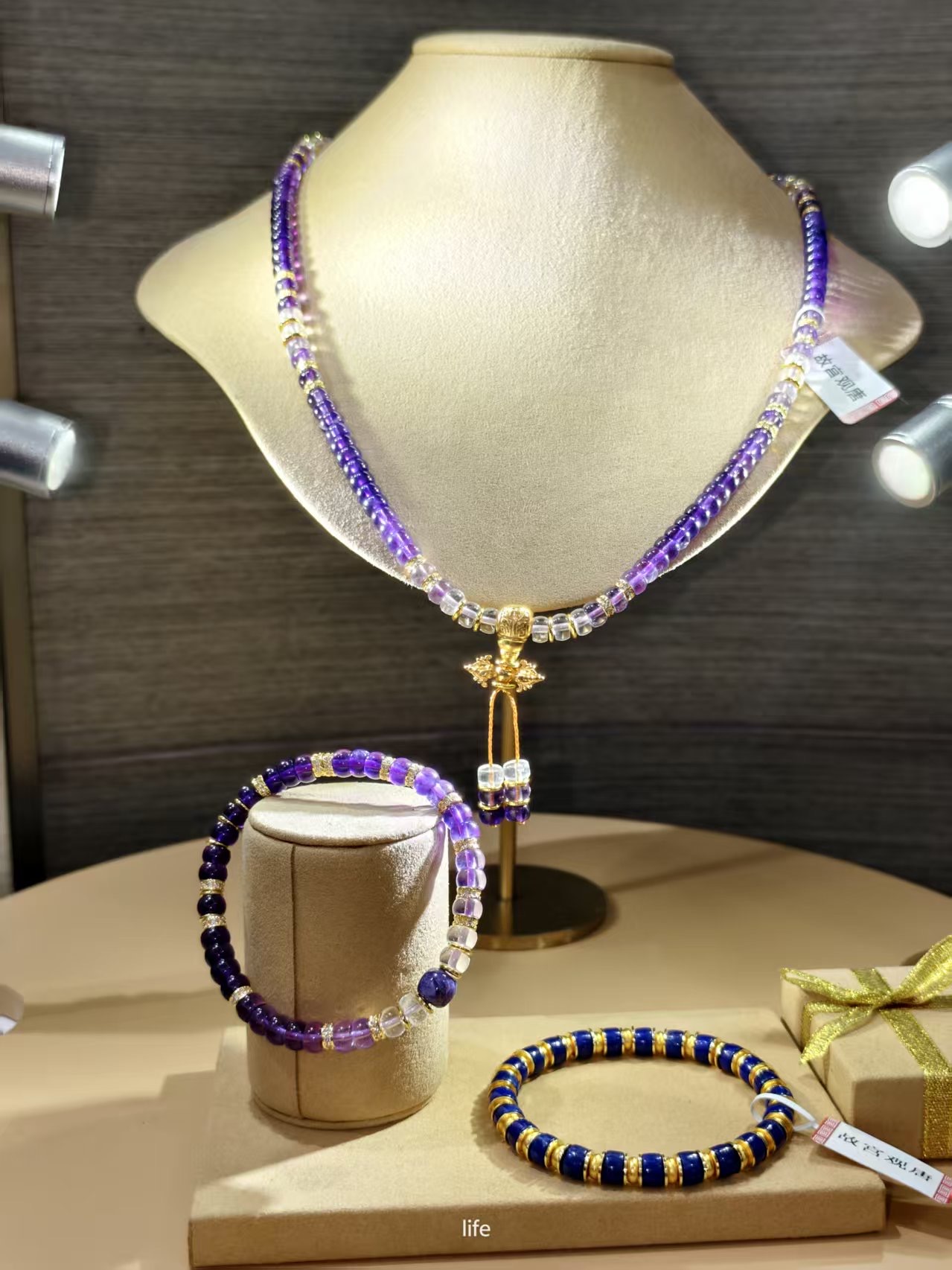
Amethyst Harmony Bracelet
A double strand of graduated amethyst and clear quartz, finished with a hand-knotted vajra clasp.
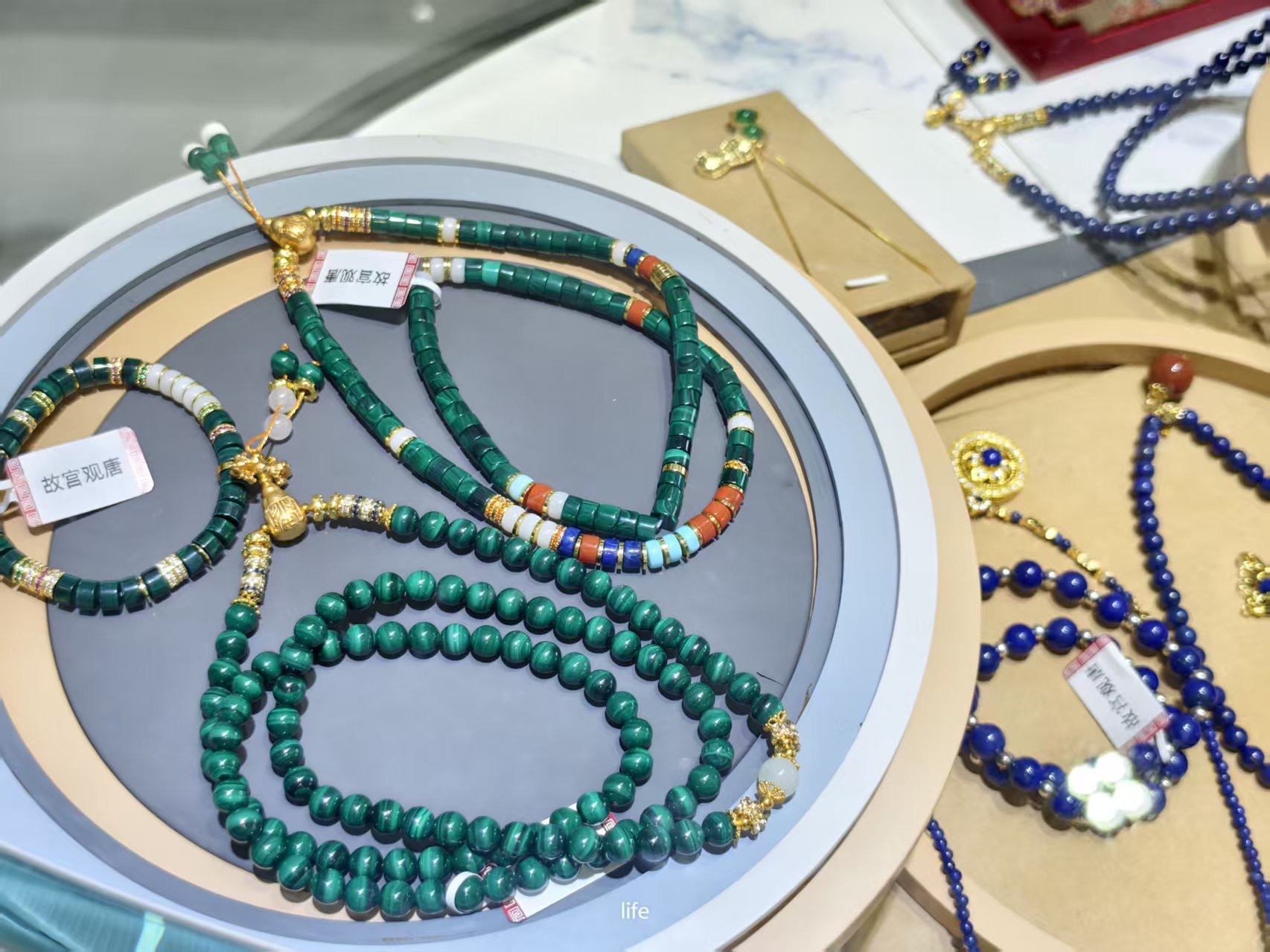
Malachite Guardian Bracelet
A long meditation strand in banded malachite, accented with white jade and carnelian counters.
- Chinese Zodiac
- Shengxiao
- Chinese Astrology
- Wu Xing
- Five Elements
- Chinese Philosophy
- Chinese Wisdom
- Lunar New Year
- Chinese Calendar
- Chinese Culture
- Classical Chinese Wisdom
Related Articles
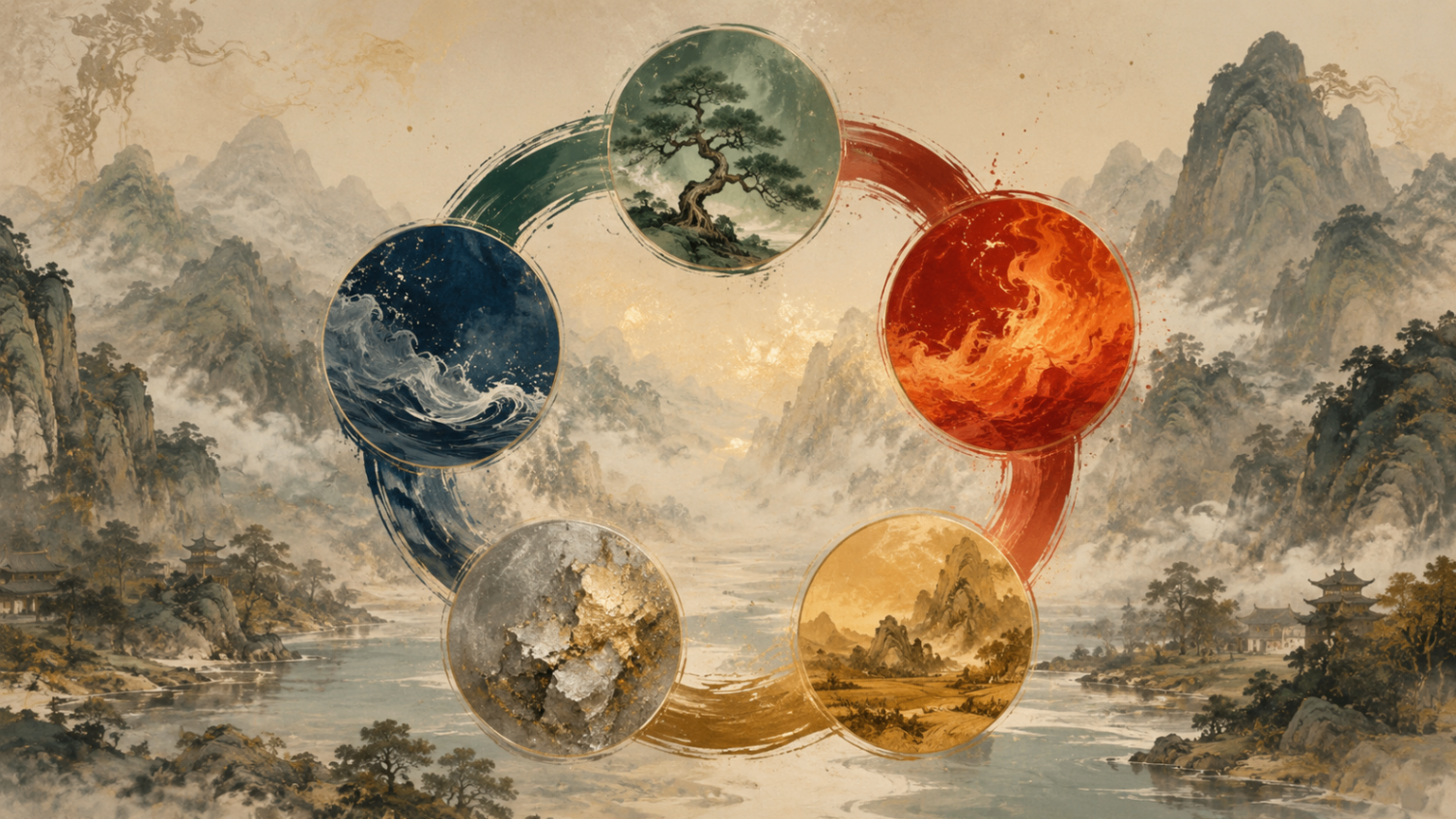
The Five Phases: What Ancient China Understood About Change That the Modern World Forgot
Wu Xing is not mysticism. It is one of history's most practical frameworks — used by emperors, physicians, and farmers for over two thousand years to understand the patterns that govern everything.
Lucky Colors in Chinese Culture: Your Element's Palette
In Chinese thought, color is not decoration. It is a structured language — a way of describing the natural forces that shape a season, a direction, a temperament, or a home.

The Hill With Two Sides: What Yin and Yang Actually Mean
Most people have encountered the symbol their entire lives — but few have been told where it actually comes from.