
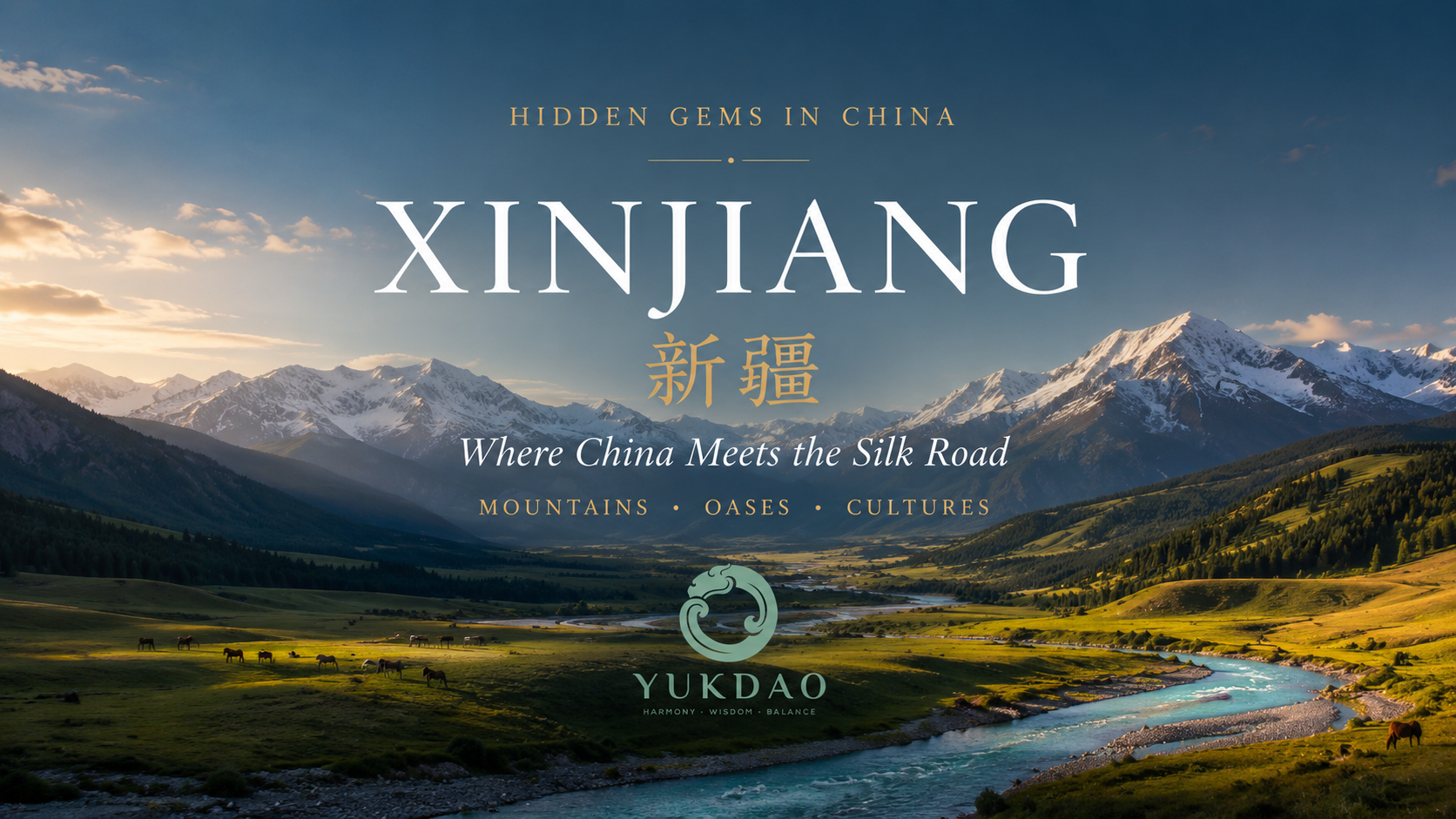
Xinjiang: Where China Meets the Silk Road
Snow-covered mountains, alpine grasslands and the oasis cities where China meets the Silk Road.
Mention Xinjiang and many people immediately picture desert.
Sand dunes. Camels. The Silk Road disappearing toward the horizon.
Those images belong to the story, but they reveal only one side of a region whose geography is far more dramatic than the stereotype suggests.
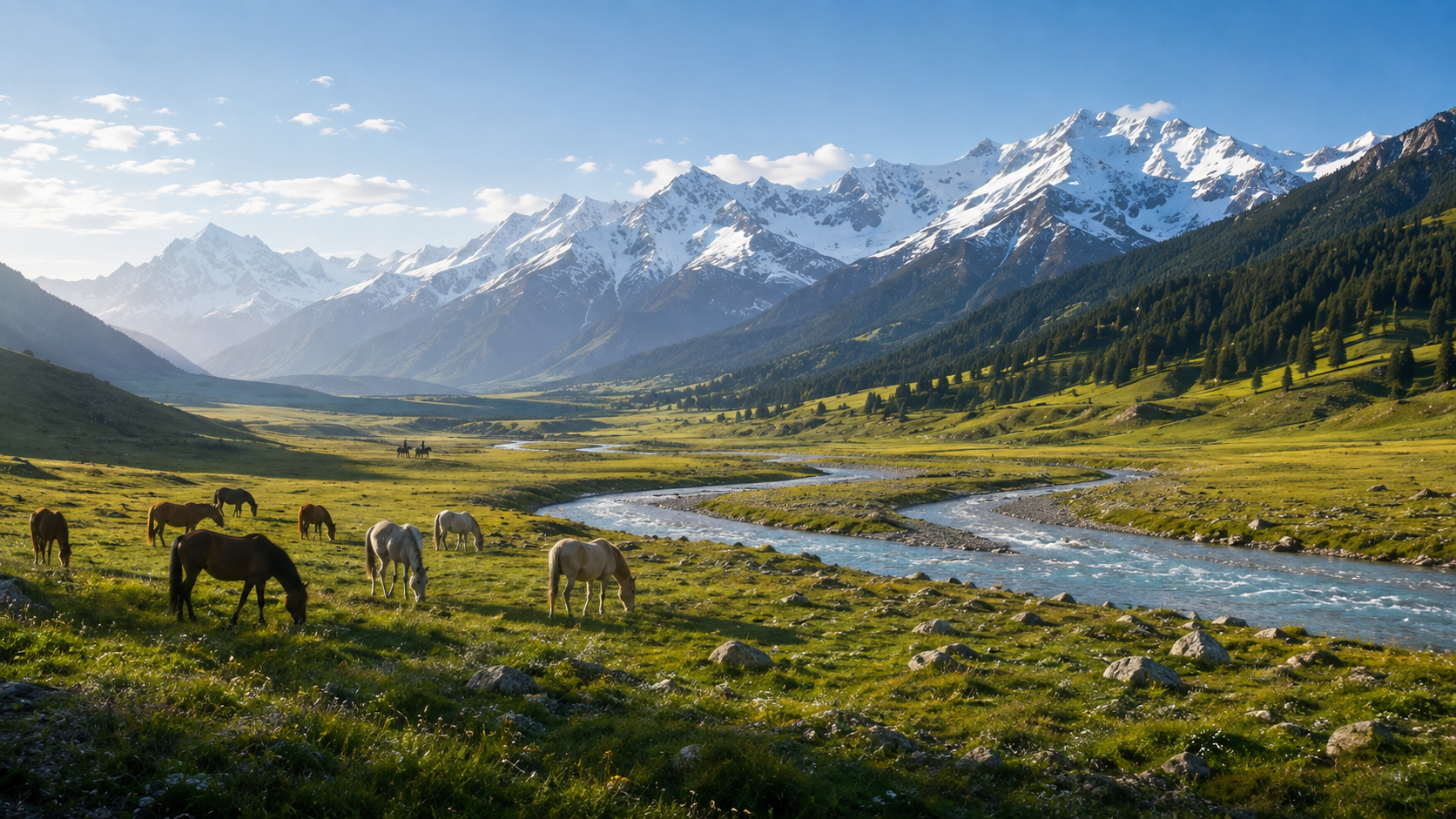
Travel north and immense grasslands unfold beneath snow-covered mountains. Rivers descend from glaciers. Horses graze in alpine valleys. Elsewhere, cities grew around oases at the edges of some of the world’s most formidable deserts.
For centuries, routes passing through this landscape connected communities across China, Central Asia and lands much farther west.
Ideas travelled with people.
So did textiles, music, food, artistic techniques, religions and languages.
Xinjiang’s story is therefore difficult to reduce to a single landscape, a single people or even a single cultural tradition.
Its defining characteristic may be its position between worlds.
A Region Larger Than Many Countries
To understand Xinjiang, start with scale.
Located in China’s far northwest, the Xinjiang Uyghur Autonomous Region occupies roughly one-sixth of the country’s land area.
Distances that appear modest on a map can involve journeys of hundreds of kilometers.
Within that enormous territory are mountain systems, high-altitude grasslands, river valleys, basins, deserts and oasis settlements.
Three great geographic features help define the region:
the Tianshan Mountains through the center, the Tarim Basin and Taklamakan Desert to the south, and the Junggar Basin to the north.
These landscapes did more than determine scenery.
They shaped where people could travel, where settlements could survive, where agriculture developed and where routes of exchange emerged.
Geography is one of the keys to understanding Xinjiang.
Xinjiang Is Not Just Desert
The Taklamakan is one of Xinjiang’s most famous landscapes, so its dunes often dominate outside perceptions of the region.
But look north toward the Tianshan Mountains and the image changes completely.
Snow remains on high peaks.
Glacial water feeds rivers.
Mountain valleys support forests and grasslands.
Pastoral landscapes stretch beneath enormous skies.
This contrast can be startling.
Within the same region, the environment can shift from some of Eurasia’s driest terrain to cool alpine valleys.
The reason lies partly in the mountains.
High ranges intercept moisture and store enormous quantities of water as snow and ice. Rivers descending from these mountains have historically supported settlements and agriculture in otherwise arid landscapes.
Without the mountains, many of Xinjiang’s oasis communities could not have developed in the same way.
The Tianshan Mountains
The name Tianshan (天山) means “Heavenly Mountains.”
The range extends far beyond China’s modern borders, forming one of Central Asia’s great mountain systems.
Within Xinjiang, the Tianshan creates a dramatic geographic divide.
Its peaks rise above valleys, lakes and grasslands that can look almost impossibly distant from the desert imagery commonly associated with the region.
For communities living around these landscapes, the mountains are not simply scenery.
They influence water, pasture, agriculture, seasonal movement and settlement.
The horses grazing beneath snow-covered peaks are therefore more than a beautiful photograph.
They reveal another relationship between people and landscape that has existed across the wider Central Asian world for centuries.
Between Mountains and Desert
South of the Tianshan lies the Tarim Basin.
At its center is the Taklamakan Desert.
Rather than crossing directly through the most difficult parts of the desert, historical travelers often moved between oasis settlements around its edges.
Water made these places possible.
Streams descending from surrounding mountain systems could support agriculture, trees, settlements and markets before eventually disappearing into the dry basin.
From a distance, an oasis can seem like a small patch of green.
Historically, it could mean survival.
And when a chain of such places formed across enormous distances, it created the conditions for long-distance exchange.
The Silk Road Was Never One Road
The phrase “Silk Road” can create a misleading image.
It sounds like a single ancient highway stretching neatly from China to Europe.
In reality, what we now call the Silk Road consisted of shifting networks of routes connecting different regions across Eurasia.
Xinjiang occupied a crucial geographic position within those networks.
Travelers moving between the Chinese heartland and Central Asia encountered mountain passes, deserts and oasis settlements. Farther east, the same networks passed through Dunhuang, where the Mogao Caves preserve some of the clearest surviving evidence of that exchange.
Routes divided.
They rejoined.
Some flourished during particular periods and declined during others.
And silk was only one of countless things moving through them.
Textiles, horses, glass, metals, spices, artistic motifs and technologies travelled.
So did beliefs, stories, musical traditions and knowledge.
The result was not a simple exchange between an “East” and a “West.”
It was a long process involving many communities positioned between them.
Oasis Cities
Across Xinjiang, historic settlements developed wherever geography allowed reliable access to water and cultivable land.
These oasis cities became much more than rest stops.
They were places where merchants traded, artisans worked, languages met and local traditions developed.
Different routes passed through places such as Kashgar, Khotan, Turpan and other settlements across the region.
Each occupied its own geographic and historical context.
Among them, Kashgar became one of the best-known crossroads in the western Tarim Basin.
Kashgar: A Living Crossroads
Kashgar sits near the western edge of the Tarim Basin, where routes historically connected toward Central Asia and across surrounding mountain systems.
Its location helped make it an important commercial and cultural center.
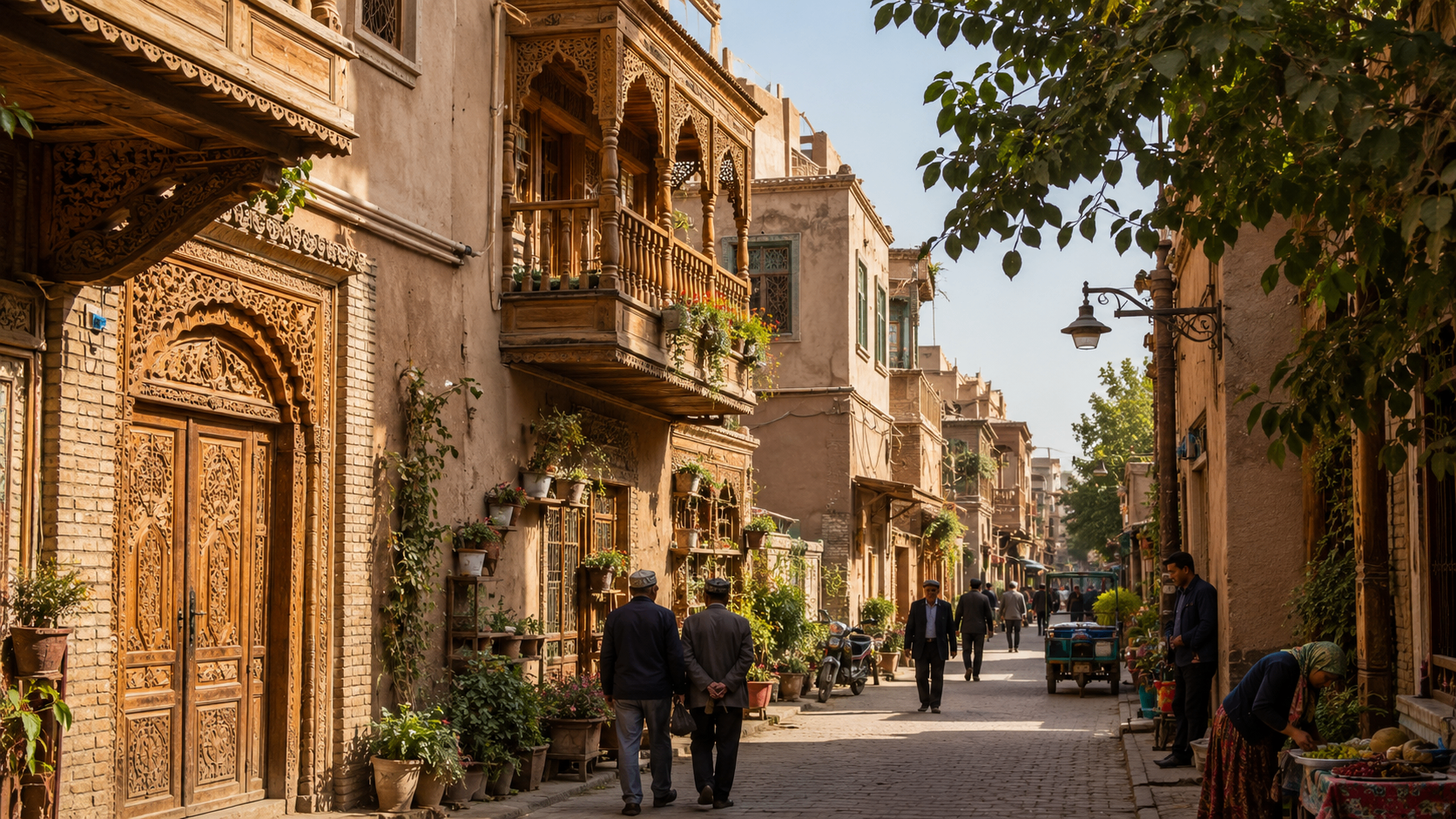
Yet describing Kashgar only as a “Silk Road city” risks turning a living place into a historical exhibit.
The city has continued to change.
People work, shop, eat, raise families and navigate contemporary life within a place carrying many layers of history.
That tension between past and present is part of what makes Kashgar interesting.
Traditional architectural forms can exist beside modern infrastructure.
Old craft practices can coexist with contemporary businesses.
A street may contain details inherited from older building traditions while functioning entirely within present-day life.
The Silk Road is part of Kashgar’s history.
It is not the entirety of Kashgar’s identity.
Architecture Built for Place
Traditional architecture across Xinjiang varies considerably, but environmental conditions have always mattered.
In oasis settlements, buildings historically needed to respond to intense sunlight, dry conditions and dramatic seasonal temperatures.
Courtyards could provide shade and privacy.
Narrow passages could reduce exposure to the sun.
Earth, brick and timber became important materials in different places.
Carved wooden doors, columns, balconies and geometric decoration introduced craftsmanship into everyday architecture.
These details reveal something important about traditional design.
Decoration was rarely isolated from practical life.
The material available, the climate, local skills and cultural preferences all shaped the built environment together.
Many Cultures, One Vast Region
No single community can represent all of Xinjiang.
The region is home to multiple ethnic and cultural groups, including Uyghurs, Han Chinese, Kazakhs, Hui, Mongols and others.
Different communities have their own histories, languages, food traditions, music, craft practices and relationships with particular landscapes.
Some traditions developed in oasis cities.
Others are strongly connected with pastoral environments.
Others reflect migration, trade or exchange over long periods.
This diversity is one reason simplistic descriptions of “Xinjiang culture” can be misleading.
A textile from one community, a dish associated with another, and an architectural tradition from a particular oasis should not automatically be treated as interchangeable.
Understanding the region requires allowing those differences to remain visible.
Craft as Cultural Memory
Objects often reveal cultural exchange more quietly than monuments.
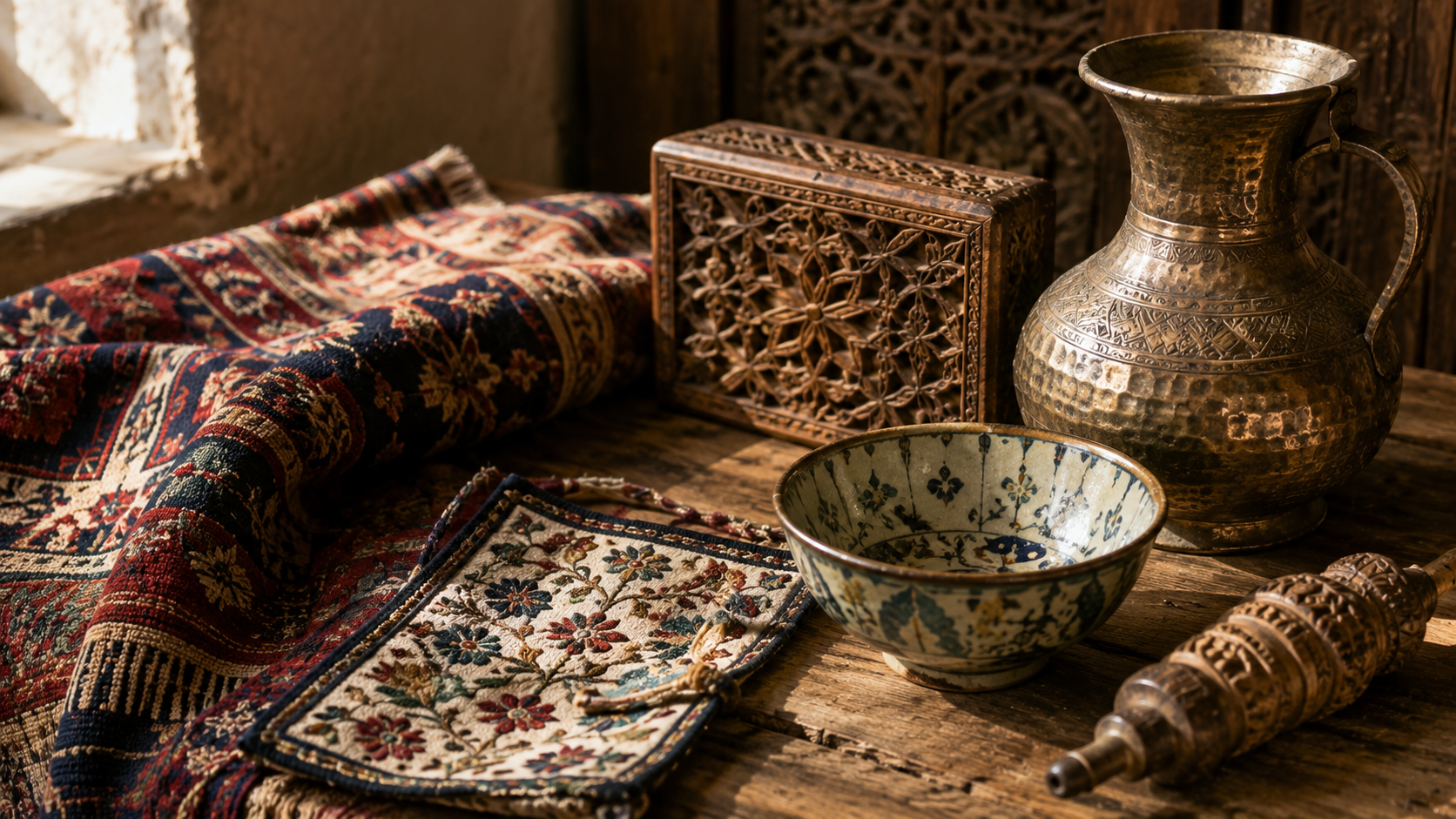
Look closely at a woven textile and the story can appear in its fibers.
Patterns repeat.
Colors carry local preferences.
Techniques pass between generations.
Materials reveal what was available locally and what arrived through trade.
Across Xinjiang, traditions of textile making, embroidery, wood carving, metalwork, ceramics and other crafts developed in different communities and periods.
Geometric patterns are particularly visible across many forms of regional decorative art, though their meanings, styles and applications vary.
Craft should not be understood merely as decoration.
A carved wooden object contains evidence of tools and technique.
An embroidered textile records hours of labor.
A metal vessel preserves the marks of its maker.
These objects connect design with everyday life.
And because Xinjiang sat within long-distance networks of movement, its material culture also reminds us that craftsmanship rarely develops in complete isolation.
Ideas travel too.
Food, Agriculture and Hospitality
Food provides another way of reading Xinjiang’s geography.
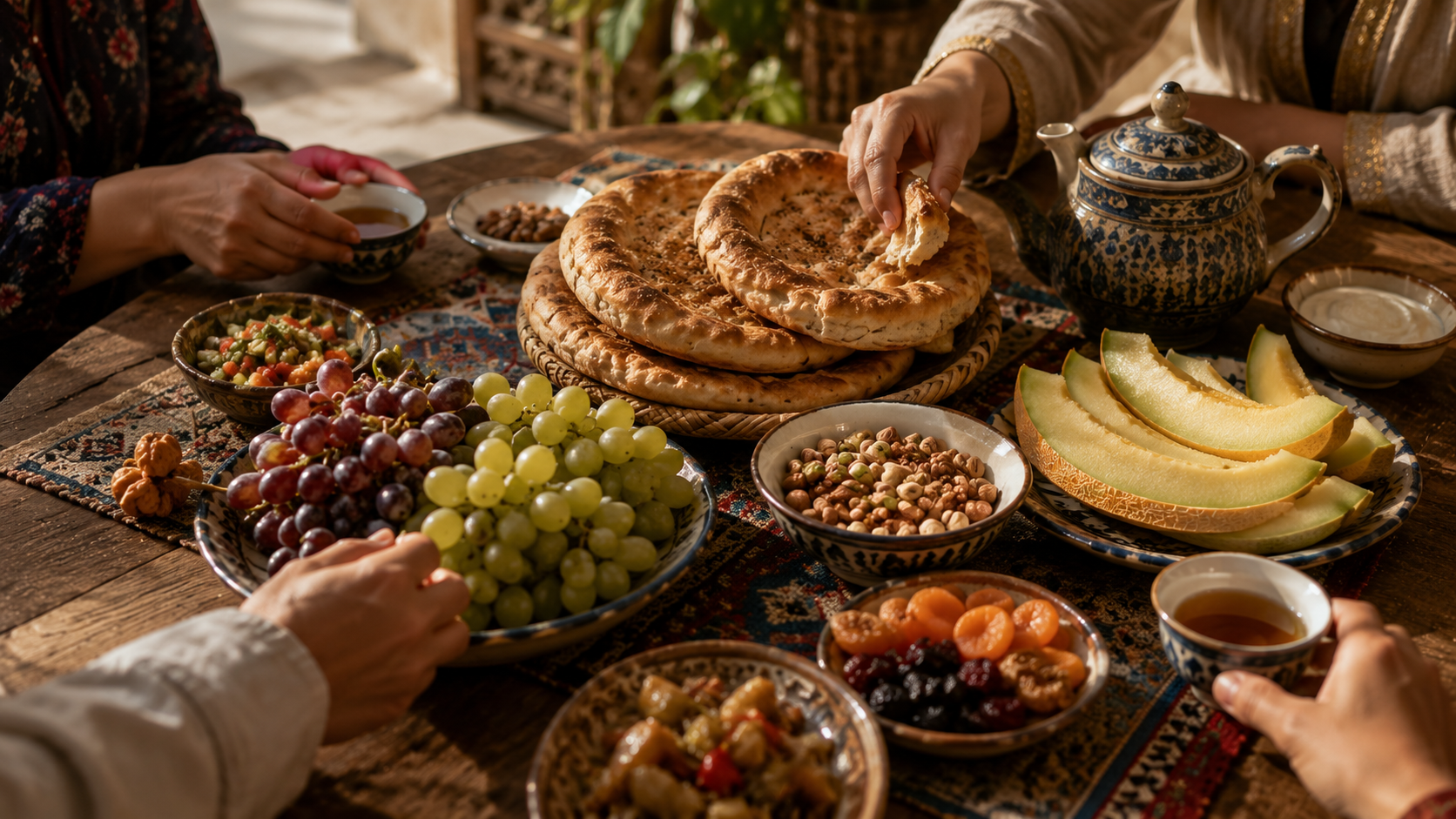
Wheat supports breads that appear in many forms across the region.
Oasis agriculture produces fruits for which Xinjiang has long been known, including grapes and melons.
Dry conditions and intense sunlight can create excellent environments for growing and drying fruit.
Nuts, dairy products, meat, noodles, rice dishes, breads and tea appear in different combinations across the food traditions of the region’s communities.
But ingredients tell only part of the story.
There is also the table.
Bread is broken.
Tea is poured.
Fruit is placed where everyone can reach it.
Meals become social spaces.
The specific dishes and customs vary between families and communities, but hospitality provides a reminder that culture is not found only in museums or historic monuments.
Much of it exists in ordinary acts repeated every day.
Why Xinjiang Feels So Different
For travelers familiar with eastern China, arriving in Xinjiang can challenge expectations of what China looks like.
The distances feel different.
The landscape opens.
Mountain systems connect visually toward Central Asia.
Architecture changes.
Languages heard in public spaces may change.
Food changes.
The history of exchange becomes unusually visible.
None of this makes Xinjiang somehow separate from Chinese history.
Instead, it demonstrates how geographically and culturally varied China has always been.
A country spanning such an enormous area inevitably contains regions shaped by very different environments and historical connections.
Xinjiang makes that diversity particularly visible.
Seeing Xinjiang Beyond the Postcard
The easiest way to represent Xinjiang is through extremes.
The enormous desert.
The snow-covered mountain.
The ancient-looking street.
The colorful textile.
The table overflowing with fruit.
Each image can be beautiful.
But none is sufficient alone.
Xinjiang becomes more interesting when the images are connected.
Mountains provide water.
Water supports oases.
Oases support settlements.
Settlements become places of exchange.
Exchange influences food, craft, language and architecture.
Routes through these landscapes connected communities over centuries.
That relationship between geography and culture is what makes Xinjiang such a compelling part of the Hidden China series.
It is not hidden because nobody knows its name.
It is hidden because the familiar images reveal only fragments of a much larger story.
“To understand Xinjiang, follow the landscape. Mountains become rivers, rivers create oases, and oases become crossroads.”
- Hidden China
- Xinjiang China
- Xinjiang Travel
- Silk Road China
- Kashgar China
- Tianshan Mountains
- Xinjiang Culture
- Xinjiang Food
Related Articles
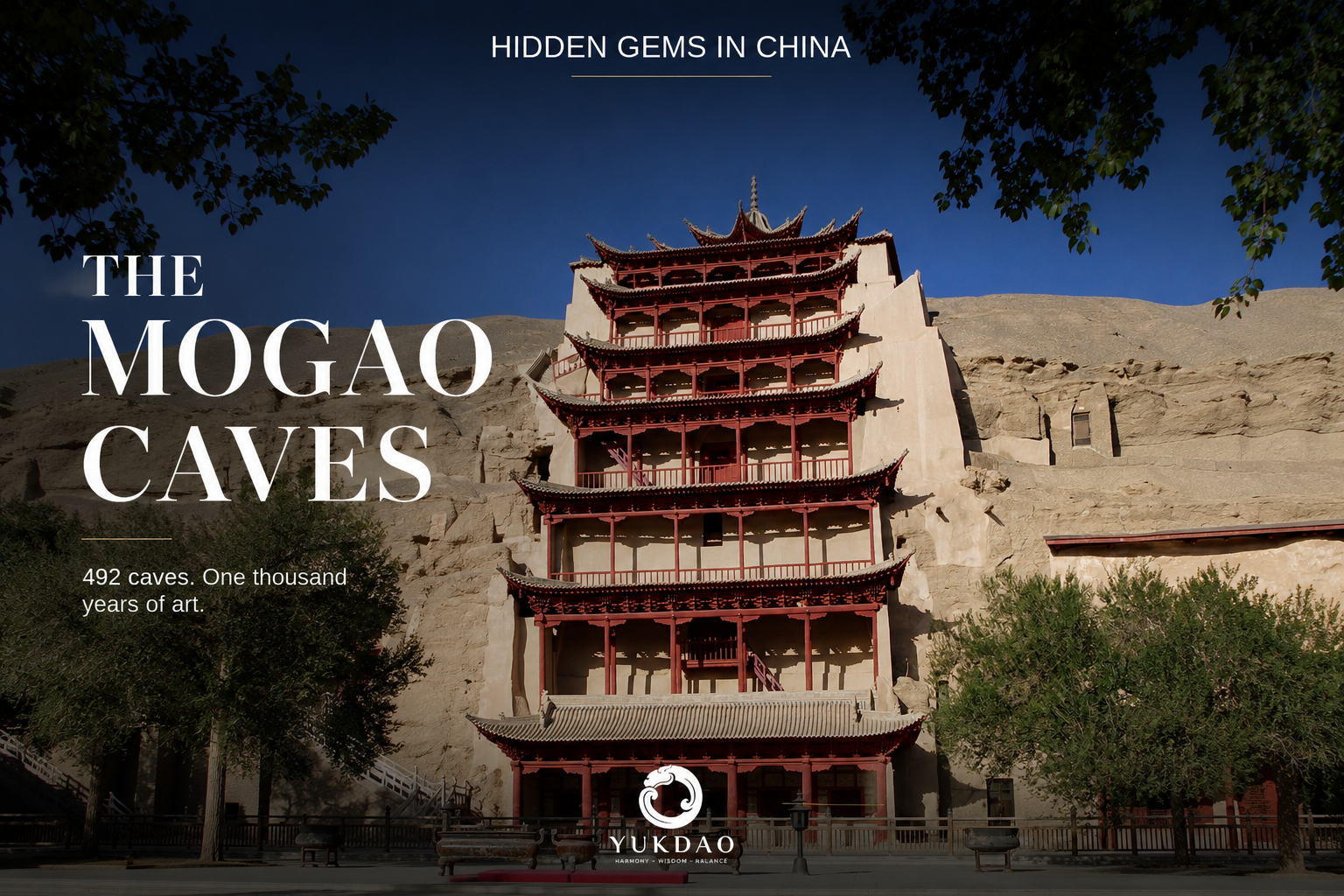
The Mogao Caves: A Thousand Years of Art Along the Silk Road
Carved into the desert cliffs near Dunhuang, the Mogao Caves preserve a thousand years of Buddhist art, Silk Road exchange and human history.
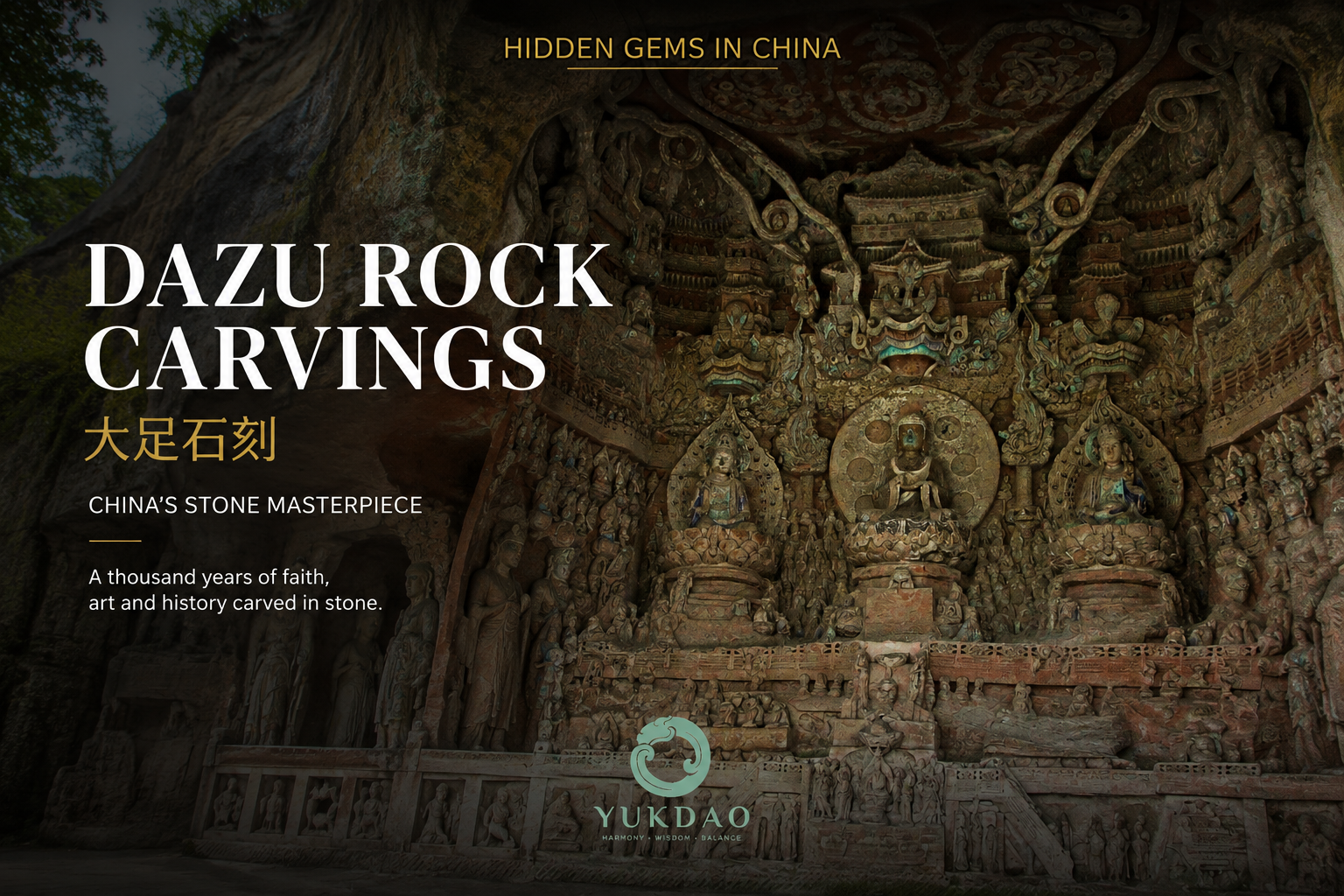
The Dazu Rock Carvings: A Thousand Years Carved in Stone
Across the hills of Chongqing, more than 50,000 carved figures reveal a world where Buddhist, Taoist and Confucian traditions met everyday life.
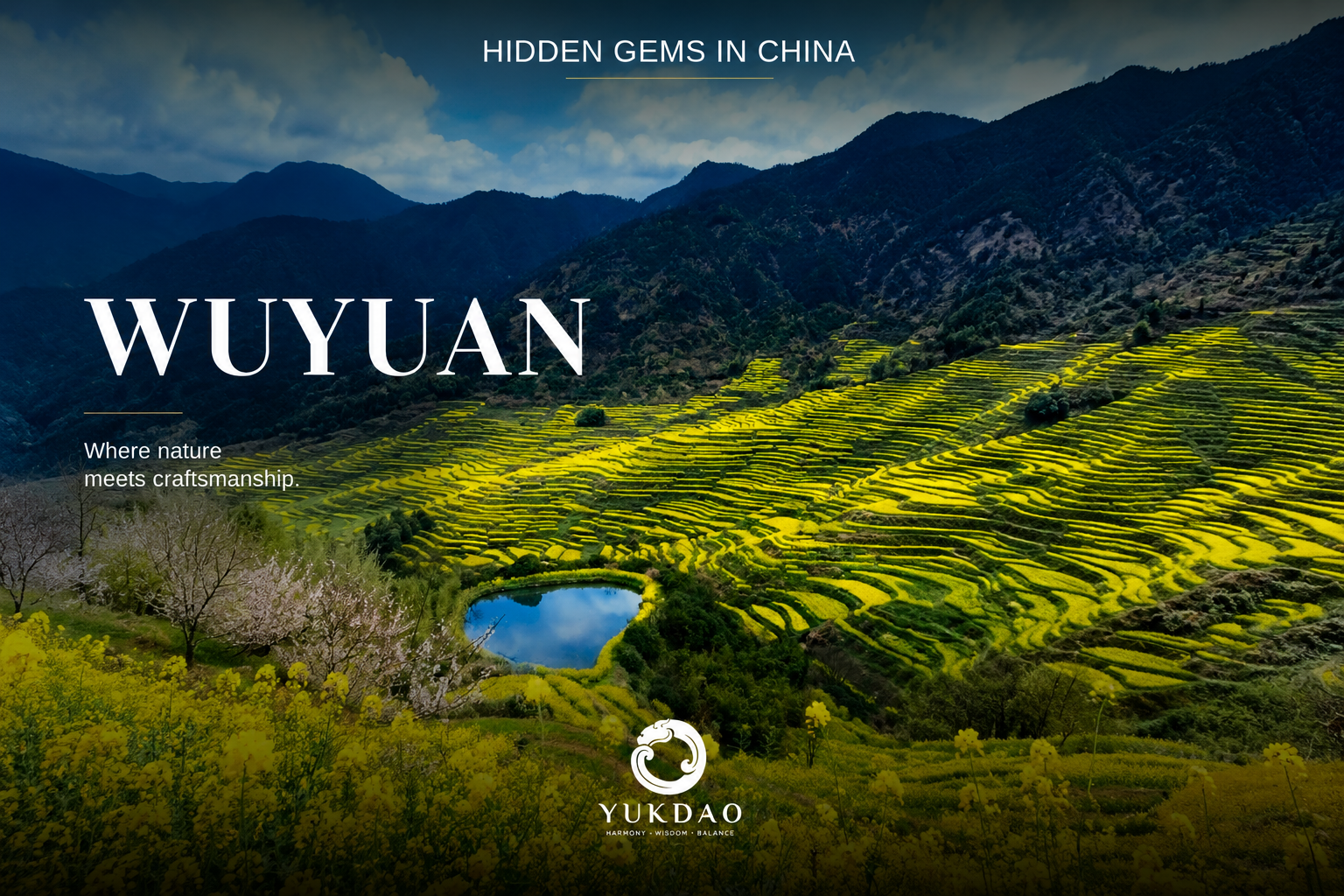
Wuyuan: Where Nature Meets Craftsmanship
Golden terraces, whitewashed villages and centuries-old carving traditions reveal a quieter side of China in Wuyuan.
Keep exploring China
Hidden places, cultural stories and thoughtful ideas, one letter at a time.