Entering Autumn: Chinese Seasonal Wisdom for the Turn of the Year
In early August, when the afternoons are still heavy enough to flatten a whole city, the Chinese calendar quietly announces that autumn has begun. It seems like a mistake. The cicadas have not stopped. Nothing has cooled.
But the traditional calendar is not describing the weather. It is describing direction. 立秋 — Lìqiū, the Beginning of Autumn — marks the moment the year stops expanding and starts drawing back in. The heat that remains is heat already leaving.
This is one of the quieter gifts of the twenty-four solar terms: they teach you to notice a change before it becomes obvious. What follows is a guide to the four terms that carry us into autumn in 2026, the element that governs the season, and the small adjustments — in eating, in the home, in attention — that Chinese tradition has attached to them.
Four Terms, One Turning
The Chinese agricultural calendar divides the solar year into twenty-four 節氣 (jiéqì), solar terms, each roughly fifteen days. Four of them carry the passage from summer into full autumn.
Beginning of Autumn
Autumn is declared while the heat still holds. The calendar marks a turn the body cannot yet feel.
End of Heat
The heat begins to withdraw. Nights lengthen noticeably and the air loses its heaviness.
White Dew
Dew appears on grass at dawn — the first visible evidence that the air has cooled below the ground.
Autumn Equinox
Day and night are equal. From here, yin exceeds yang for the rest of the year.
Read together, the sequence is a description of withdrawal: heat declared over, heat actually receding, moisture condensing, light balancing and then tipping. No single day feels dramatic. The whole is unmistakable.
The Season the Calendar Sees

Western seasons are keyed to the solstices and equinoxes — autumn begins when the light balances in late September. The Chinese calendar places the equinox in the middle of autumn rather than at its start, which pushes the whole season roughly six weeks earlier.
That difference is not arbitrary. The solar terms were built for farmers, who needed to know when to act, not when a change had finished happening. By the equinox it is too late to prepare for harvest; by Lìqiū it is exactly the right time.
Why an early autumn is useful
Living by this calendar means you begin adjusting while conditions are still comfortable. You start sleeping earlier before the dark forces you to. You begin clearing before the year closes in. The tradition treats anticipation as a form of care.
Autumn Belongs to Metal 金
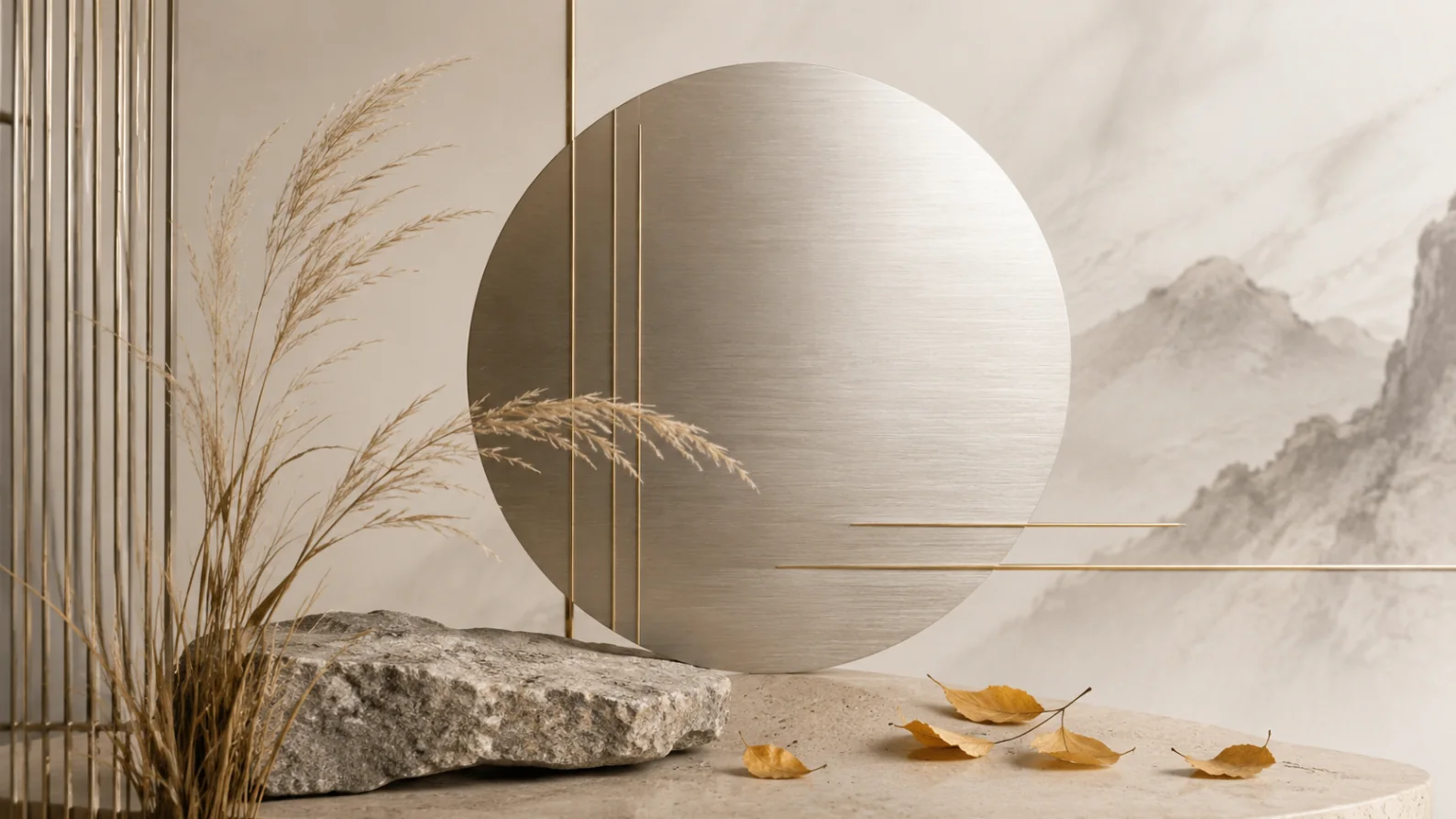
In the Five Element framework (五行), each season is governed by one phase. Spring is Wood, expanding. Summer is Fire, peaking. Autumn is Metal (金): the phase of contraction, refinement, clarity and release.
Metal is not cold or hard in this system, though it can be both. Its character is discernment — the capacity to separate what matters from what does not, and to let the second go without argument. A tree in autumn does not mourn its leaves.
The correspondences
Metal governs the lungs and large intestine, the sense of smell, the colour white, the direction west, and the emotion classically translated as grief. Dryness is its climate. This is why autumn advice in Chinese tradition is so consistently about moisture: dry air, dry skin, dry cough, dry mood.
What the season asks
Metal is the phase of editing. Finish rather than start. Decide rather than explore. Return the borrowed thing, close the open loop, say the sentence you have been rehearsing since spring. Autumn rewards completion.
If you want to see how the elements sit in your own chart rather than in the season generally, our Complete BaZi Analysis reads your Four Pillars and shows which elements your birth chart actually leans on — some people find Metal season clarifying, others find it thinning.
Eating Into Autumn
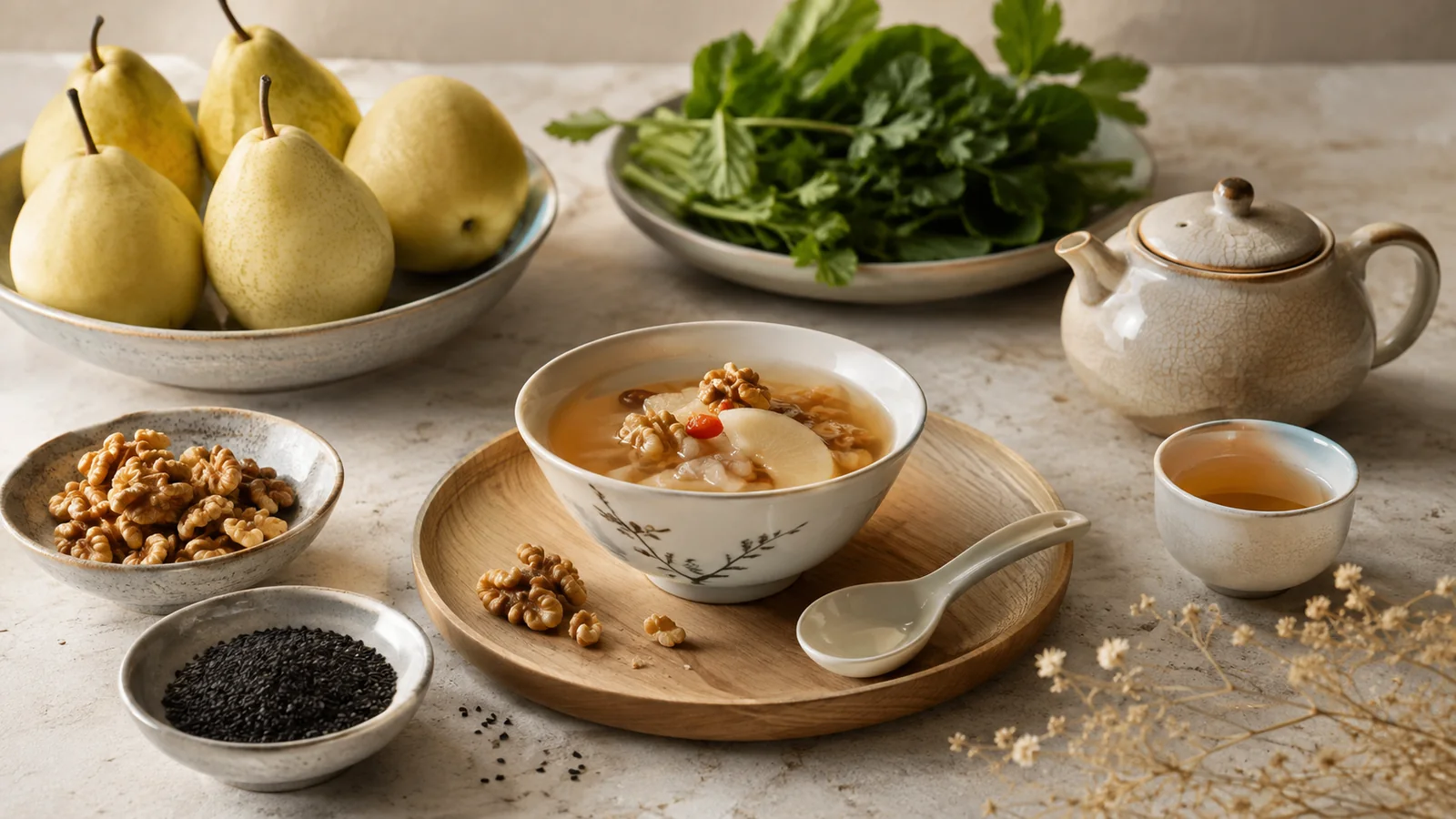
The governing principle of autumn eating is 潤燥 (rùn zào): moisten dryness. As the air loses water, the body is understood to lose it too — first from the lungs and skin, then from mood and sleep.
White foods for a white season
Metal’s colour is white, and the classic autumn foods follow it almost literally: Asian pear, lotus root, white fungus (銀耳), lily bulb, daikon, almond, tofu, white sesame. Steamed pear with rock sugar is the household remedy for an autumn cough in half of China.
Warm, wet, slow
Cooking method matters as much as ingredient. Soups, congees, braises and steamed dishes carry moisture into the body; grilling, roasting and deep-frying take it out. This is the season salads quietly leave the table.
Walnuts, sesame and the long view
Black sesame and walnuts appear constantly in autumn eating, less for immediate relief than for accumulation — they are considered nourishing to the deeper reserves the body will draw on in winter. Autumn food is preparation as much as comfort.
A Quiet Home Reset
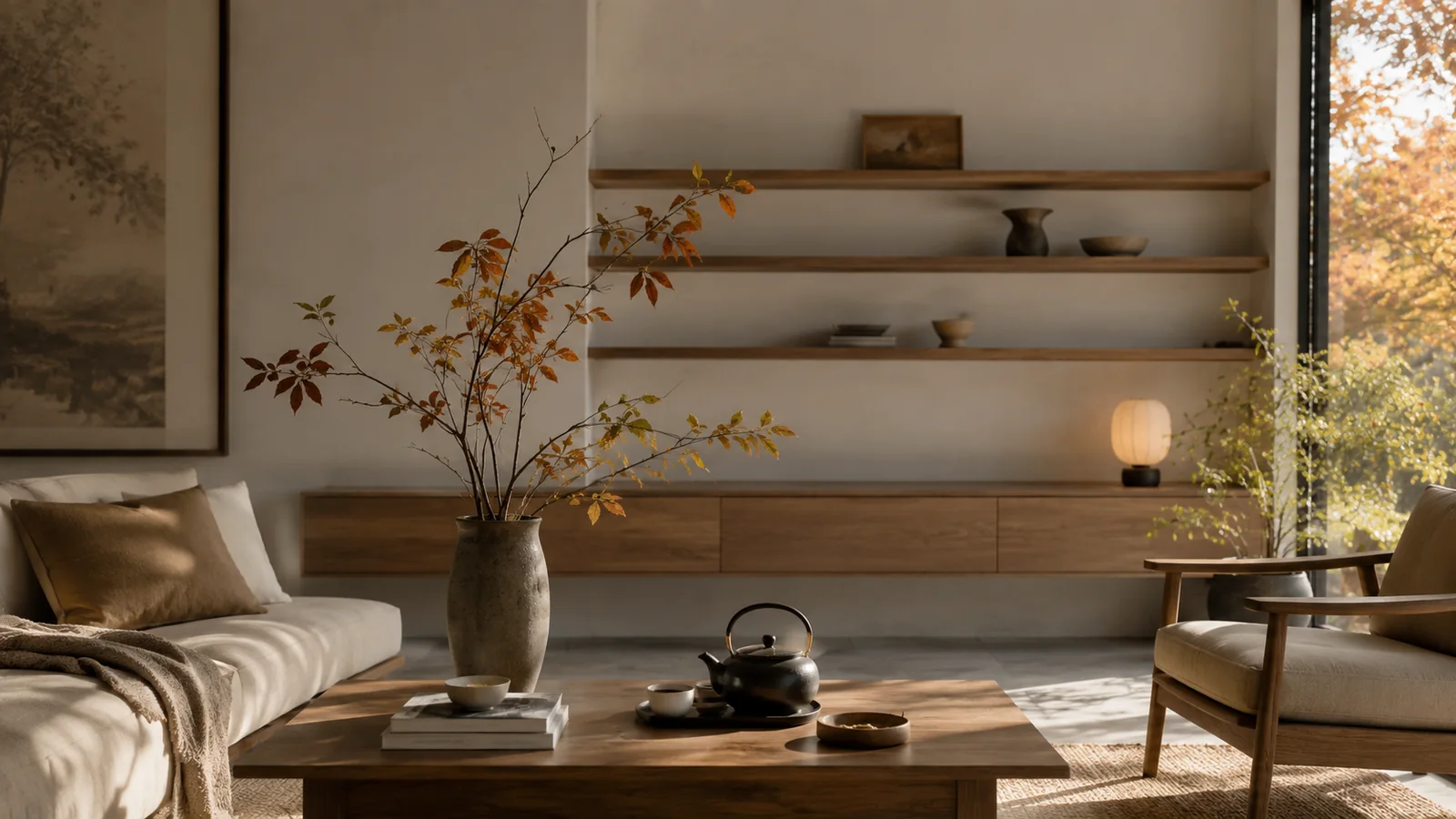
Autumn is the traditional moment for clearing, and the reasoning is elemental rather than aesthetic. Metal governs boundaries and refinement; a crowded room has neither.
Clear before you decorate
Start with the entrance and the western side of your home — west is Metal’s direction. Remove what has accumulated without decision: the pile by the door, the shelf nobody edits, the things kept only because they were never considered.
Let air move
Metal is associated with the lungs, and the home’s equivalent of breath is airflow. Open windows in the cool of the morning, clear the paths between rooms, and resist the instinct to seal everything the first cold week.
Bring the season inside sparingly
One arrangement of bare branches, a single ceramic vessel, a length of undyed cloth. Autumn styling in the Chinese sense is subtraction, not addition — the room should feel emptier at the end of the reset than at the start.
Autumn and the Twelve Signs
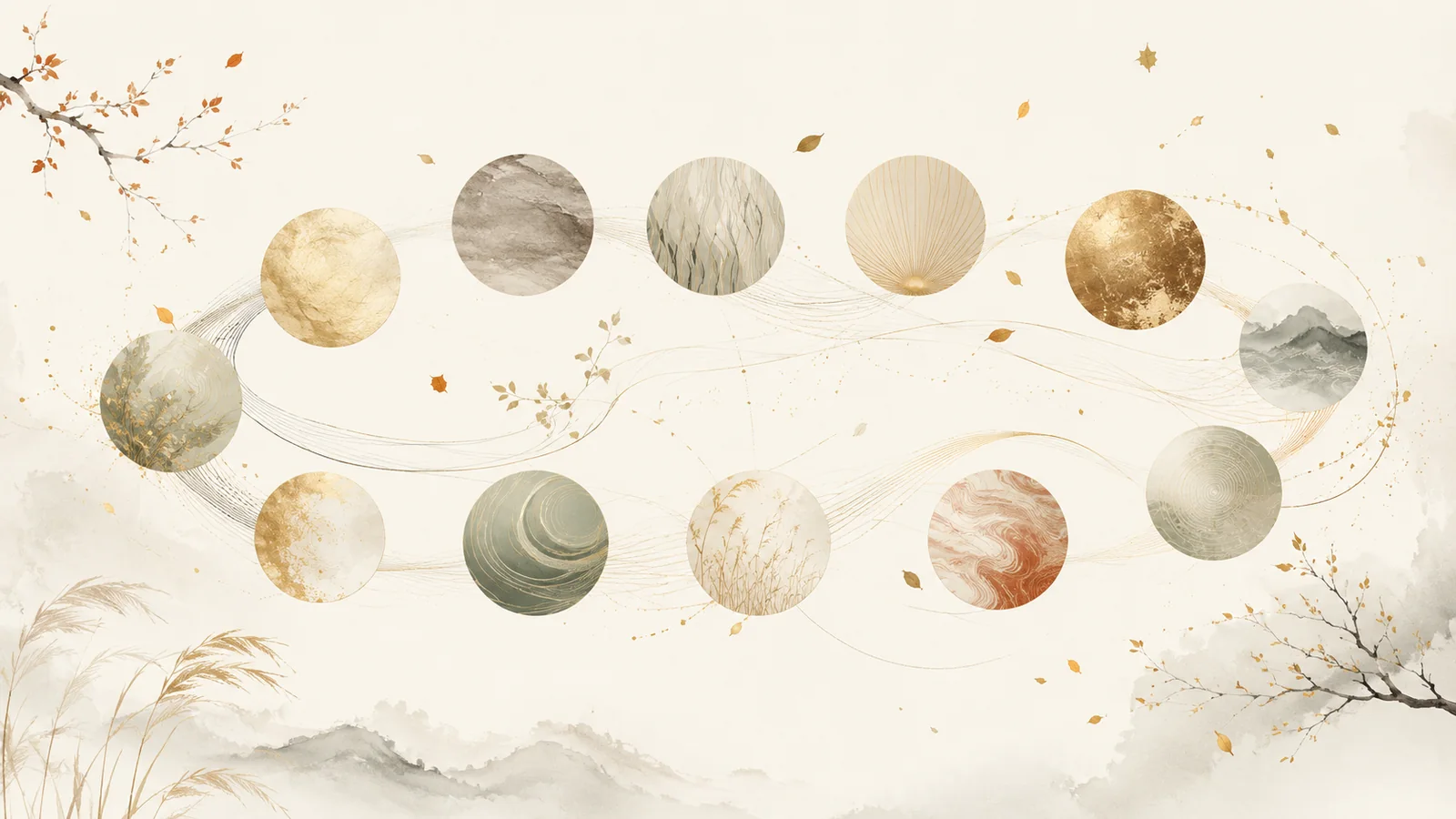
Autumn’s three months belong to the Monkey (申, roughly August), the Rooster (酉, September) and the Dog (戌, October). Monkey and Rooster are both Metal branches; Dog is the Earth that closes the season and stores its heat.
This is why autumn is described as Metal’s own quarter — the season and the branches agree. For anyone whose chart already carries a great deal of Metal, the months can feel sharp and slightly brittle. For those short of it, the same weeks often bring an unfamiliar decisiveness.
A gentler way to read it
None of this predicts events, and traditional Chinese thinking does not treat it that way. It is a vocabulary for describing conditions: what the season amplifies, and what it asks you to set down. A Rooster year, a Rooster month and a Rooster hour all carry the same character at different scales.
Curious where your own sign sits in the current year? Our Chinese Zodiac Calculator gives your animal from your birth year, and the 2026 Year of the Fire Horse guide explains the wider year this autumn belongs to.
Living the Turn
The instruction hidden inside all of this is small and unglamorous: notice earlier. The calendar names autumn while it is still hot because the change has already begun, and because the people who wrote it believed there was value in meeting a season on the way in rather than after arrival.
Sleep a little earlier. Eat something warm and moist. Clear one surface. Finish one thing you have been carrying since spring. None of it is dramatic. That is the point — autumn is not a season of gestures.
Does Metal season steady you, or thin you out?
The same autumn lands differently depending on what your chart already carries. A Complete BaZi Analysis reads your Four Pillars and shows which elements you rely on and which crowd you.
“One leaf falls, and the whole world knows it is autumn.”
- Chinese Wisdom
- Solar Terms
- Liqiu
- Five Elements
- Wu Xing
- Metal Element
- Feng Shui
- Seasonal Living
Related Articles
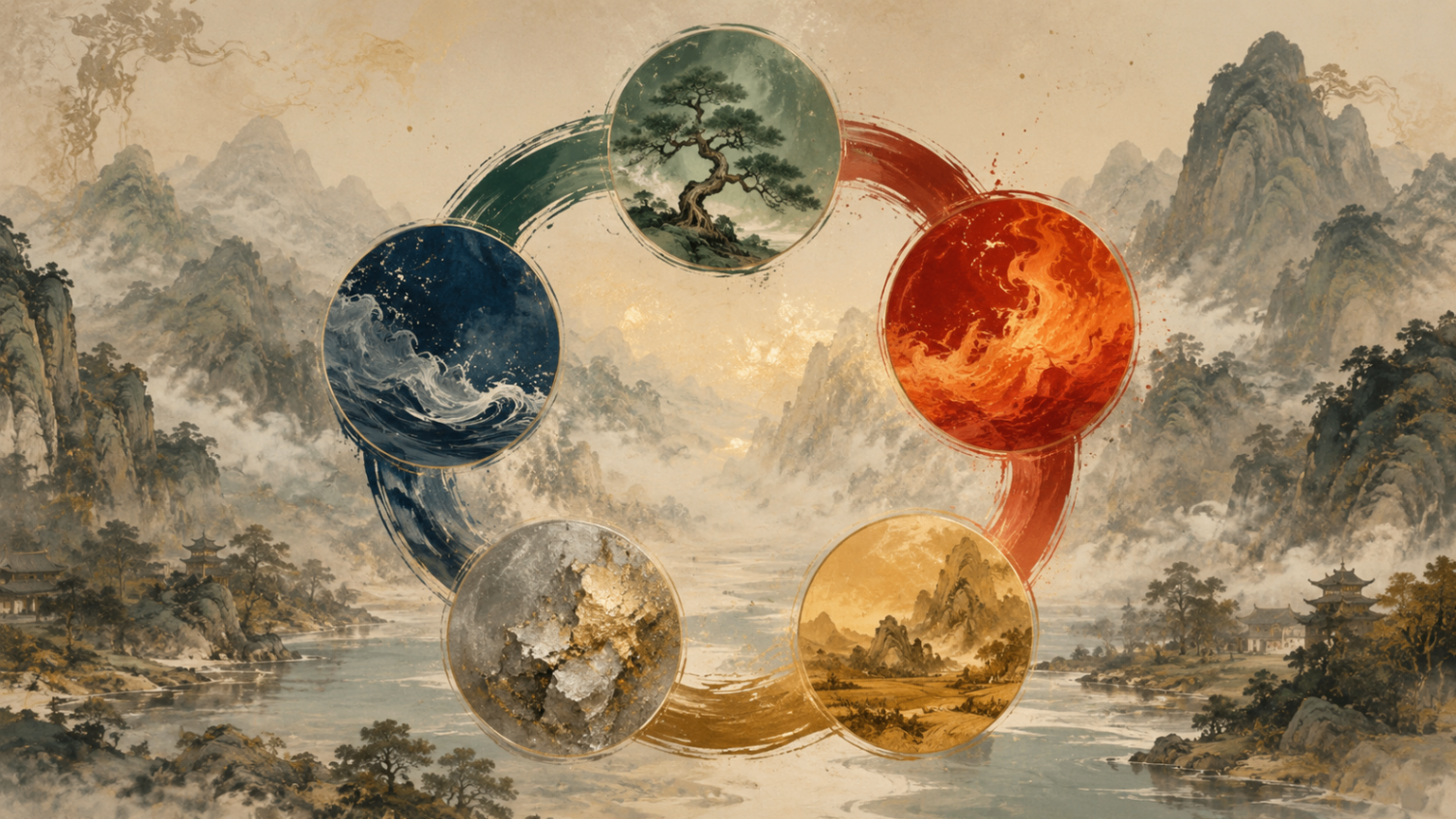
The Five Phases: What Ancient China Understood About Change That the Modern World Forgot
Wu Xing is not mysticism. It is one of history's most practical frameworks — used by emperors, physicians, and farmers for over two thousand years to understand the patterns that govern everything.
2026 Year of the Fire Horse: What 丙午 Means in the Chinese Zodiac
2026 is not simply a Year of the Horse. In the traditional Chinese calendar it is 丙午, Bǐng Wǔ — a Yang Fire Horse year that returns only once every sixty years.
What Is BaZi? A Guide to Chinese Fortune Telling and the Four Pillars of Destiny
A clear introduction to BaZi: how the Four Pillars, Day Master, Five Elements and Luck Pillars form a traditional Chinese framework for reading a life in time.