
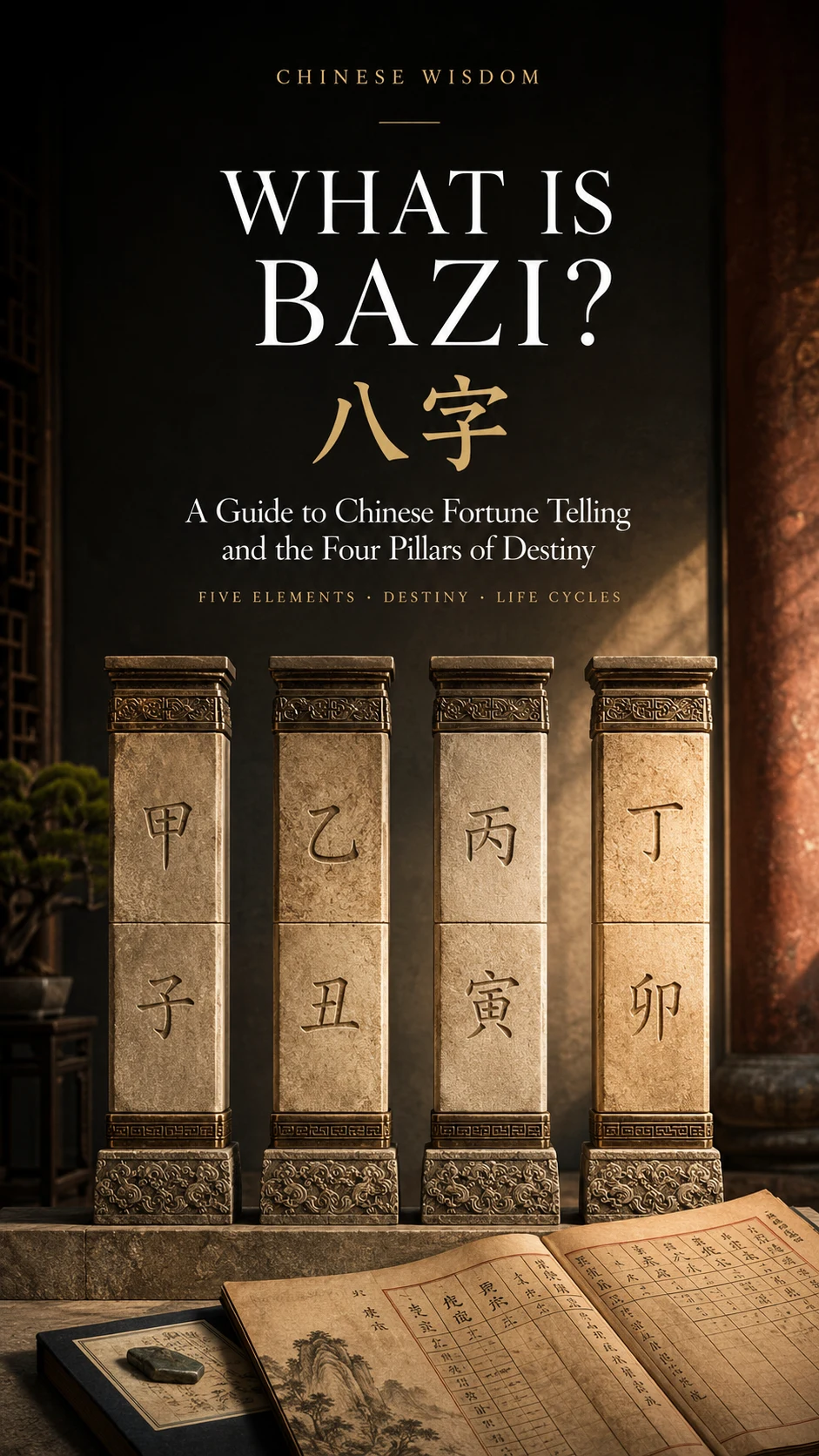
Chinese Astrology · Foundational Guide
What Is BaZi? A Guide to Chinese Fortune Telling and the Four Pillars of Destiny
Beyond the birth-year animal lies a detailed map of time: four pillars, eight characters and a lifelong conversation among the Five Elements.
Search for “Chinese fortune telling” and you will encounter many traditions: face reading, palmistry, the zodiac, divination texts and almanacs. BaZi is one of the most systematic. Its subject is not a single animal sign, but the pattern formed by the date and time of birth.
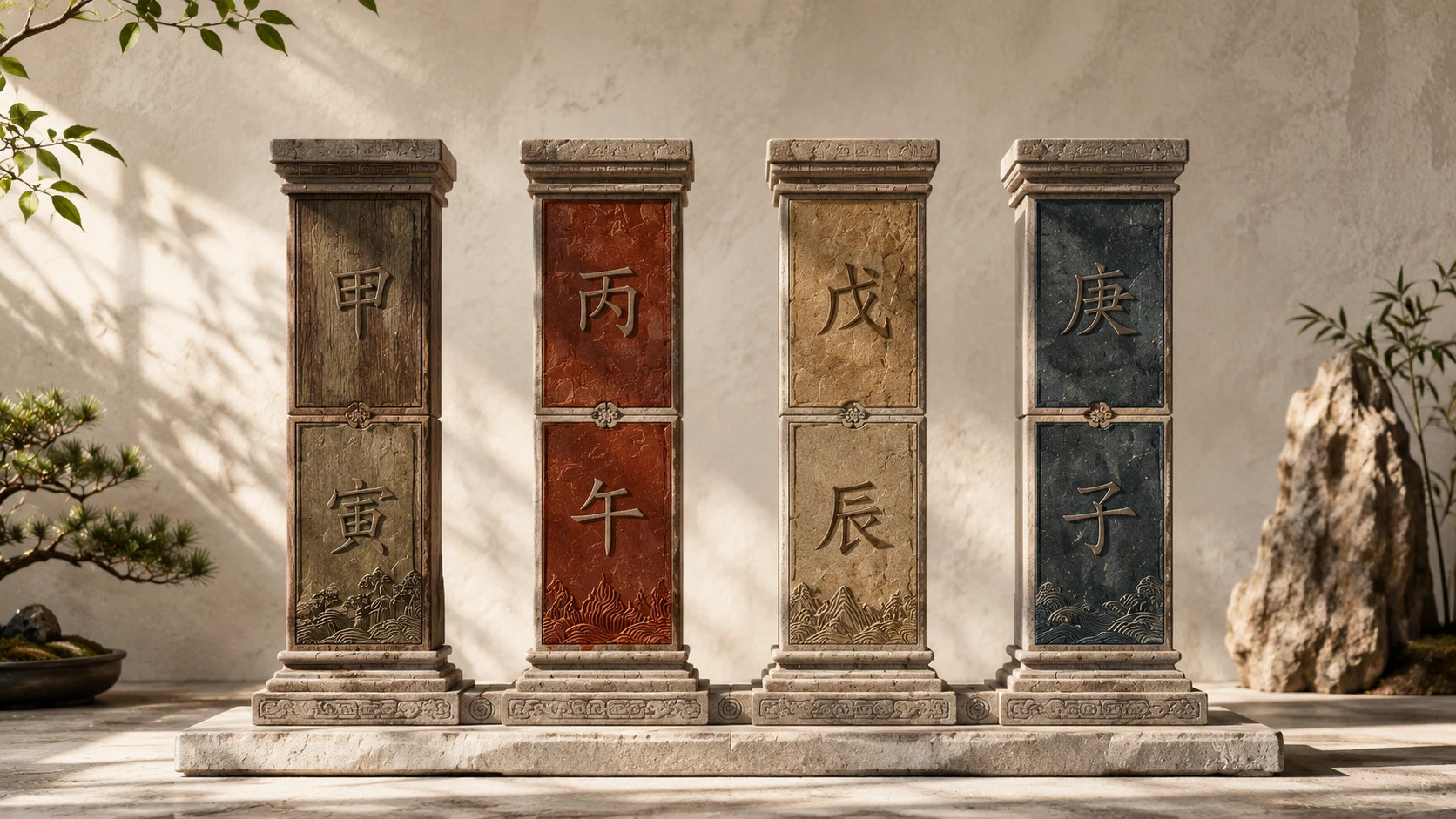
BaZi (八字) literally means “Eight Characters.” Those characters come from four time markers—the year, month, day and hour—each expressed as a Heavenly Stem above an Earthly Branch. Together they form the Four Pillars of Destiny (四柱命理).
A responsible reading does not declare an unavoidable fate. It studies structure: what the chart contains, what season strengthens or weakens it, how its elements interact, and how later cycles alter the conditions around it.
What Does BaZi Mean?
The word BaZi combines 八, eight, and 字, characters. It refers to the eight Chinese characters calculated from a person's birth information. The wider discipline is often called Four Pillars study because those eight characters are arranged into four columns.
Each pillar contains one of the Ten Heavenly Stems and one of the Twelve Earthly Branches. Stems present an element in a yin or yang form. Branches carry an animal association, but also contain hidden stems and seasonal information. This is why BaZi is much more detailed than a birth-year zodiac sign.
The Four Pillars of Destiny
The Four Pillars describe four different time scales and domains of experience. Their meaning is relational rather than isolated: no pillar should be interpreted without the rest of the chart.
Year Pillar · 年柱
The Year Pillar is the broadest layer. It is commonly associated with ancestry, early environment, public context and the social world into which a person is born. Its Earthly Branch supplies the familiar zodiac animal.
Month Pillar · 月柱
The Month Pillar carries exceptional weight because it establishes the season. Season determines which elements are naturally vigorous, resting or constrained. It is also traditionally connected with upbringing, work structures and the formative environment.
Day Pillar · 日柱
The Day Pillar contains the chart's central reference point. Its Heavenly Stem is the Day Master; its Earthly Branch is traditionally called the spouse or relationship palace. Much of a reading begins by examining this pillar in context.
Hour Pillar · 时柱
The Hour Pillar adds the most specific time layer. It is traditionally associated with inner life, aspirations, later-life development, projects and children. Without an accurate birth time, this pillar cannot be calculated reliably.
The Day Master: The Chart’s Point of Reference
The Day Master (日主) is the Heavenly Stem of the Day Pillar. It is not a personality label in isolation. It is the reference against which the rest of the chart is organized.
A Jia Wood Day Master and a Ding Fire Day Master do not simply receive two different “element personalities.” A practitioner asks whether the Day Master is seasonally supported, rooted in the branches, helped by other elements, drained through expression or constrained by controlling elements.
This distinction matters. Two people can share the same Day Master yet have opposite structural needs because one chart contains abundant support and the other does not.
The Five Elements in BaZi
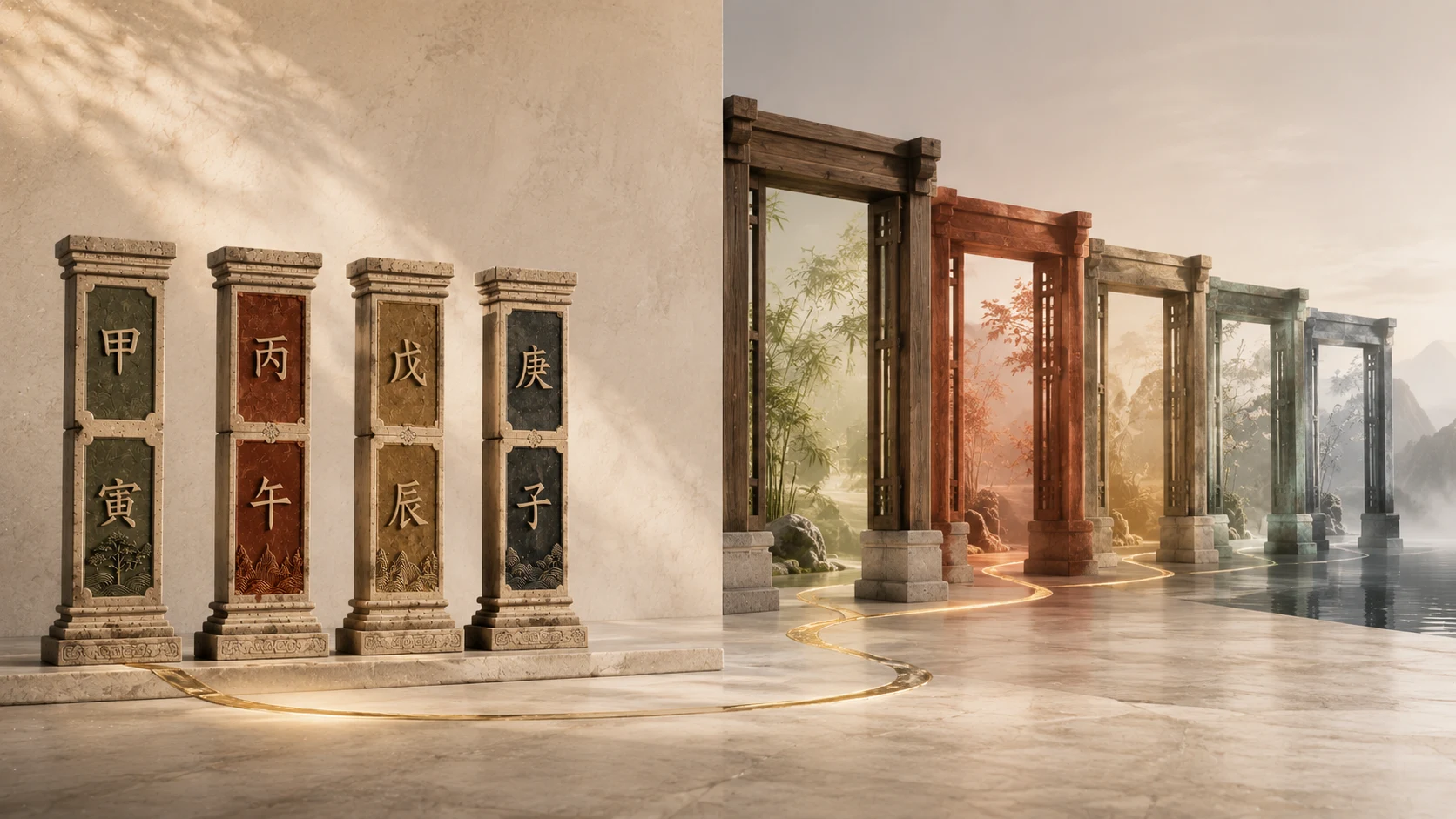
BaZi uses the Five Phases—Wood, Fire, Earth, Metal and Water—as a language of process and relationship. They are not literal substances and are not scored by counting visible symbols alone.
The generating cycle describes one phase supporting another: Wood feeds Fire, Fire creates Earth, Earth bears Metal, Metal supports Water, and Water nourishes Wood. The controlling cycle describes regulation: Wood controls Earth, Earth contains Water, Water controls Fire, Fire refines Metal, and Metal cuts Wood.
Season, position, hidden stems, combinations and transformations all affect how much influence an element carries. “More” is not automatically better, and a missing element is not automatically harmful. The question is what helps the whole chart function with greater balance.

How a BaZi Chart Is Read
Different lineages emphasize different techniques, but a careful Zi Ping-style reading usually moves from structure toward interpretation rather than beginning with predictions.
- Confirm the birth data, location and calendar conversion.
- Establish the four Stems and Branches, including hidden stems.
- Assess the Month Branch and seasonal climate.
- Evaluate the Day Master's roots, support, output and constraints.
- Identify the Ten Gods—the relational roles formed around the Day Master.
- Study combinations, clashes, harms and structural patterns.
- Then compare the natal chart with Luck Pillars and annual timing.
This order guards against a common error: attaching a fixed meaning to one symbol without considering the chart that contains it.
What Can BaZi Be Used For?
Character and working style
A chart can suggest how a person tends to process pressure, express ideas, seek resources or operate within structure. These are patterns to investigate, not limits imposed on identity.
Career and contribution
The Ten Gods and wider structure can frame questions about authority, creativity, technical depth, entrepreneurship, collaboration and public contribution. BaZi cannot replace skills, qualifications or knowledge of a real market.
Wealth and resources
In BaZi, “wealth” is a technical relationship to the Day Master—not a promise of riches. Its usefulness depends on whether the chart can engage with and sustain that element. Practical financial judgment remains essential.
Relationships
Relationship analysis considers more than a single compatibility animal. It may examine the Day Branch, Ten God relationships, combinations, clashes and timing — the comparison behind a BaZi compatibility reading. It should never be used to excuse harm or override communication and consent.
Health and wellbeing
Classical texts connect elemental patterns with bodily systems, but BaZi is not medical diagnosis. Any health concern belongs with a qualified healthcare professional; symbolic observations should remain reflective rather than clinical.
Luck Pillars and the Dimension of Time
A natal chart is fixed, but the conditions around it change. Luck Pillars (大运, Da Yun) are approximately ten-year periods calculated from the birth chart. Annual and sometimes monthly pillars add shorter layers of timing.
A new pillar may reinforce an existing pattern, introduce an element the chart can use, or create a combination or clash. This does not guarantee an event. It describes a changing environment in which certain themes may become more prominent.
Timing is therefore an interaction: the same Fire year will not mean the same thing for every person because it enters a different natal structure.
BaZi vs the Chinese Zodiac
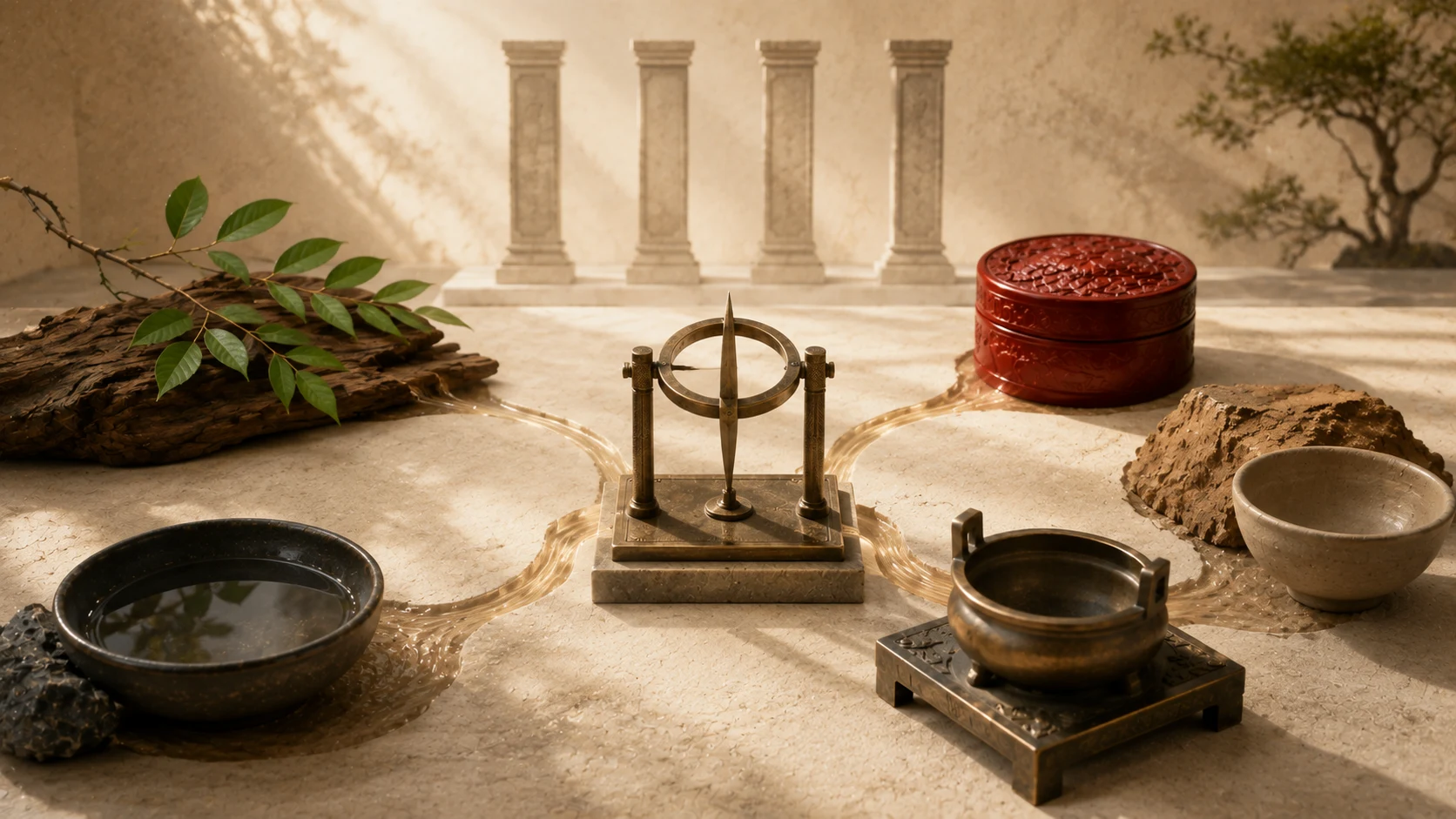
The Chinese zodiac is not incorrect; it is simply one layer. The animal most people know is the Earthly Branch of the Year Pillar. BaZi places that branch inside a much larger calculation.
| Question | Chinese Zodiac | BaZi |
|---|---|---|
| Birth data | Primarily birth year | Year, month, day and hour |
| Core symbols | 12 zodiac animals | 10 Stems, 12 Branches, hidden stems and Five Elements |
| Personal reference | Year animal | Day Master |
| Timing | Annual animal cycles | Luck Pillars, annual and shorter cycles |
| Detail | Broad cultural overview | Individual chart structure |
| Best use | An accessible introduction | A nuanced personal analysis |
If you only know your zodiac animal, start with YukDao's Chinese Zodiac Calculator. If you want the four-pillar structure, calculate your free BaZi chart.
See Your Four Pillars
Enter your birth date, time and location to reveal the Eight Characters, Day Master, elemental balance and a structured personal interpretation.
Begin Your BaZi AnalysisWhat a Responsible BaZi Reading Should—and Should Not—Do
A useful reading explains its reasoning. It distinguishes the natal chart from later timing, avoids treating one symbol as a verdict, and makes uncertainty visible when the birth time is unknown.
It should offer language for reflection and decision-making—not fear. It should not guarantee wealth, diagnose illness, declare a relationship doomed or encourage dependence on repeated readings.
A chart may describe the weather around a journey. It does not walk the road for you.
Frequently Asked Questions
What is BaZi?
BaZi, 八字, is a traditional Chinese system that translates a person's birth year, month, day and hour into four pairs of Heavenly Stems and Earthly Branches. These eight characters are interpreted through relationships among the Five Elements, yin and yang, season and timing.
Is BaZi the same as the Chinese zodiac?
No. A popular Chinese zodiac reading usually begins with the animal of the birth year. BaZi uses the year, month, day and hour, and the Day Stem becomes the central reference point of the chart.
What is the Day Master in BaZi?
The Day Master is the Heavenly Stem of the Day Pillar. It represents the chart's central point of reference; the other elements are interpreted according to how they support, express, control or are controlled by it.
Do I need my exact birth time for a BaZi chart?
An exact birth time is needed to calculate the Hour Pillar. A chart can still be discussed without it, but it is incomplete and conclusions involving the Hour Pillar should remain cautious.
Can BaZi predict the future?
BaZi is better understood as a traditional framework for reading patterns, capacities and changing conditions than as a guarantee of specific events. A responsible reading preserves choice, context and uncertainty.
What are Luck Pillars?
Luck Pillars, or Da Yun 大运, are approximately ten-year cycles calculated from the natal chart. Practitioners compare each cycle with the original Four Pillars to study how the chart's conditions change over time.
- BaZi
- Four Pillars
- Day Master
- Five Elements
- Wu Xing
- Chinese Astrology
- Chinese Wisdom
Related Articles
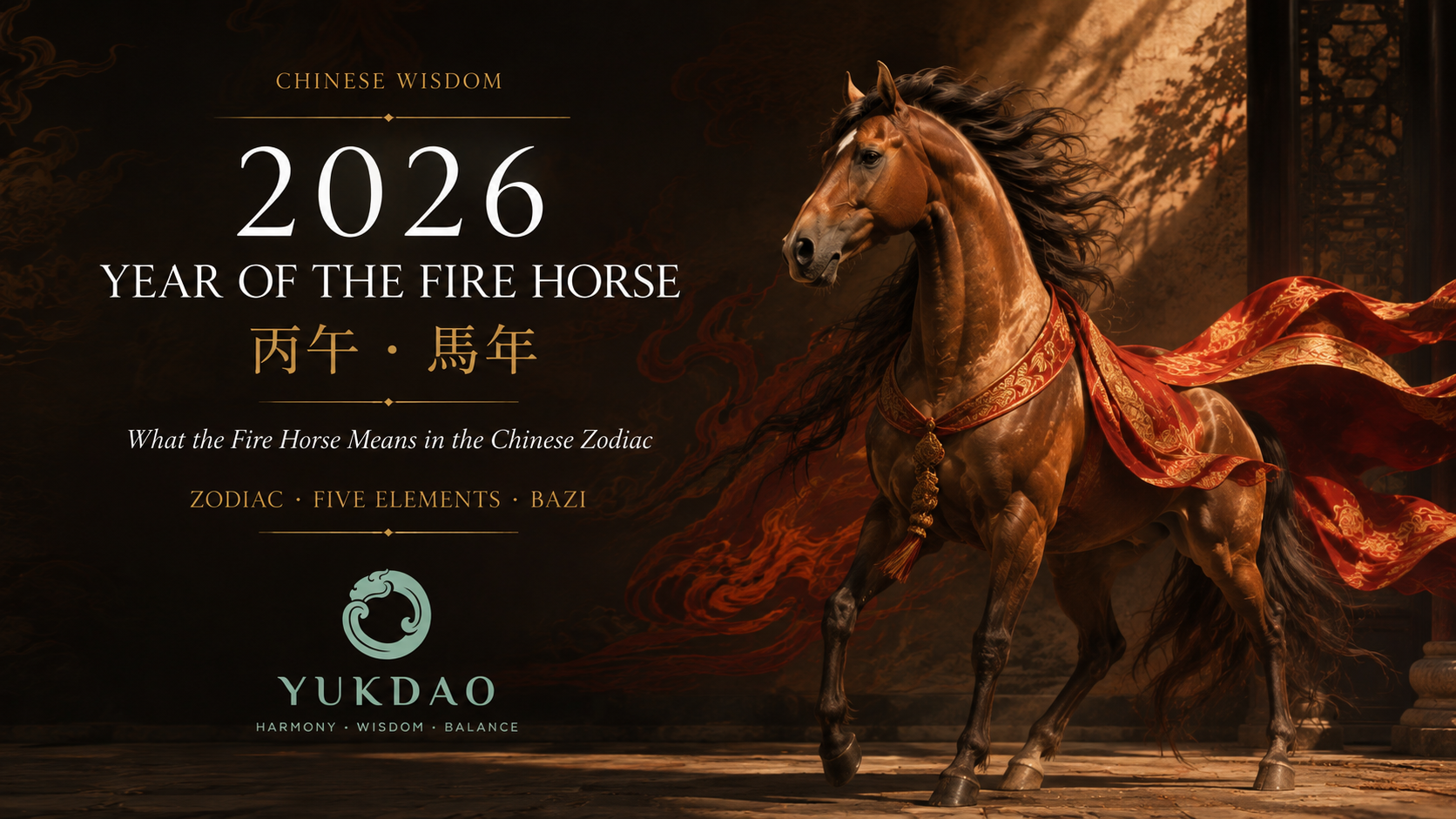
2026 Year of the Fire Horse: What 丙午 Means in the Chinese Zodiac
2026 is not simply a Year of the Horse. In the traditional Chinese calendar it is 丙午, Bǐng Wǔ — a Yang Fire Horse year that returns only once every sixty years.
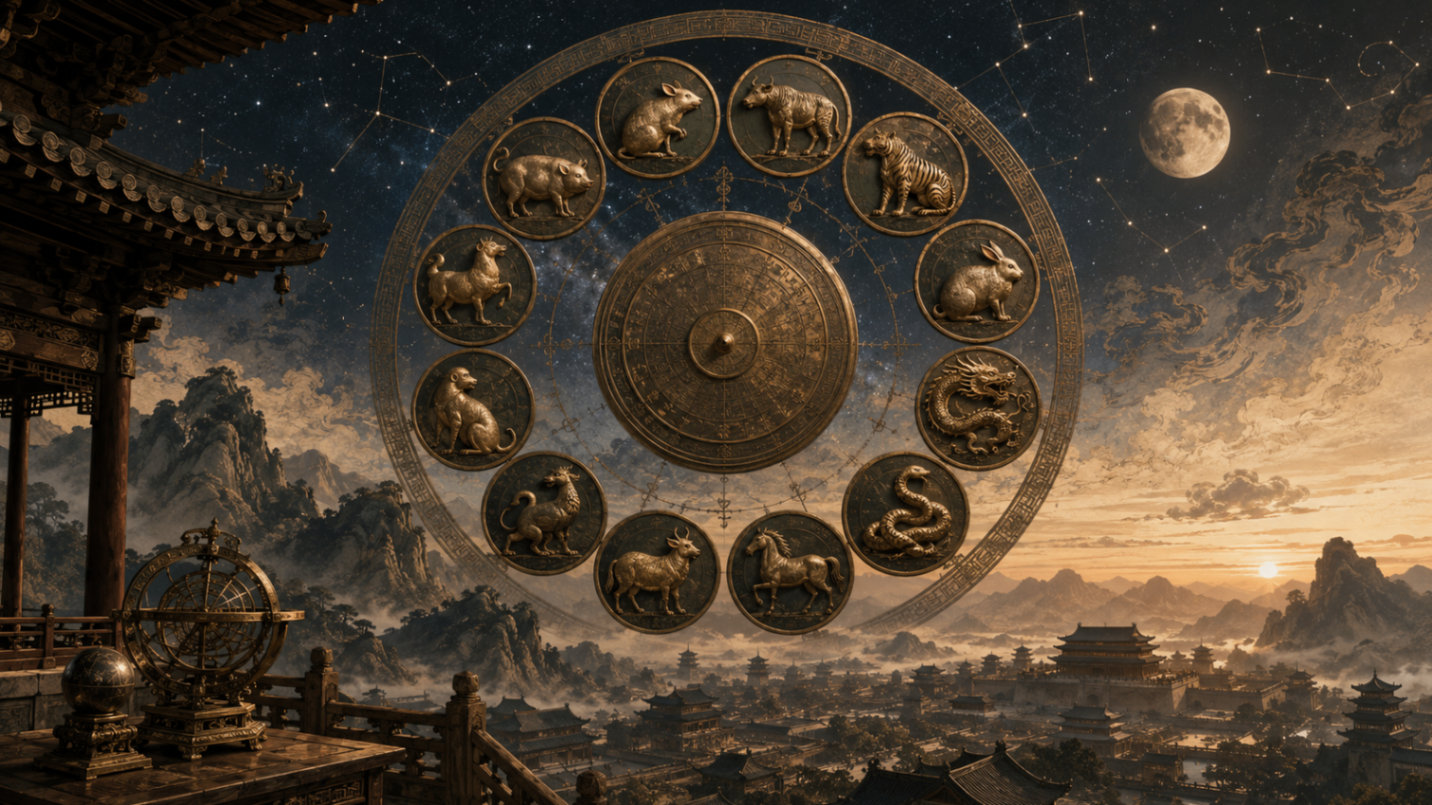
Shengxiao: A Serious Introduction to the Chinese Zodiac
Most people could tell you their Chinese zodiac animal. Far fewer could tell you where the system actually came from, how it works in full, or why it continues to shape social dynamics, birth planning, and commercial culture across Asia today.

Is Your Destiny Fixed? A Chinese Astrology Perspective
On fate, luck, timing, and the freedom to choose.