The Language of Color: What the Forbidden City’s Colors Really Mean
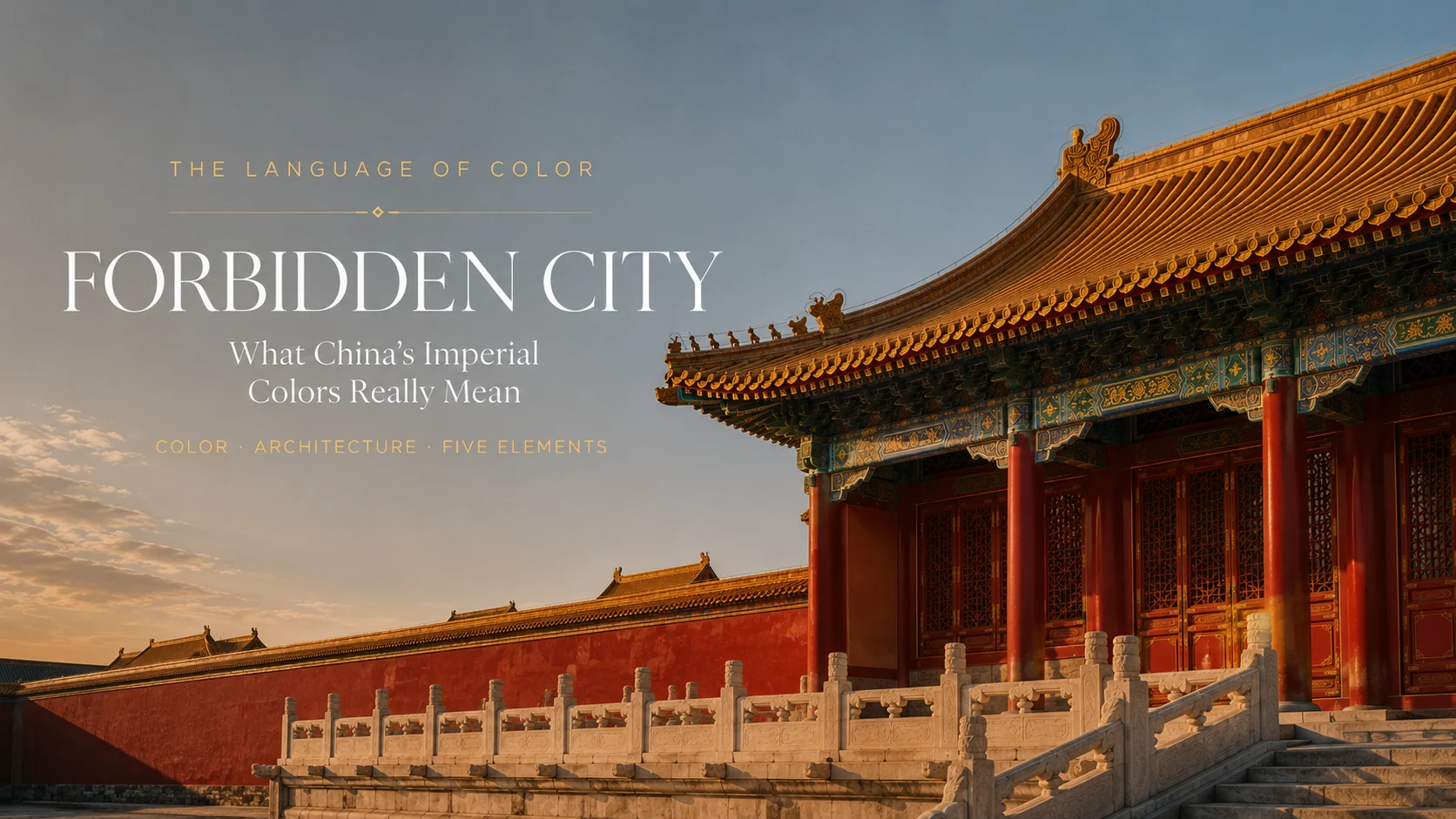
Walk through Beijing’s Forbidden City and color seems to be everywhere.
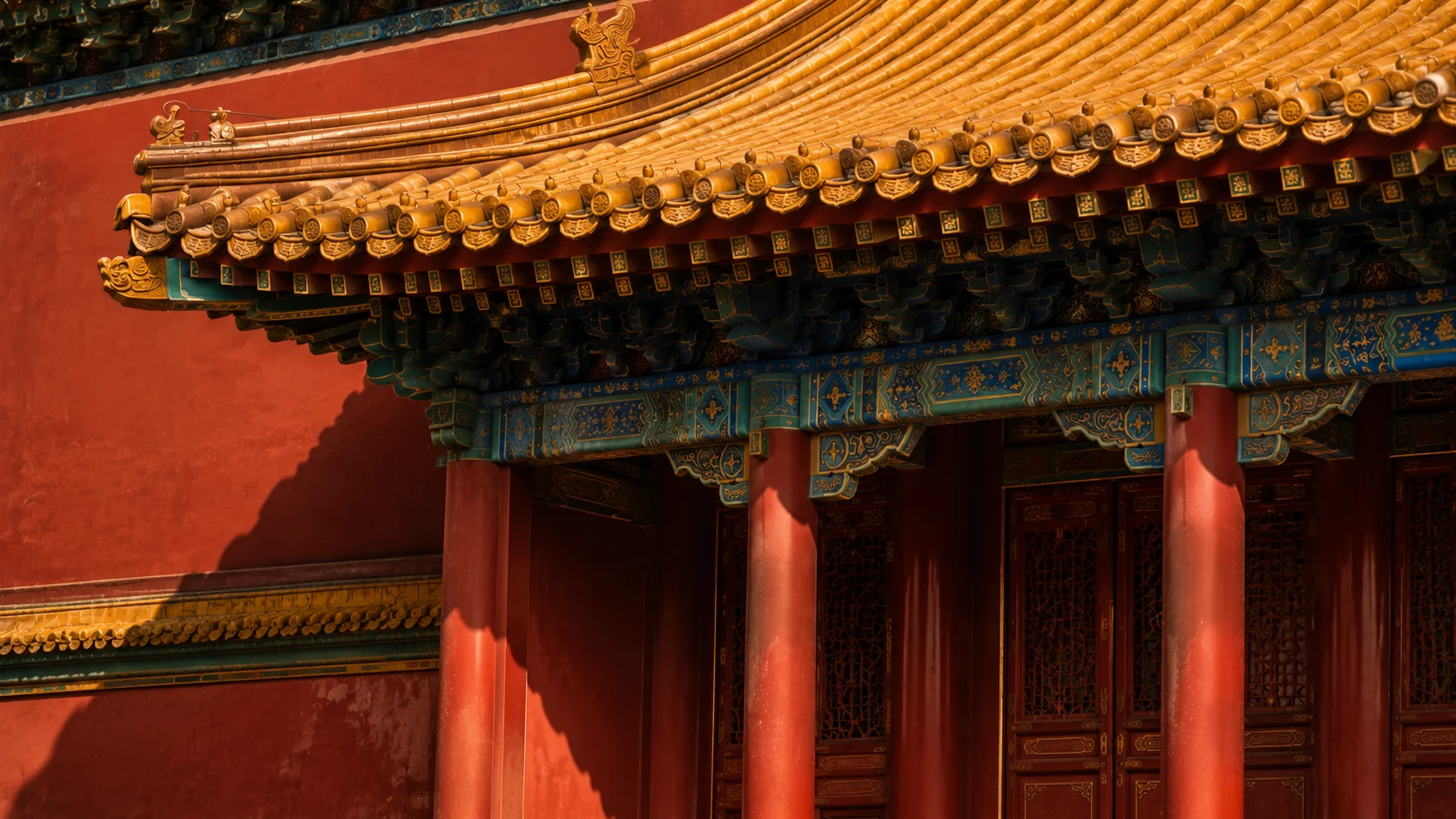
Vermilion walls stretch across vast courtyards. Red columns support sweeping roofs of imperial yellow glazed tile. Beneath the eaves, blue-green paint, mineral pigments and touches of gold transform structural timber into intricate fields of color.
Then, occasionally, the pattern changes.
A roof turns green.
Another becomes almost black.
The difference is easy to admire. But it is more interesting to ask why it exists.
In the Forbidden City, color was not simply applied to make architecture beautiful. It existed within a much larger visual culture in which material, hierarchy, direction, function and traditional cosmological associations could interact.
The result is a palace that can almost be read through color.
The Forbidden City was the imperial palace of the Ming and Qing dynasties and remained at the center of imperial power for centuries. Its layout, design and decoration became an exceptional expression of Chinese hierarchical culture.
That hierarchy is visible in space and scale.
It is also visible in color.
Red and Yellow: The Colors That Define the Forbidden City
Think of the Forbidden City and two colors probably appear immediately: red and yellow.
They dominate its most recognizable architecture.
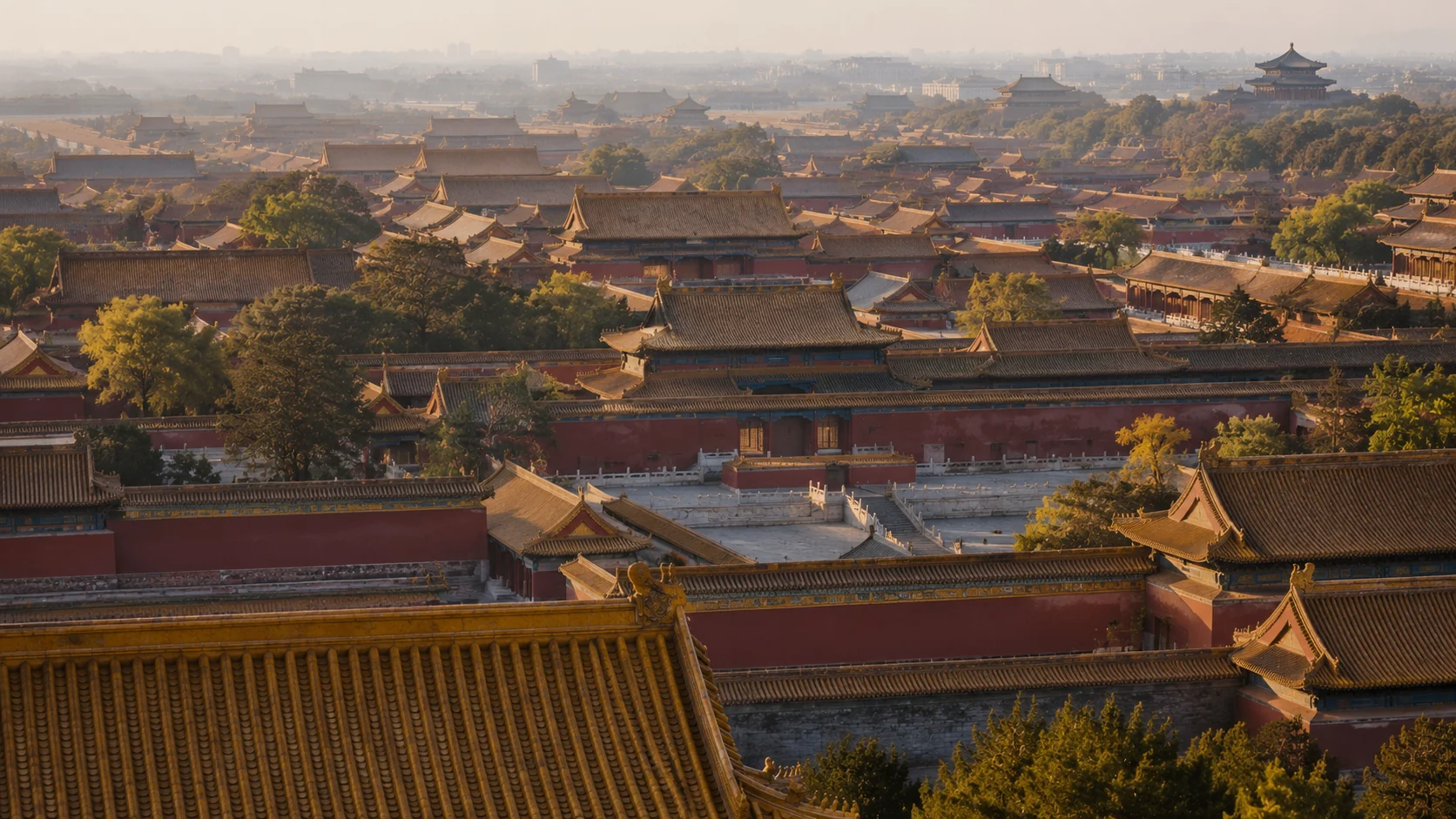
Large walls and timber structures are painted in deep red tones, while many of the principal halls rise beneath yellow glazed-tile roofs.
Together, they create the visual identity most people associate with China’s imperial palace.
But in traditional Chinese thought, these colors also belonged to a larger system of correspondences.
The Five Elements, or 五行 Wu Xing, were associated with five principal colors and five directions:
| Element | Direction | Color |
|---|---|---|
| Wood 木 | East | 青, blue-green/green |
| Fire 火 | South | Red |
| Earth 土 | Center | Yellow |
| Metal 金 | West | White |
| Water 水 | North | Black |
This does not mean that every painted surface in the Forbidden City can be decoded through a simple Five Element chart.
Architecture is more complicated than that.
But these correspondences formed part of the cultural language from which imperial architecture developed.
And nowhere is that relationship more striking than in the palace’s two dominant colors.
Red: The Color of Fire
Within the Five Element system, red corresponds to Fire 火.
It is tempting today to explain almost every use of red in Chinese culture with one phrase: “Red means good luck.”
But that is far too narrow for the Forbidden City.
Here, red is architectural.
It covers monumental walls, gates, doors, columns and other timber surfaces, establishing visual continuity across an enormous palace complex.
It creates warmth against pale stone.
It separates architecture from sky.
And beneath the yellow roofs, it forms one half of the palace’s most important color relationship.
Because above the red is yellow.
Yellow: Earth, the Center and Imperial Authority
Yellow occupies an exceptional position in the Forbidden City’s architecture.
Within traditional Five Element correspondences:
Yellow = Earth 土, and Earth corresponds to the center.
The association became especially significant in imperial culture. Yellow glazed tiles were closely connected with the highest levels of official architecture.
This means the great yellow roofs of the Forbidden City were not simply chosen because they looked magnificent in sunlight.
Color could communicate status.
Material could communicate status.
Architecture itself could communicate status.
And when yellow is placed above red, another relationship appears.
Fire Generates Earth
Within the generating cycle of the Five Elements: Fire generates Earth. 火生土
Red corresponds to Fire.
Yellow corresponds to Earth.
The Forbidden City’s familiar combination of red walls and yellow roofs therefore produces a striking architectural expression of this relationship.
This is an important distinction.
The symbolism is not merely: red means one thing, yellow means another.
The colors can also be understood in relationship to one another.
That idea of relationship sits at the heart of Wu Xing.
The Five Elements are not five isolated symbols. They interact.
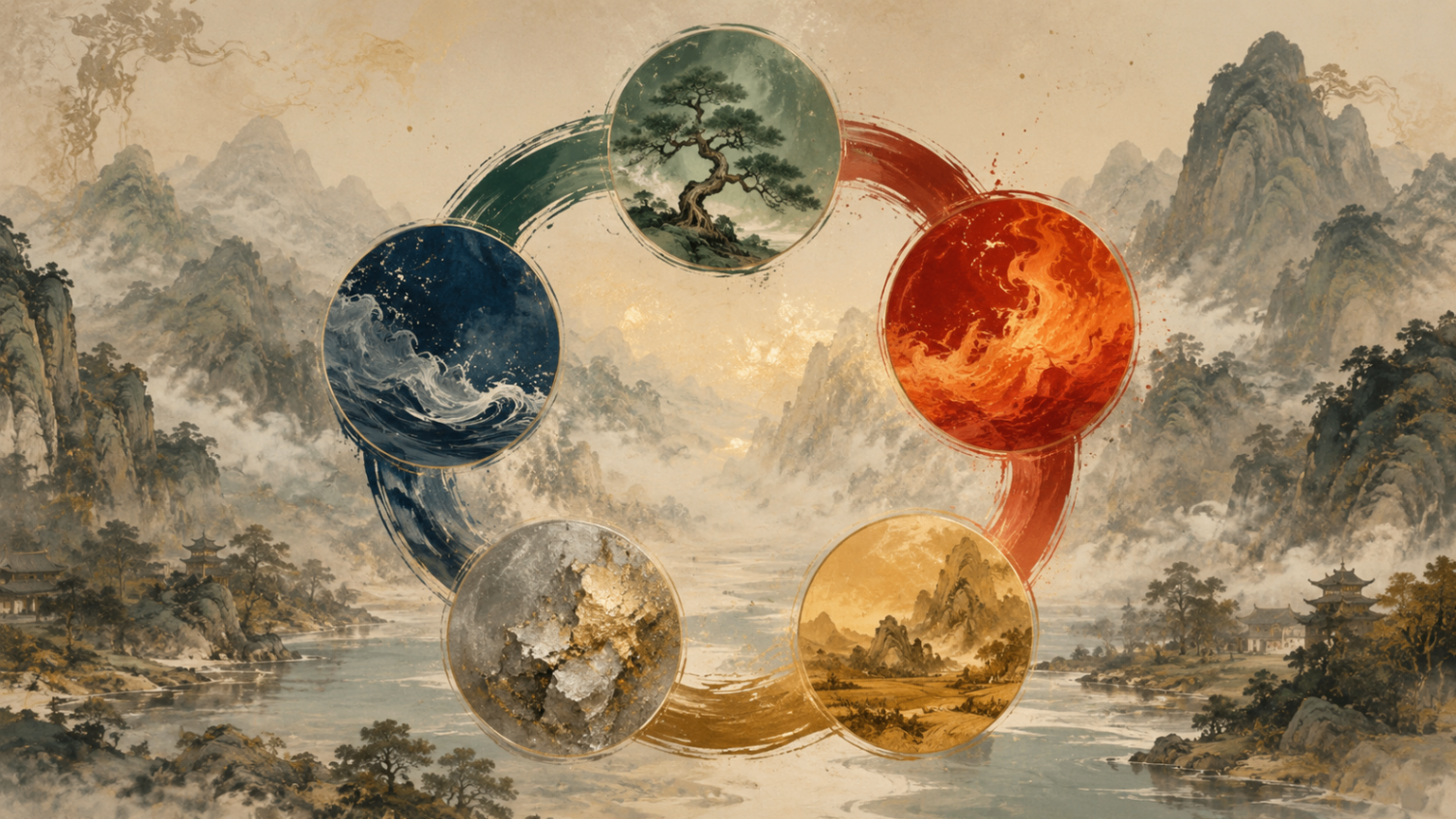
Wood generates Fire. Fire generates Earth. Earth generates Metal. Metal generates Water. Water generates Wood.
So the visual language of the Forbidden City becomes more interesting when we stop asking only what an individual color means and begin asking what the colors are doing together.
But the Forbidden City Is Not Only Red and Yellow
The dominant palette establishes an expectation.
That is precisely why the exceptions are so revealing.
Move through other parts of the palace and yellow is no longer universal.
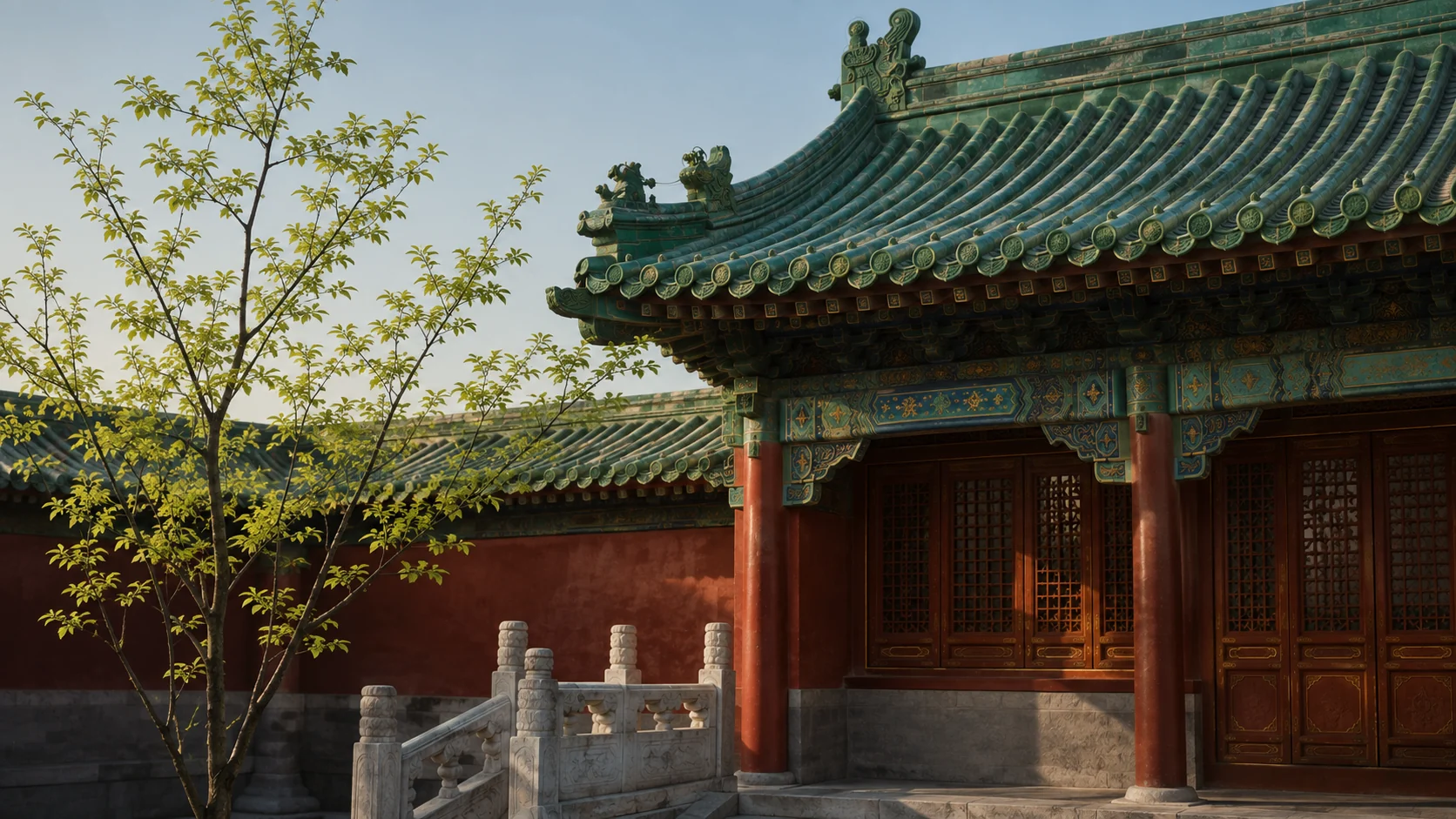
There are green roofs.
There are dark roofs.
There are cool blue-green architectural surfaces.
These changes demonstrate something important about traditional Chinese color: meaning depends on context.
Where is the building?
Who was it intended for?
What was its function?
What rank did it represent?
What relationship did its location have with traditional systems of direction?
The answer can change the palette.
Green: Wood, the East and Growth
Green provides one of the clearest examples.
In the traditional Five Element correspondence system:
East = Wood 木, and Wood is associated with 青, a historical color category encompassing blue-green and green tones.
Within the eastern area of the Forbidden City, green glazed roofs were historically associated with buildings connected to imperial princes.
The relationship was meaningful.
East was associated with Wood.
Wood with growth.
Green with living vegetation and renewal.
The green glazed roofs of the eastern princely residential complex, Nansansuo 南三所, can be understood through this connection between the east, Wood, green and the flourishing continuation of later generations.
There is an additional historical example in Wenhua Hall 文华殿. When it functioned in connection with the crown prince, its eastern location and the Wood-growth association were reflected in green glazed roofing. After its function changed, the roof was later changed to yellow glazed tiles.
That change is particularly revealing.
The architecture remained architecture.
But a change in function and status could produce a change in color.
Then There Is Black
Among the Forbidden City’s many roofs, one of the most fascinating is almost the opposite of imperial yellow.
It is dark.
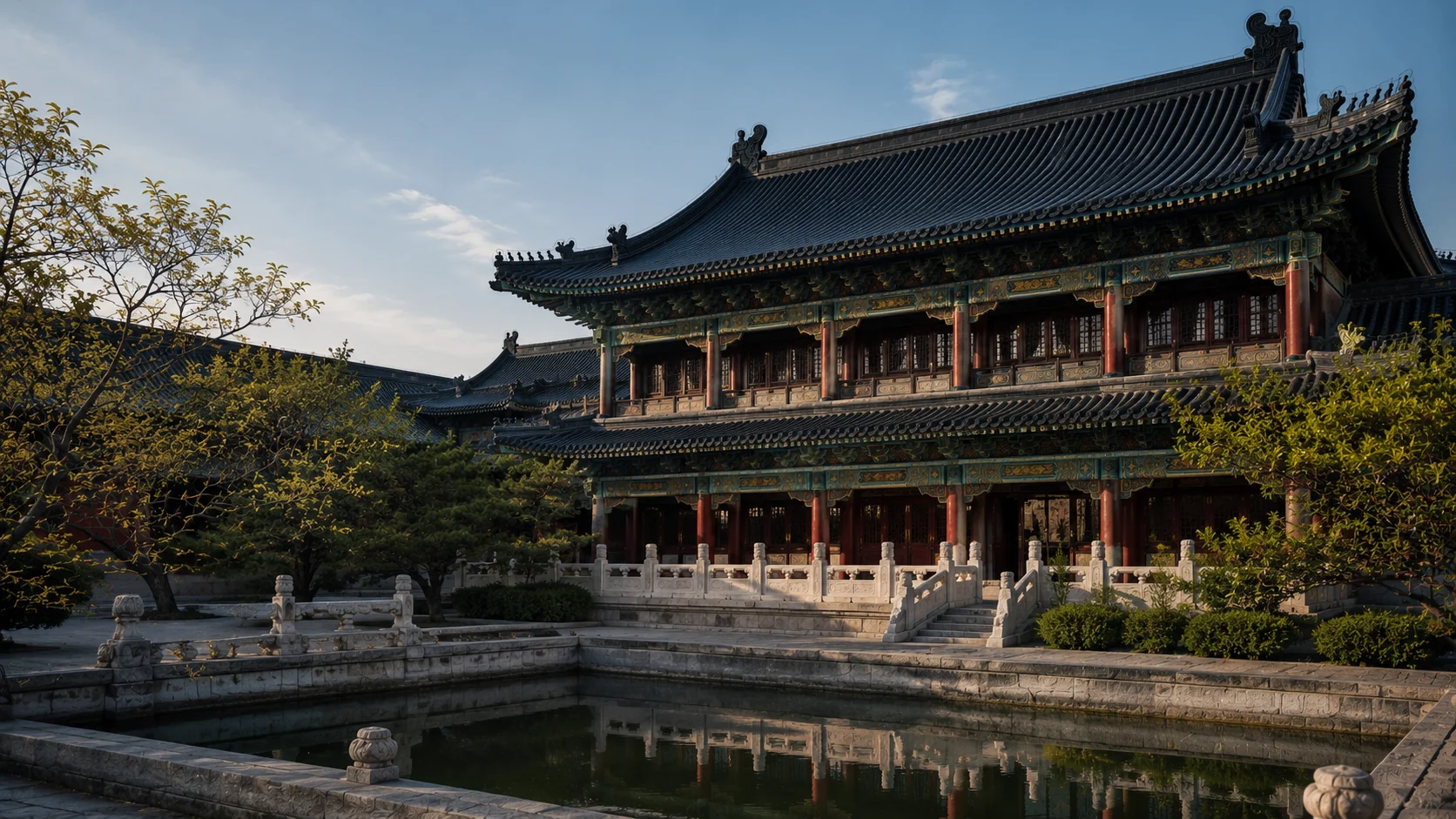
The building is Wenyuan Pavilion 文渊阁.
Constructed under the Qianlong Emperor and completed in 1776, Wenyuan Pavilion was created to house the imperial copy of the enormous Siku Quanshu 四库全书 collection.
Books introduced a very practical architectural concern: fire.
And here, color and function meet again.
Black: Water and Protection from Fire
Within Five Element correspondences:
Black = Water 水, and in the controlling cycle: Water controls Fire. 水克火
Wenyuan Pavilion therefore uses a black glazed-tile roof edged with green.
The relationship between black and Water made the color especially appropriate to a building created to protect an extraordinary collection of books.
The symbolism was not confined to the roof.
A rectangular pool was constructed in front of the pavilion, supplied from the Inner Golden Water River, connecting symbolic meaning with the practical importance of water in fire protection.
Suddenly, a dark roof that might initially look like an aesthetic exception becomes perfectly coherent.
Its difference is its meaning.
Look Beneath the Roof
Roofs and walls establish the Forbidden City’s palette from a distance.
But walk closer and another world of color appears.
Look beneath the eaves.
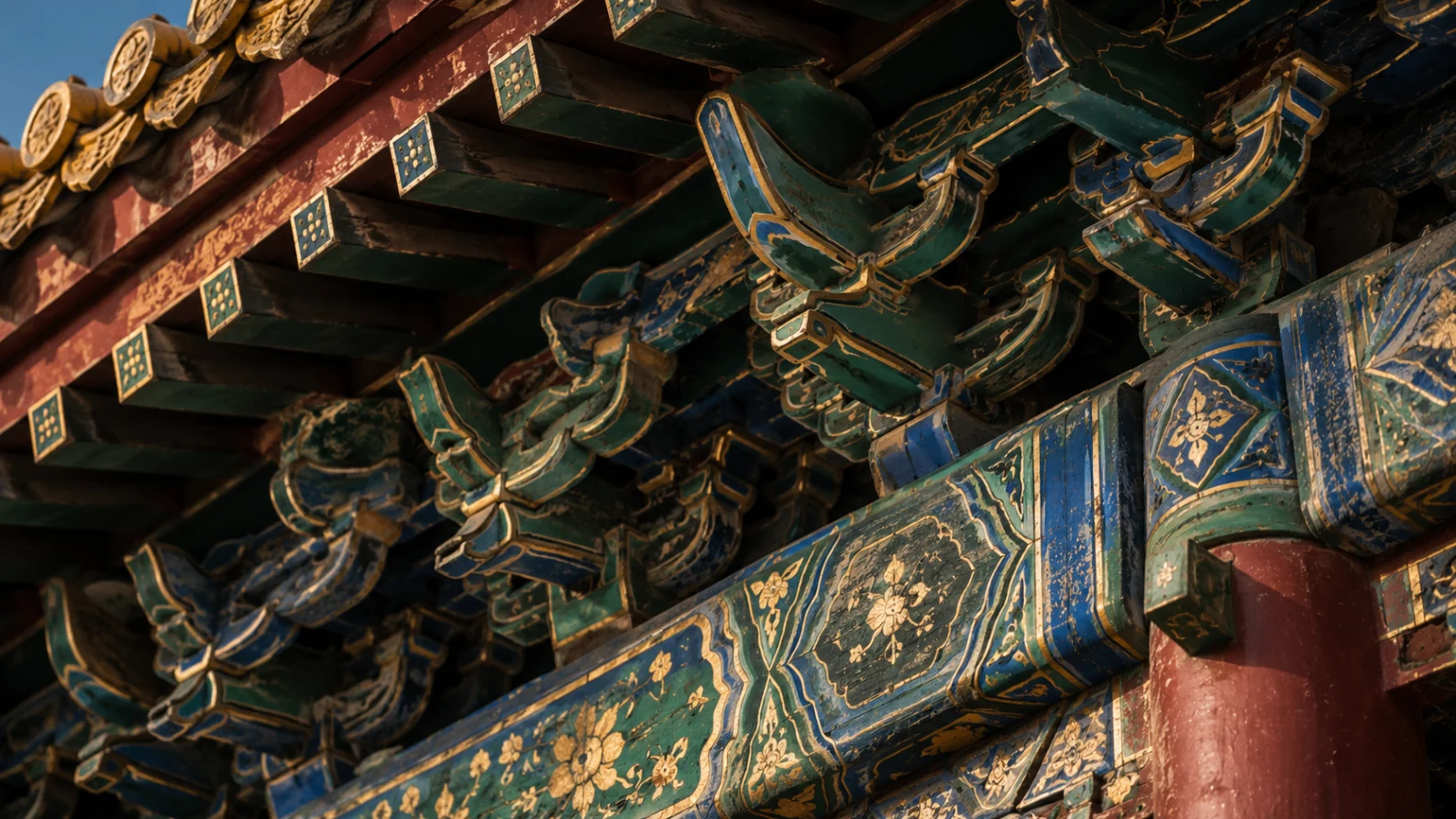
The wooden structural system becomes layered with painted decoration. Blue-green, red, gold and other mineral tones articulate beams, brackets and architectural details.
This produces one of the great visual contrasts of the Forbidden City.
From across a courtyard, the architecture can appear almost elemental: red wall, yellow roof, blue sky, white stone.
But underneath the eaves, those enormous fields of color fragment into extraordinary detail.
Pattern sits inside pattern.
Paint follows structure.
Color defines edges.
Gold catches light.
Blue-green cools the deep red surrounding it.
The building works at two completely different visual scales.
From afar, color creates order.
Up close, color reveals craftsmanship.
Color Could Tell You About Rank
This is where modern interpretations of traditional Chinese color often become too simple.
We like statements such as: “Red means luck.” “Yellow means wealth.” “Green means nature.”
They are memorable.
But imperial architecture did not operate like a modern color psychology chart.
The Forbidden City was a rigorously hierarchical environment.
The dimensions of a building mattered.
Its roof form mattered.
Its position mattered.
Its decoration mattered.
And the colors and materials used on it could matter too.
The form, specification and color of glazed architectural components were connected with architectural hierarchy and cultural meaning. Yellow occupied an especially elevated position, while other colors appeared according to building rank, location and purpose.
Color was therefore not merely emotional.
It could be institutional.
Five Colors, Five Directions, Five Elements
Seen together, the system becomes clearer.
Wood 木 · East · 青 — growth, vegetation and eastern associations.
Fire 火 · South · Red — the red that becomes one of the defining architectural colors of the palace.
Earth 土 · Center · Yellow — the central color associated with imperial authority and the great glazed roofs of principal palace architecture.
Metal 金 · West · White — part of the wider Five Color and Five Direction correspondence system.
Water 水 · North · Black — the relationship that becomes especially vivid at Wenyuan Pavilion.
But this should never become a decoder ring for the entire Forbidden City.
That would miss the point.
The same color can acquire significance through several overlapping systems.
Architecture has practical requirements.
Materials have technological limitations.
Buildings have rank.
Spaces have functions.
Traditions evolve.
The Five Elements provide one important framework within this visual culture, not an explanation for every painted surface.
Color Is Also Material
There is another detail easily lost when viewing the Forbidden City through photographs: these colors are physical.
Imperial yellow is not simply a digital shade of yellow.
It appears through glazed ceramic architecture.
Green can appear in glazed roof components.
Red exists across painted timber and walls.
Blue-green decoration follows wooden structural members.
Black becomes a reflective glazed surface.
The language of color is therefore also a language of craft.
Pigment. Timber. Minerals. Glaze. Ceramic. Stone. Light.
This is one reason the Forbidden City’s palette cannot be fully understood from a color chart.
The material changes the color.
Sunlight changes it again.
Why the Forbidden City Still Looks So Powerful
The Forbidden City’s palette can appear extravagant, yet one of its greatest strengths is actually restraint.
The strongest colors repeat.
Red creates enormous visual continuity.
Yellow establishes a dominant roofscape.
Pale stone provides breathing room.
Blue-green details become more visible as the viewer approaches.
Exceptions are limited enough to remain meaningful.
A green roof attracts attention because yellow is expected.
A black roof becomes extraordinary because the surrounding architectural language has already taught you what normally belongs there.
This is sophisticated visual design.
Consistency gives exceptions power.
The Meaning Is in the Relationship
Perhaps the most useful lesson from the Forbidden City’s colors is that traditional Chinese color symbolism should rarely be reduced to: one color = one meaning.
Red can be considered through Fire.
But it is also paint on timber, an architectural surface and part of an imperial visual system.
Yellow can correspond with Earth and the center.
But on a glazed palace roof it can also communicate hierarchy.
Green can correspond with Wood and growth.
But its significance becomes especially interesting when it appears in the east on buildings associated historically with younger generations.
Black can correspond with Water.
At Wenyuan Pavilion, that association becomes meaningful because the building protected an extraordinary collection of books from one of their greatest threats: fire.
Meaning emerges from context.
Learning to Read the Forbidden City
The next time you see an image of the Forbidden City, look beyond the famous red walls.
Look at the roof.
Then look beneath it.
Look for green.
Look for black.
Notice where the color changes.
Notice where it does not.
Ask what the building was used for.
Ask where it stands.
Ask who occupied it.
And instead of asking only: What does this color mean? ask: Why is this color here?
That small change in question reveals a much richer world.
Because in the Forbidden City, color was never only decoration.
It was architecture.
It was material.
It was hierarchy.
It was philosophy.
It was craft.
And together, those colors created a language.
If you would like to follow the same colors into personal symbolism, our guide to colors in Chinese culture and your elemental palette is a natural next step.
- Chinese Craft
- Chinese Architecture
- Forbidden City
- Chinese Colors
- Five Elements
- Wu Xing
- Imperial China
Related Articles
The Five Phases: What Ancient China Understood About Change That the Modern World Forgot
Wu Xing is not mysticism. It is one of history's most practical frameworks — used by emperors, physicians, and farmers for over two thousand years to understand the patterns that govern everything.
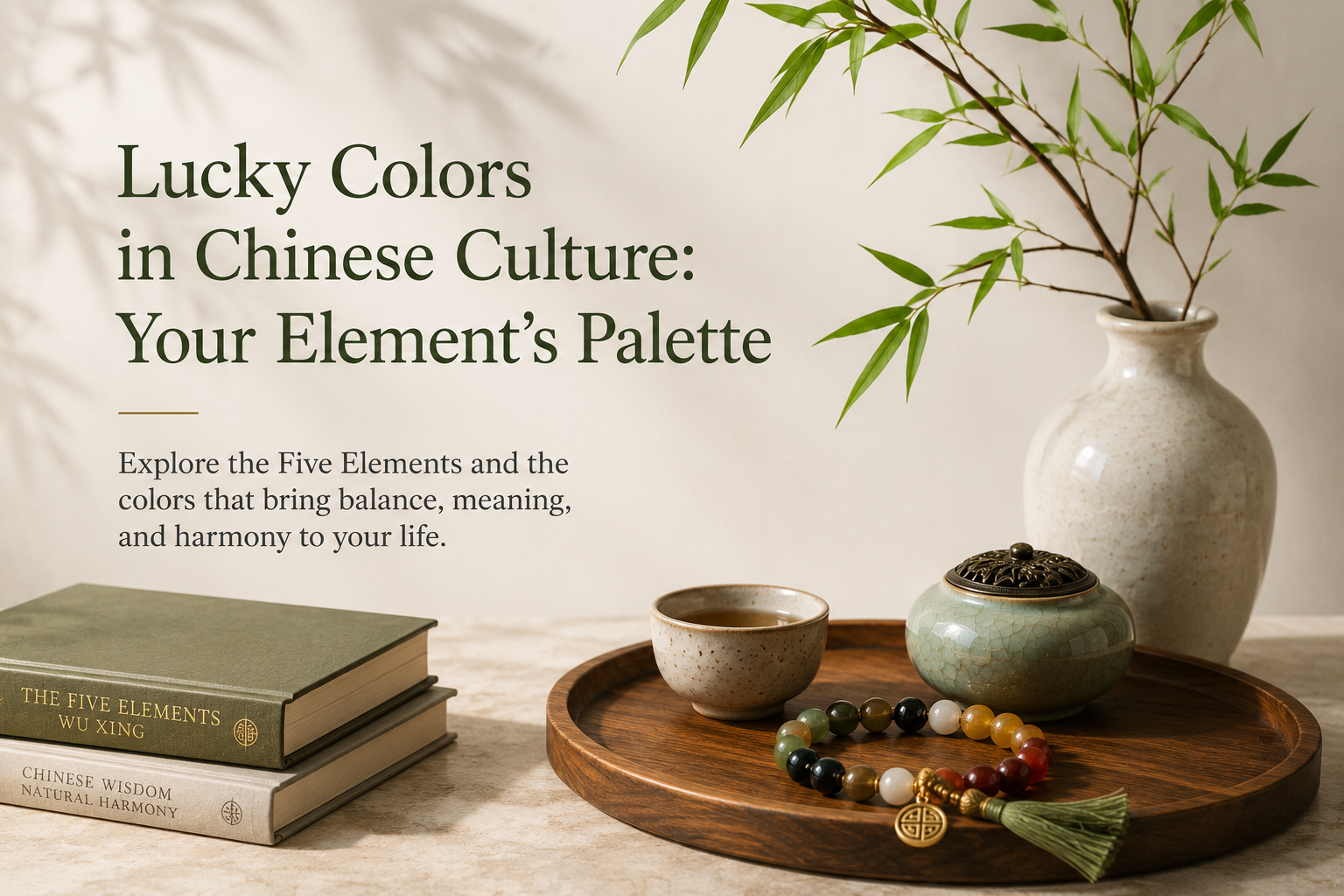
Lucky Colors in Chinese Culture: Your Element's Palette
In Chinese thought, color is not decoration. It is a structured language — a way of describing the natural forces that shape a season, a direction, a temperament, or a home.
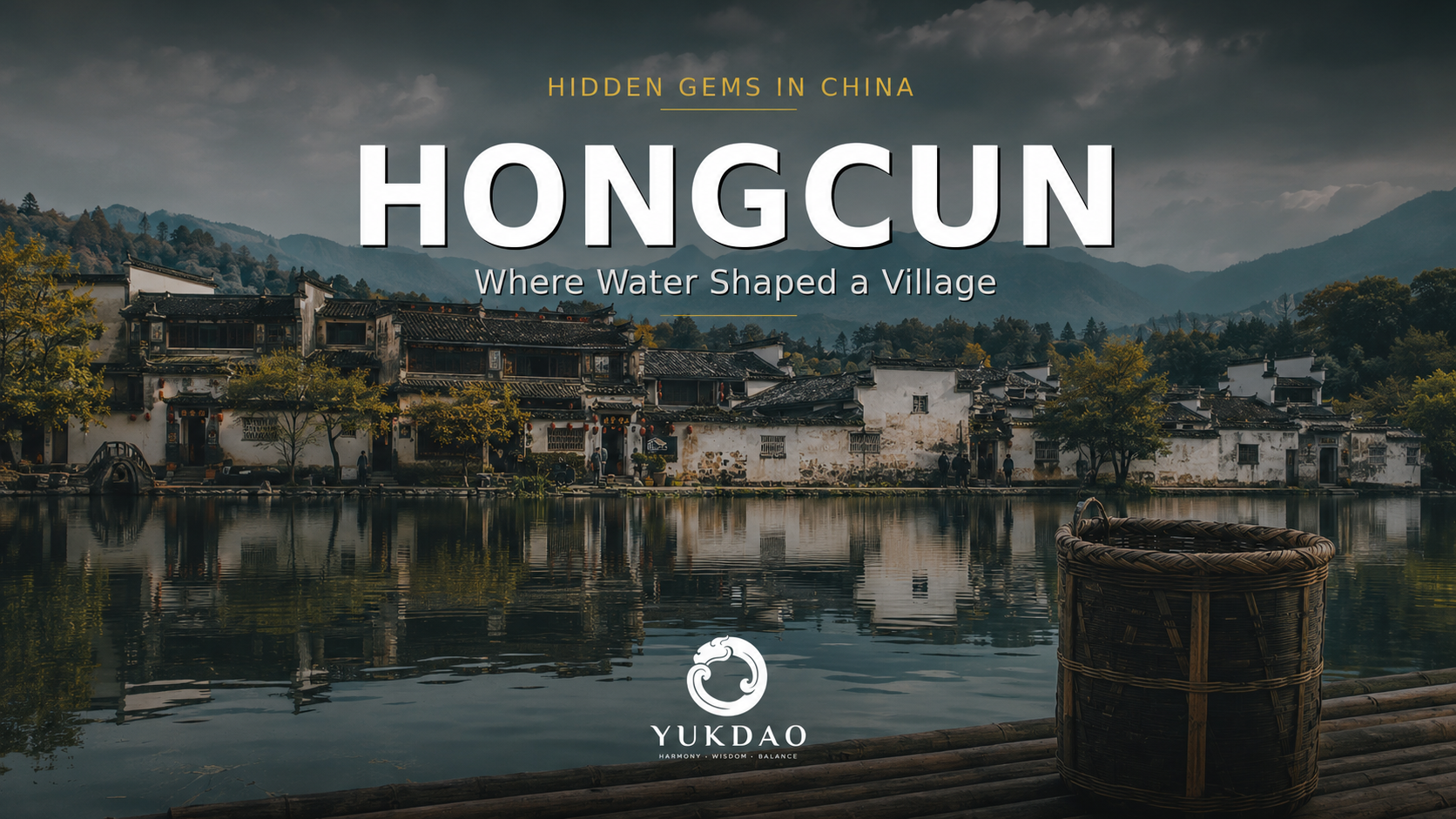
Hongcun: The Ancient Chinese Village Designed Around Water
At the foot of the mountains in southern Anhui, white-walled houses gather around ponds, canals and narrow stone lanes. Hongcun is more than a picturesque village. Its architecture, water system and carefully composed landscape reveal how an entire community was designed around the relationship between people and nature.