
Hongcun: The Ancient Chinese Village Designed Around Water
At the foot of the mountains in southern Anhui, white-walled houses gather around ponds, canals and narrow stone lanes. Hongcun is more than a picturesque village. Its architecture, water system and carefully composed landscape reveal how an entire community was designed around the relationship between people and nature.
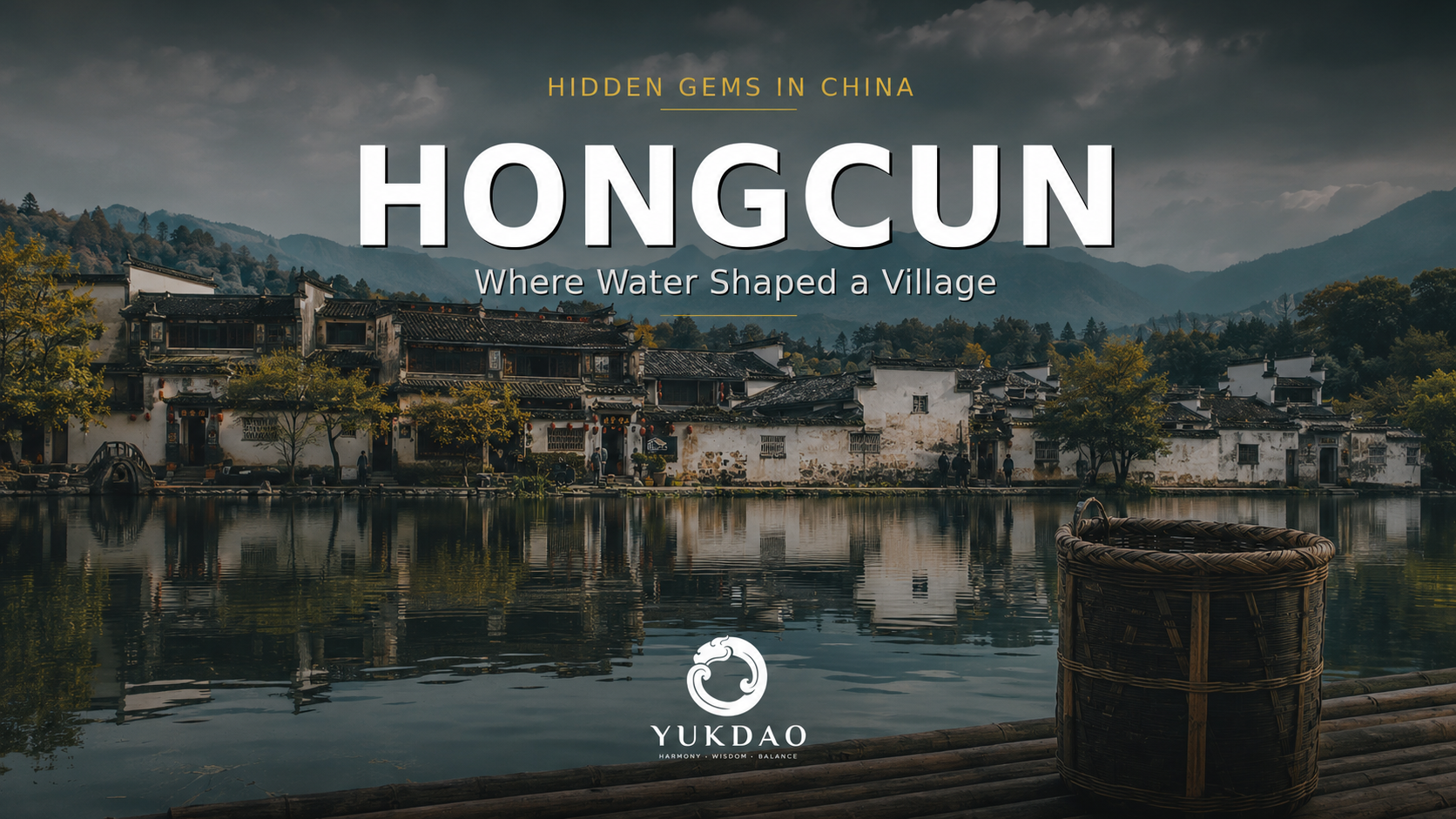
There are places that appear beautiful at first glance, then become more interesting the longer you look.
Hongcun is one of them.
From across South Lake, the village resembles a traditional Chinese ink painting. White walls rise above the water. Dark tiled roofs form uneven lines beneath mist-covered mountains. Trees, gateways and old houses are repeated in the lake's reflection.
The scene feels almost too carefully arranged to be real.
Yet Hongcun was not designed simply to be admired. Its landscape grew from practical needs, family life, regional prosperity and a particular understanding of how a settlement should exist within nature.
Located in Yi County in southern Anhui Province, Hongcun is one of the best-preserved historic villages associated with Huizhou culture. Together with nearby Xidi, it was added to the UNESCO World Heritage List in 2000. UNESCO recognises the villages for their preserved street patterns, architecture, decoration and unusually complete integration of houses with water systems.
Watch Hongcun in under one minute
See the waterways, Huizhou architecture and mountain setting that make Hongcun one of China's most distinctive historic villages.
A village shaped by water
Water is not merely part of Hongcun's scenery. It organises the village.
A network of narrow channels runs beside houses and through lanes before reaching two larger bodies of water: the crescent-shaped Moon Pond at the centre of the village and South Lake at its southern edge. UNESCO describes Hongcun as a settlement built beside a stream that forms these two pools, with architecture and landscape reflecting a pursuit of harmony between people and nature.
The channels once supported everyday village life. Water could be brought close to homes for washing, household use, irrigation and fire prevention. Instead of separating infrastructure from the appearance of the village, Hongcun incorporated it into the streets, courtyards and rhythm of daily life.
The result is a place where water seems to appear everywhere.
It runs beside stone paths, passes beneath small bridges, collects beneath old walls and reflects the changing light throughout the day.
Local tradition describes Hongcun's plan as resembling an ox. The hill behind the village forms its head, trees become its horns, bridges represent its legs, the channels act as its intestines, Moon Pond is its stomach and South Lake its belly. The description is symbolic, but it also offers a memorable way to understand how the different parts of the settlement connect.
The quiet geometry of Huizhou architecture
Hongcun belongs to the historic cultural region of Huizhou, an area known for a distinct architectural language.
Its houses are immediately recognisable:
- White plaster walls
- Dark grey tiled roofs
- Enclosed courtyards
- Tall stepped gables
- Carved wooden, brick and stone details
- Narrow lanes opening into unexpected spaces
From a distance, the buildings appear restrained and almost monochrome. Their beauty comes from proportion, repetition and contrast rather than bright colour.
The stepped walls rising above the roofs are commonly known as horse-head walls because their profiles can resemble raised horses' heads. They also had a practical purpose. Built between densely arranged wooden structures, the high walls could help slow the spread of fire from one property to another.
Inside the houses, the design becomes more detailed. Courtyards admit light and rain into otherwise enclosed compounds. Carved screens, beams and doorways communicate status, family aspirations and cultural values.
UNESCO notes that Hongcun and Xidi retain the landscape, architectural forms, decoration and construction techniques characteristic of southern Anhui villages from the 14th through the 20th centuries. Many were developed by successful merchants or officials who returned to their home region and invested in houses, halls and local institutions.
The simplicity of the exterior therefore hides a more complicated social history.
Built by the world of Huizhou merchants
The mountains of southern Anhui created both beauty and limitation. Farmland was restricted, encouraging many local men to leave home and enter commerce.
Over time, Huizhou merchants became active across China. Those who succeeded often returned wealth to their ancestral communities, constructing residences, academies, ancestral halls and public works.
This helps explain an apparent contradiction in Hongcun.
The village feels rural and secluded, yet many of its houses display considerable sophistication. Their owners were connected to commercial networks beyond the village, while remaining strongly tied to lineage, education and ancestral identity at home.
The architecture expresses both worlds.
It is outwardly disciplined, but internally elaborate. It values privacy, but also gives importance to shared lineage. It sits within a natural landscape, while revealing careful human planning.
According to UNESCO, the preserved buildings and street patterns of Hongcun and Xidi provide evidence of the social and economic structure that shaped this long period of settled life.
Why Hongcun resembles an ink painting
Hongcun is often compared to a Chinese landscape painting, and the resemblance is not only visual.
Traditional landscape painting rarely treats nature as a background behind human activity. Mountains, water, buildings, paths and empty space belong to one composition. The viewer is invited to move through the scene rather than focus on a single dominant object.
Hongcun creates a similar experience.
The village does not reveal itself all at once. A narrow lane turns toward a courtyard. A wall frames a mountain. A canal leads toward a pond. A doorway briefly reveals a darker interior before the path moves on.
Even the empty spaces matter.
Mist softens the mountains. Water doubles the buildings. Pale walls create areas of quiet between dark rooflines and trees.
This is why the best-known view of Hongcun is not simply a photograph of an individual building. It is the complete relationship between village, water and mountain.
The architecture does not attempt to overpower the landscape. It becomes part of it.
Moon Pond, the centre of village life
Near the centre of Hongcun lies Moon Pond, called Yuezhao in Chinese.
Its crescent shape creates one of the village's most recognisable scenes. Old houses rise directly around the water, their façades reflected beneath them. Narrow lanes converge nearby, giving the pond both a visual and communal role.
It is easy to think of Moon Pond as decoration, but it belongs to the wider water network. It helped collect and distribute water while forming a shared open space within the dense village.
That combination is central to Hongcun's character.
Practical structures were not treated as separate from beauty. Water management, movement, architecture and social life were shaped together.
South Lake creates a different experience. Located at the edge of the village, it opens Hongcun toward a wider landscape. From across the water, the village can be seen as a single composition framed by hills and sky.
Moon Pond draws the visitor inward.
South Lake invites the visitor to step back.
What to notice in Hongcun
Hongcun rewards slow observation.
Look beyond the famous lake view and notice how frequently the village controls what can be seen.
A tall wall may conceal an entire residence. A small gateway may open into a sequence of courtyards. Light reaches the interior from above rather than through large outward-facing windows.
Notice the relationship between stone and water. The lanes are narrow, but the channels make them feel alive. Their sound and movement soften the density of the buildings.
Look upward at the rooflines. Their irregular heights create a rhythm against the mountains, particularly when seen through mist.
Then look at the surfaces.
Weather has changed the white walls into layers of cream, grey and faded earth. These marks are not imperfections. They reveal the passage of time and prevent the village from feeling like a reconstruction of its own history.
Hongcun remains compelling because it has not been reduced to a single monument.
It is a complete environment.
More than a beautiful village
It would be easy to remember Hongcun only for its reflections.
But its deeper significance lies in the way different systems meet:
- Architecture and landscape
- Private homes and shared infrastructure
- Commercial wealth and ancestral identity
- Practical engineering and symbolic meaning
- Human planning and the movement of water
Hongcun shows that traditional Chinese design was not always about creating isolated masterpieces. Sometimes it was about coordinating an entire place.
A house belonged to a lane.
A lane followed water.
Water connected the village.
The village sat beneath the mountain.
This is what gives Hongcun its unusual calm. Its beauty does not come from one spectacular building. It emerges from the relationships between many ordinary elements, arranged and adapted across centuries.
From the edge of South Lake, the village may still resemble an ink painting.
Walk inside, however, and it becomes something richer: a living lesson in how landscape, community and architecture can be designed as one.
- Hidden China
- Hongcun
- Anhui
- Huizhou Architecture
- Unesco
- Chinese Villages
Related Articles
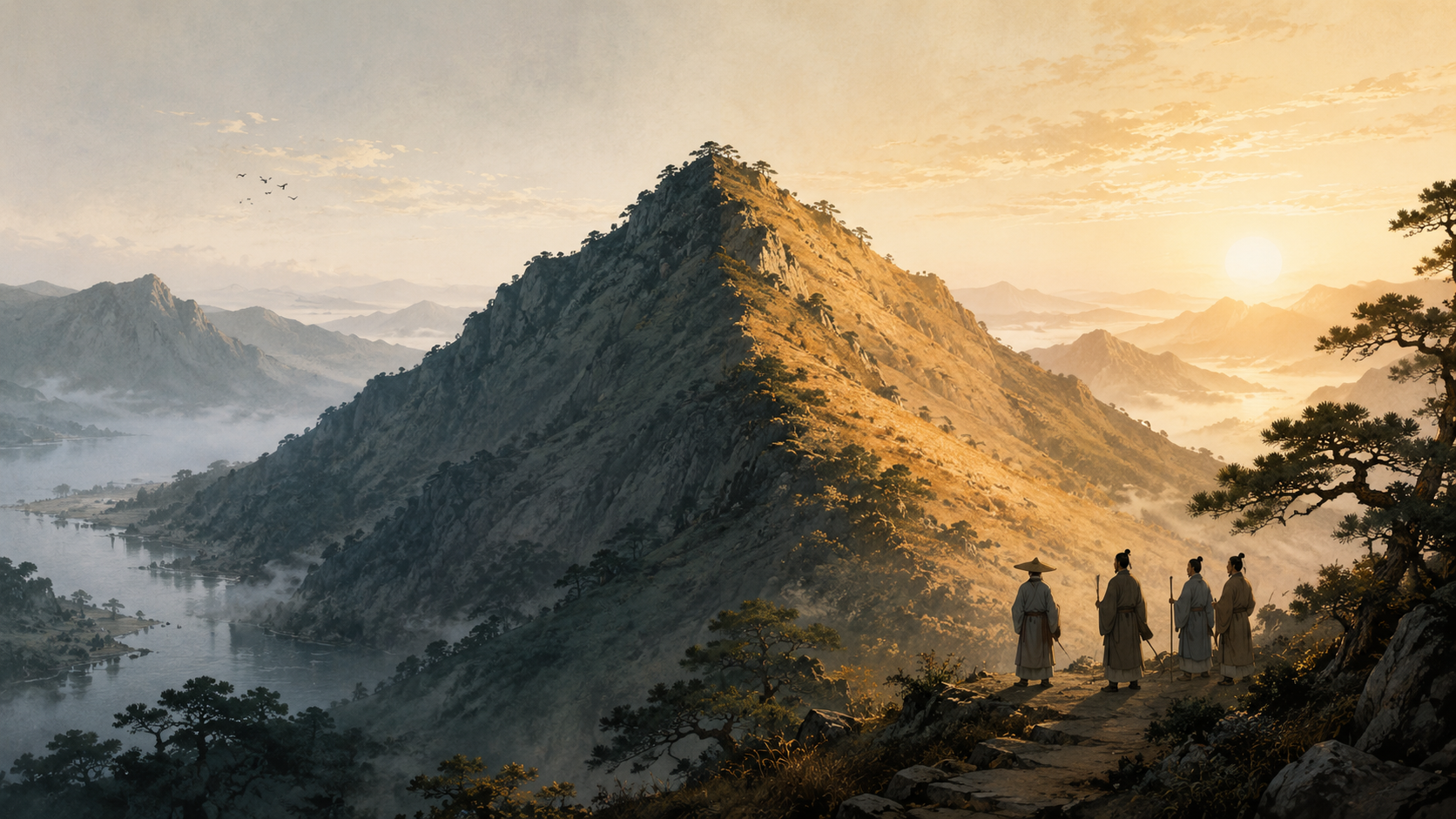
The Hill With Two Sides: What Yin and Yang Actually Mean
Most people have encountered the symbol their entire lives — but few have been told where it actually comes from.
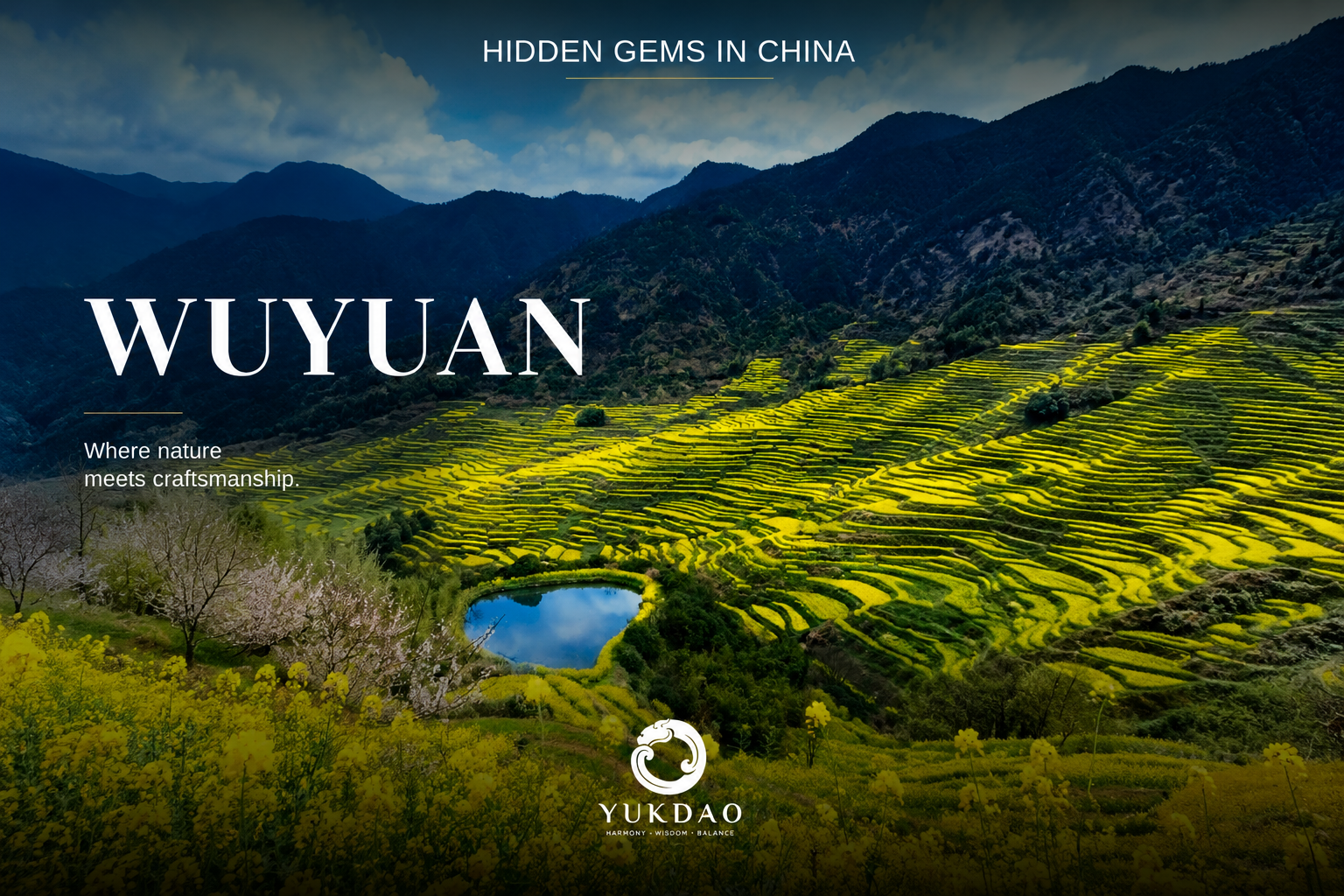
Wuyuan: Where Nature Meets Craftsmanship
Golden terraces, whitewashed villages and centuries-old carving traditions reveal a quieter side of China in Wuyuan.
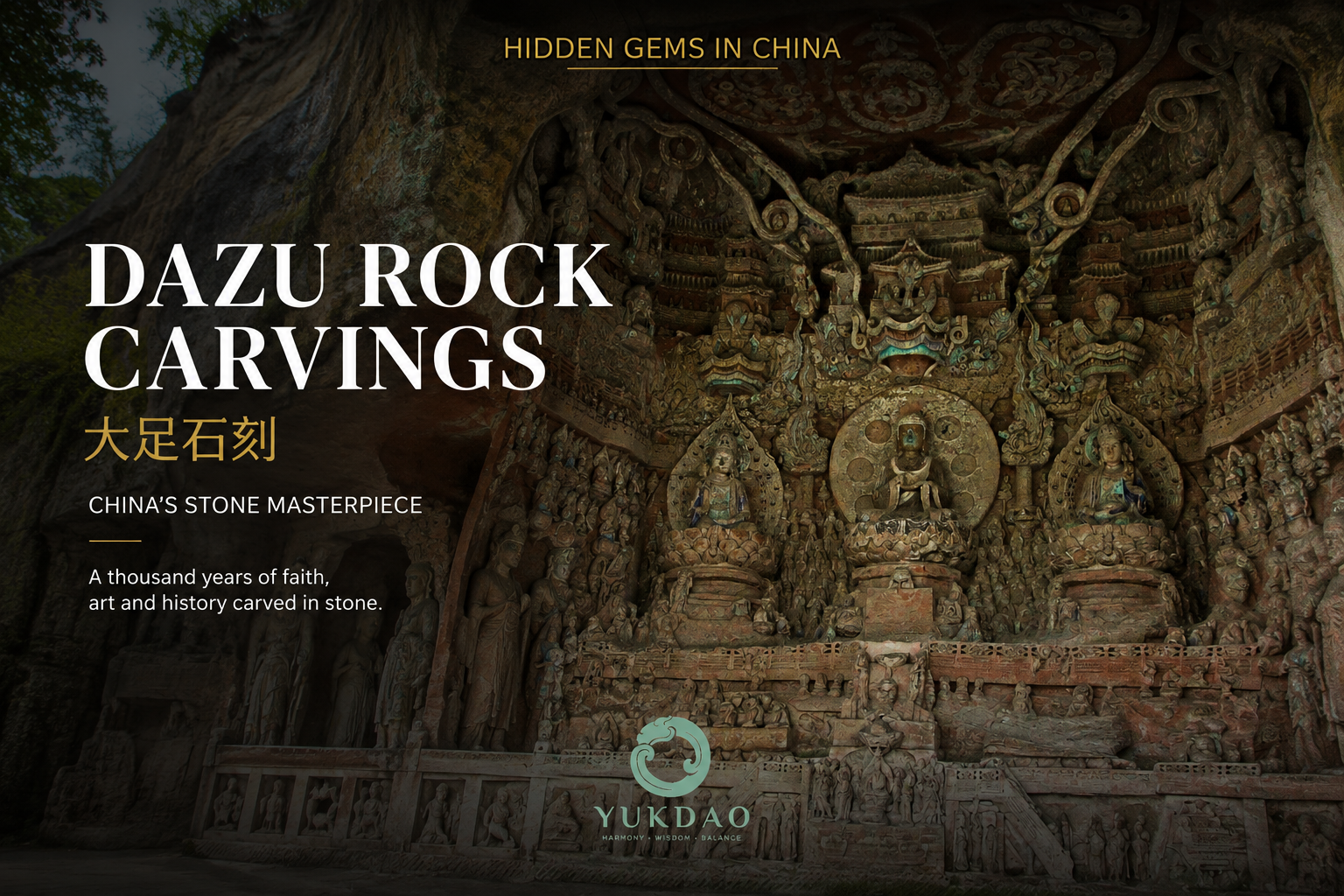
The Dazu Rock Carvings: A Thousand Years Carved in Stone
Across the hills of Chongqing, more than 50,000 carved figures reveal a world where Buddhist, Taoist and Confucian traditions met everyday life.
Keep exploring China
Hidden places, cultural stories and thoughtful ideas, one letter at a time.