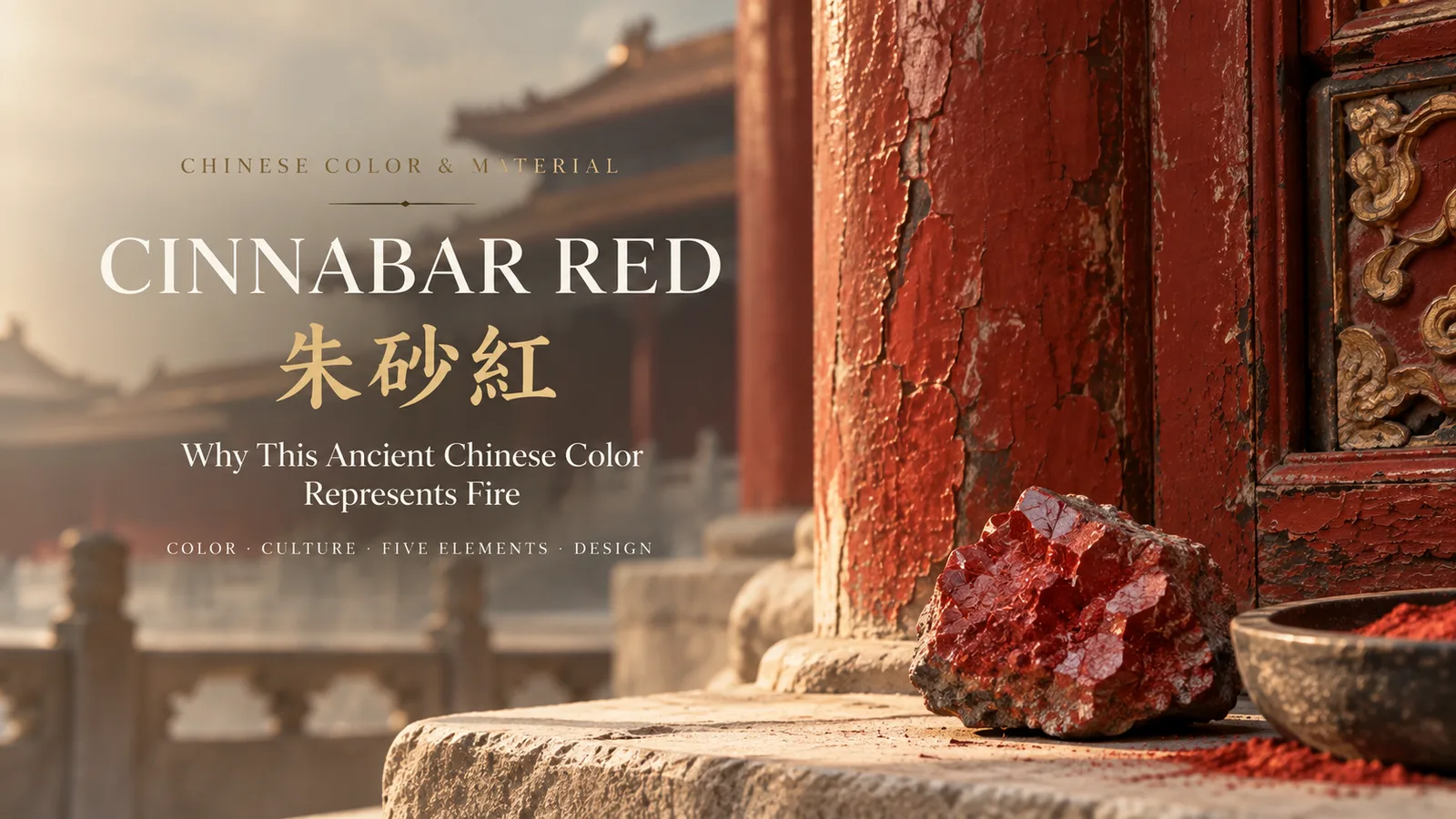
Cinnabar Red: Why This Ancient Chinese Color Represents Fire
From mineral pigment and imperial architecture to Five Element symbolism and contemporary jewelry, cinnabar red carries a Chinese story far deeper than its color alone.
A short introduction to cinnabar red — the mineral, the pigment, and the Chinese colour tradition behind it.
From mineral pigment and imperial architecture to the design language of the YukDao Fire Element Bracelet.
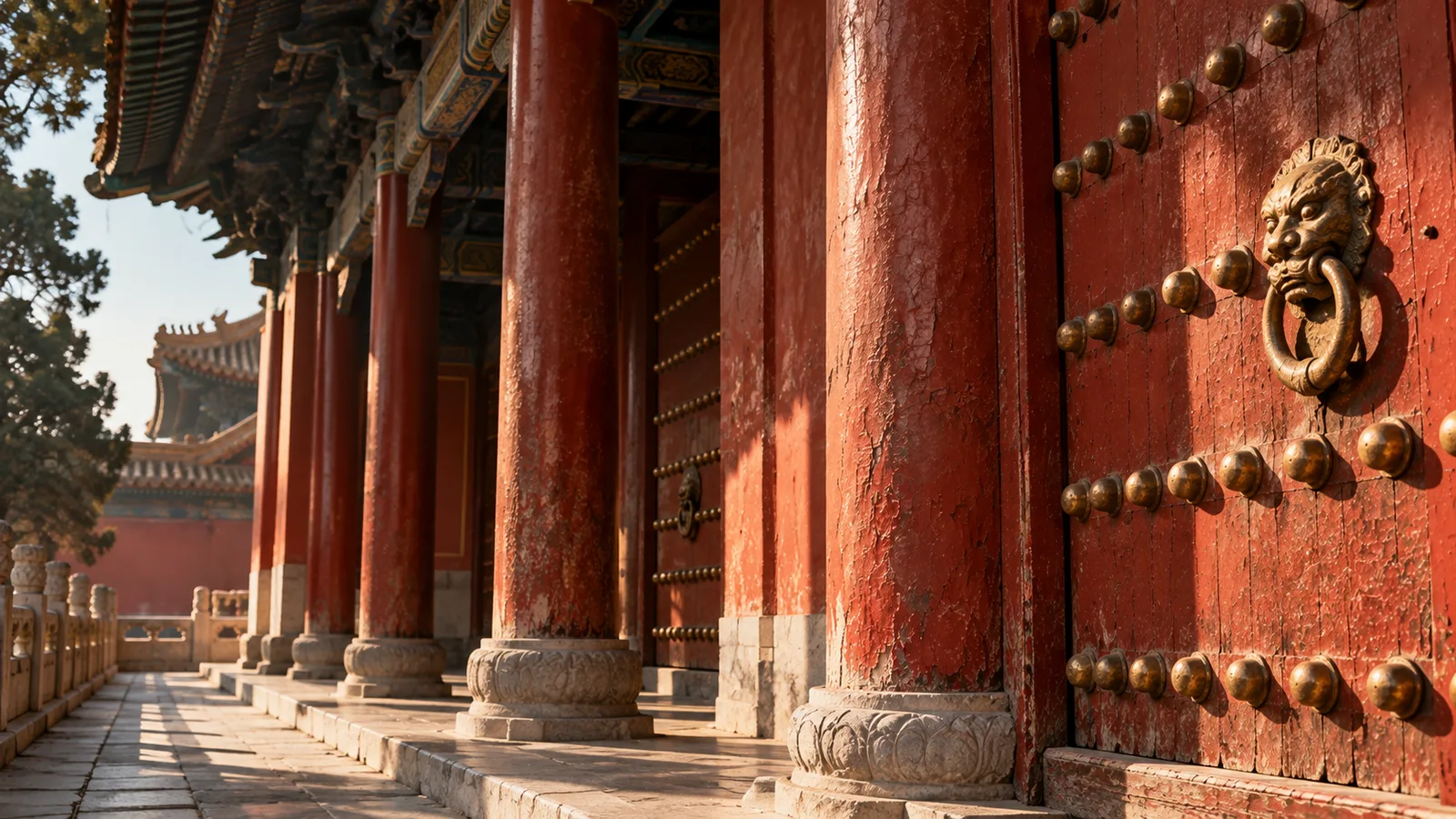
Walk through the Forbidden City and one color is almost impossible to escape. Red.
It appears across monumental gates, painted columns, doors, walls and architectural details. Against the yellow glazed roofs, it has become one of the most recognizable visual signatures of imperial Chinese architecture.
But traditional Chinese red is not simply one color.
Chinese culture developed a remarkably rich vocabulary for red, including 赤 chì, 朱 zhū, 丹 dān and other shades with different historical and material associations. Among the most culturally distinctive is 朱砂紅 zhūshā hóng, usually translated into English as cinnabar red.
Its story begins not with fashion, but with a mineral.
And that is one reason we chose this color for the YukDao Fire Element Bracelet.
What Is Cinnabar Red?
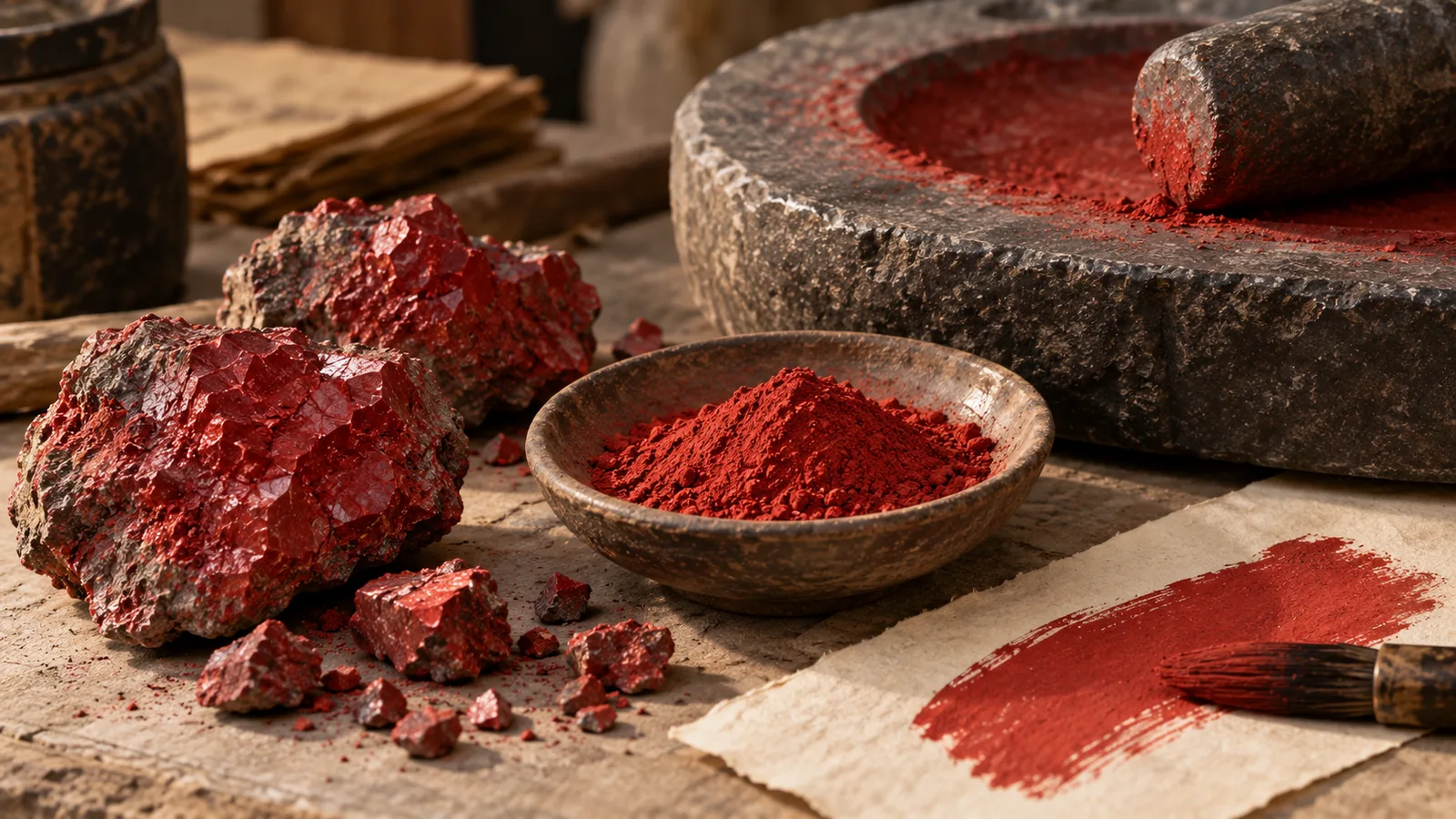
Cinnabar is a naturally occurring mineral historically valued for its intense red color. When processed as a pigment, it produces the rich vermilion family of reds that became important within Chinese painting and decorative culture.
The Palace Museum describes 辰砂 chénshā, also known as 朱砂 zhūshā, as a scarlet mineral pigment used in traditional Chinese painting.
This distinction matters.
Cinnabar red is not simply a modern bright red selected from a color chart. Its identity is connected to a physical material and to a much older history of Chinese color making.
Traditional mineral pigments possess a visual character quite different from flat synthetic color. Their reds can feel deep, earthy and substantial, shifting with light and surface rather than appearing uniformly bright.
That material quality helped make cinnabar and related vermilion tones part of the visual language through which generations of Chinese craftspeople worked with red.
Red Was Never Just Red in China
Color in traditional Chinese culture could communicate far more than appearance. It could interact with ideas about direction, season, hierarchy, ritual, cosmology and auspicious meaning.
Red developed particularly strong cultural associations. Across different historical contexts, the wider Chinese red family became connected with ideas including celebration, auspiciousness, dignity and vitality.
This is why red appears so frequently in Chinese celebrations and decorative traditions.
But there is an important distinction.
It would be too simplistic to say that every red object has one fixed meaning, or that cinnabar itself automatically brings good fortune. Traditional Chinese symbolism is more contextual than that. A color gains meaning through its relationship with the object, occasion, material and surrounding visual system.
Cinnabar red belongs to this larger cultural world of red, but it also carries something more specific: a connection to one of China’s historically important mineral pigments. That combination of material history and cultural meaning makes it especially interesting for contemporary Chinese design.
Why Is Red Associated With the Fire Element?
To understand another layer of cinnabar red, we have to look at Wu Xing 五行, commonly translated as the Five Elements or Five Phases.
The five are: Wood 木 · Fire 火 · Earth 土 · Metal 金 · Water 水
Each participates in a wider network of traditional correspondences. Among the best known are the relationships between the Five Elements, five directions and five color families.
| Element | Direction | Traditional Color |
|---|---|---|
| Wood 木 | East | Green / 青 |
| Fire 火 | South | Red / 赤 |
| Earth 土 | Center | Yellow / 黃 |
| Metal 金 | West | White / 白 |
| Water 水 | North | Black / 黑 |
- Wood 木East · Green / 青
- Fire 火South · Red / 赤
- Earth 土Center · Yellow / 黃
- Metal 金West · White / 白
- Water 水North · Black / 黑
Within this system, red corresponds to Fire.
This relationship is visible even in discussions of the Forbidden City’s architecture. The palace’s dominant red and yellow can be understood through traditional Five Element correspondences: red belongs to Fire, while yellow belongs to Earth.
Their combination can also be read through the generating relationship: Fire produces Earth, 火生土.
So when we describe cinnabar red as a Fire color, we are not inventing a modern jewelry association. We are working with a much older Chinese system of color.

What Does Fire Mean?
This is where modern explanations of the Five Elements can become misleading.
Fire should not simply be reduced to “passion.”
Within a contemporary explanation of Five Element thinking, Fire can be understood through qualities such as warmth, expression, activity, visibility, movement and transformation.
Think about the behavior of fire itself. It radiates outward. It produces light. It makes things visible. It transforms what it encounters. Its energy rises rather than settles.
These qualities help explain why Fire can be useful as a language for understanding periods of greater expression, movement or outward activity.
But Wu Xing is fundamentally relational. More Fire is not automatically better.
The Auspicious Meaning Behind Cinnabar Red
There is another reason cinnabar red feels distinctly Chinese.
It belongs to a broader red visual tradition deeply connected with auspicious culture.
Chinese decorative arts frequently use visual language to communicate wishes rather than simply decorate surfaces. Flowers, animals, objects, characters, materials and colors can participate in compositions carrying ideas about happiness, longevity, harmony, prosperity or other desirable conditions.
A familiar principle used to describe this broader tradition is:
圖必有意,意必吉祥
Images carry meaning, and that meaning tends toward auspicious wishes.
Color participates in this language too. Red became one of its most recognizable components.
For us, this is a more interesting way to understand the “good meaning” behind cinnabar red. We do not claim that wearing a red bead magically produces good fortune. Instead, we recognize that the color belongs to a long Chinese visual tradition in which red has been used to express positive wishes, celebration, vitality and auspicious intention.
There is a difference between cultural symbolism and a promise of supernatural results. YukDao is interested in the former.
From Ancient Pigment to Contemporary Jewelry
So what happens when a color with this history enters a contemporary bracelet?
This is the question behind our approach to Chinese jewelry.
A Chinese-inspired object does not necessarily need to reproduce an antique design. Nor does it need to cover itself with dragons, characters, coins or other instantly recognizable motifs.
Chinese identity can exist more quietly.
It can exist in material. It can exist in color. It can exist in proportion. It can exist in an ornamental detail. And it can exist in the thinking that determined why those elements were chosen in the first place.
That is how we approached cinnabar red.
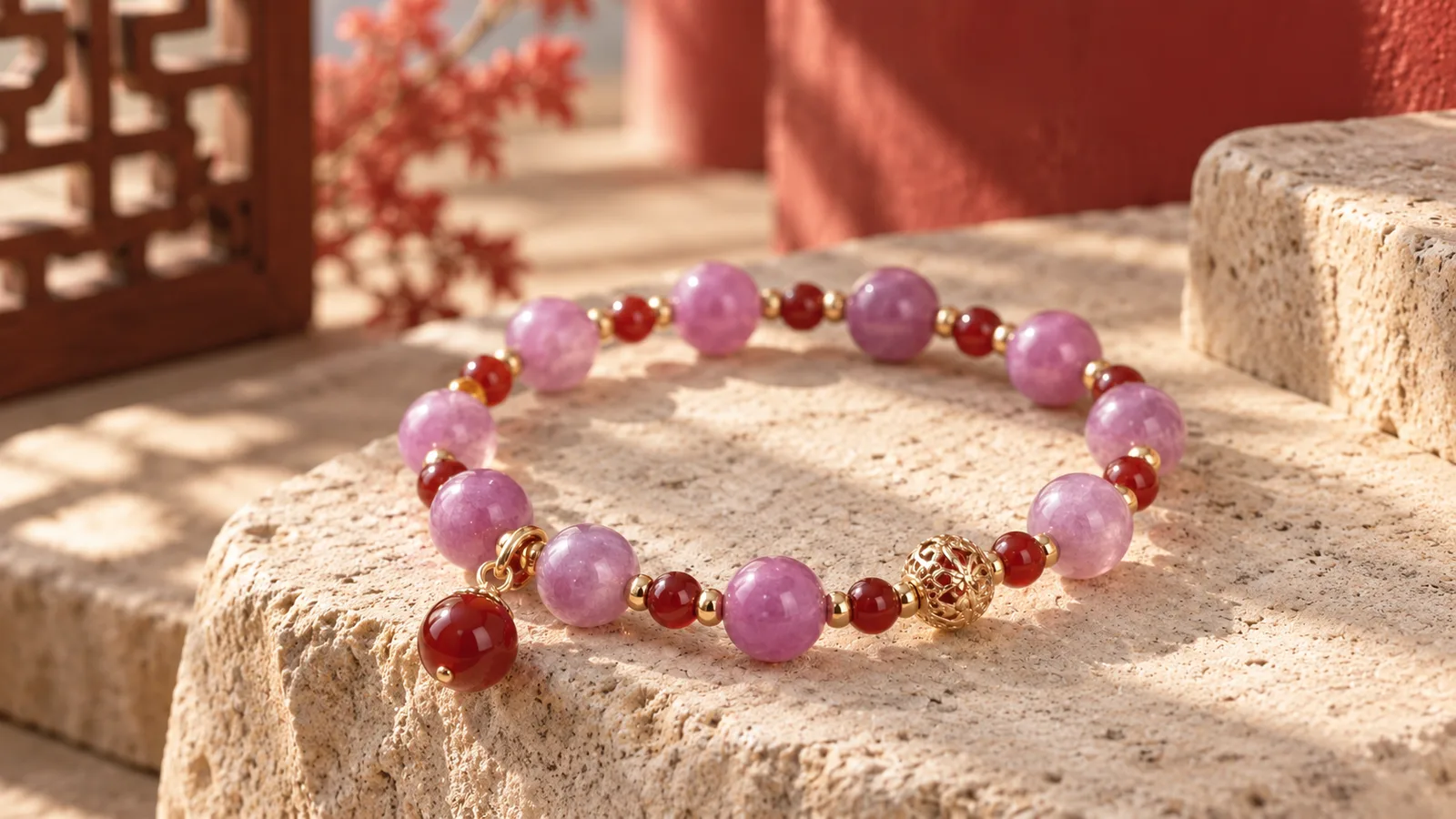
Why We Chose Cinnabar Red for the Fire Element Bracelet
We did not choose the bead simply because it is red.
A generic red stone could have communicated the Fire Element at the most basic visual level. But we wanted the material language of the bracelet to carry another layer of Chinese cultural memory.
Cinnabar red gives us three interconnected ideas.
Color
It belongs to the historic vocabulary of Chinese red.
Element
Red corresponds to Fire within the traditional Five Element system.
Culture
Cinnabar has a material history within Chinese painting, pigment and decorative culture.
Together, these ideas make the choice more meaningful than a simple equation of Fire with red. Instead, the design becomes:
Fire expressed through a red with its own Chinese cultural history.
That difference is central to how we think about YukDao jewelry.
The cultural element should not feel as though it has been added after the bracelet was designed. It should be embedded in the design itself.
A Bracelet Can Carry More Than One Chinese Story
This same principle appears elsewhere in our Five Elements bracelets.
The stones and their colors form one layer of the design. They allow us to explore the different material languages associated with Wood, Fire, Earth, Metal and Water.
But across the collection, another element remains: our Chinese Floral Sphere, inspired by the decorative tradition of 繡球 xiùqiú. Its floral structure introduces another Chinese ornamental language into the bracelet.
These two ideas work differently.
The Five Element stones make each bracelet distinct. The Chinese Floral Sphere creates a recurring cultural thread across the collection. One speaks through element and color. The other speaks through ornament and craft.
Together, they express what we want a contemporary YukDao bracelet to be: not an imitation of antique Chinese jewelry, but a modern object whose design still has roots in Chinese culture.
But Fire Is Not for Everyone
There is one final distinction that matters.
If cinnabar red represents Fire, does that mean everyone should wear more Fire?
No.
Within BaZi 八字, the Five Elements are not treated as five universally beneficial energies that everyone should collect in equal amounts.
A BaZi chart examines relationships among the elements within the complete birth structure. Depending on that structure, an element may be supportive in one chart and challenging in another.
Someone who benefits from Fire therefore has a very different relationship with Fire from someone whose chart already contains an excessive or difficult Fire dynamic.
This is also why we do not want our Five Elements bracelets to become generic “lucky color” jewelry.
The question is not simply: What does Fire mean? A more personal question is: What role does Fire play in your chart?
Is Fire Supportive in Your BaZi?
Your zodiac sign alone cannot tell you which elements are supportive. A complete BaZi chart looks at the relationships among Wood, Fire, Earth, Metal and Water across your Four Pillars.
Find Out Your Supporting and Challenging Five Elements →Why Cinnabar Red Still Matters
A color can survive for centuries because it is beautiful.
But sometimes it survives because it becomes part of a culture’s visual vocabulary. Cinnabar red sits at the intersection of both.
It begins with mineral and pigment. It enters painting, architecture and decorative culture. It participates in China’s broader auspicious language of red. Within Five Element thought, it connects naturally with Fire. And today, it can be interpreted again through contemporary design.
That is why we chose cinnabar red for the YukDao Fire Element Bracelet. Not simply because Fire is red. But because when we choose a red to represent Fire, we want that red to have a story.
A Chinese story.
- The Palace Museum 故宮博物院 — collections and research on Chinese painting pigments and palace architecture.
- National Museum of China 中國國家博物館 — Chinese material culture, decorative arts and historical objects.
- Chinese Craft
- Cinnabar Red
- Chinese Color
- Fire Element
- Five Elements
- Wu Xing
- Chinese Jewelry
Related Articles
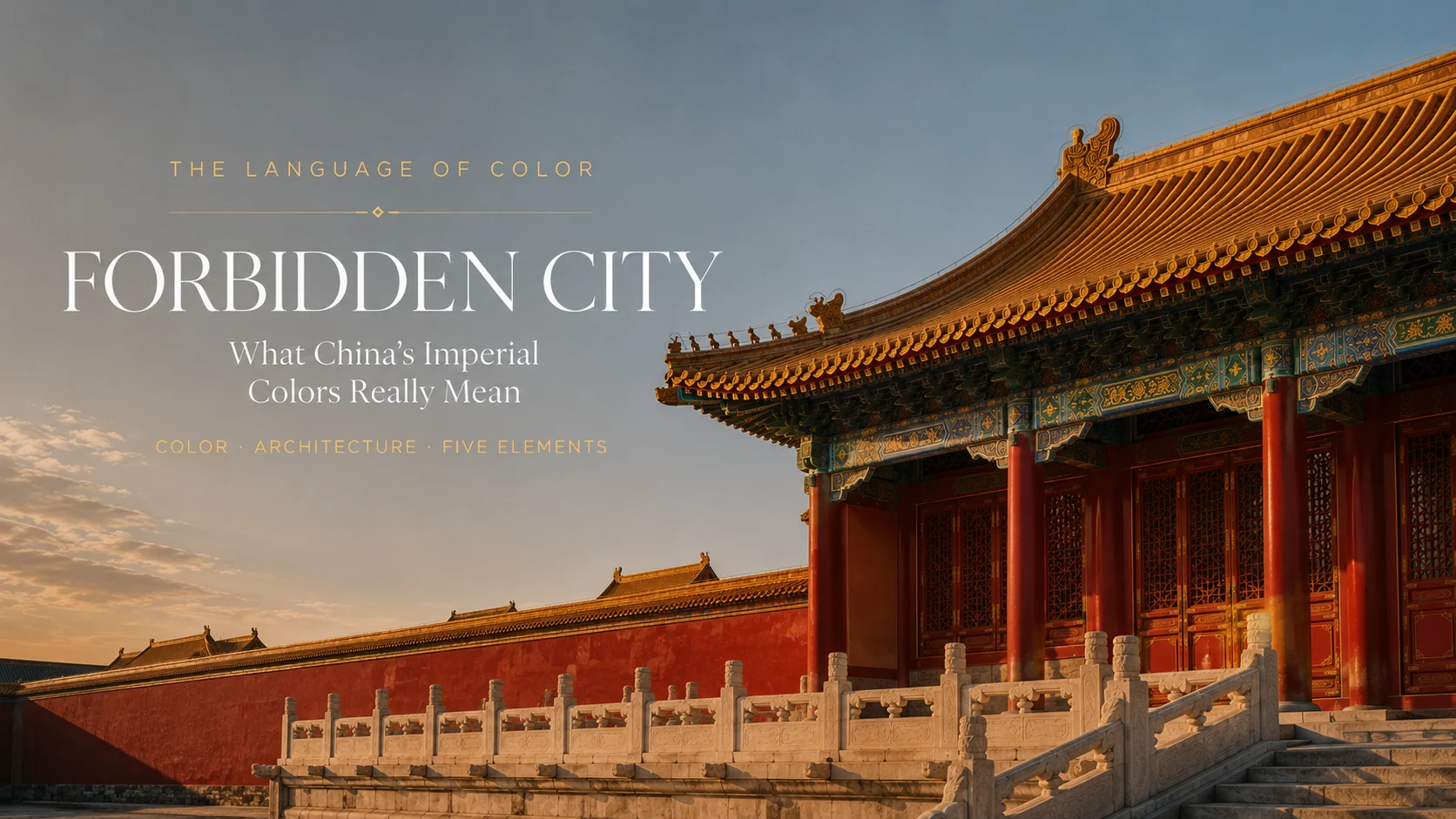
The Language of Color: What the Forbidden City’s Colors Really Mean
Vermilion walls, imperial yellow roofs, a green roof in the east and one almost black. A guide to reading the Forbidden City through color, material and the Five Elements.
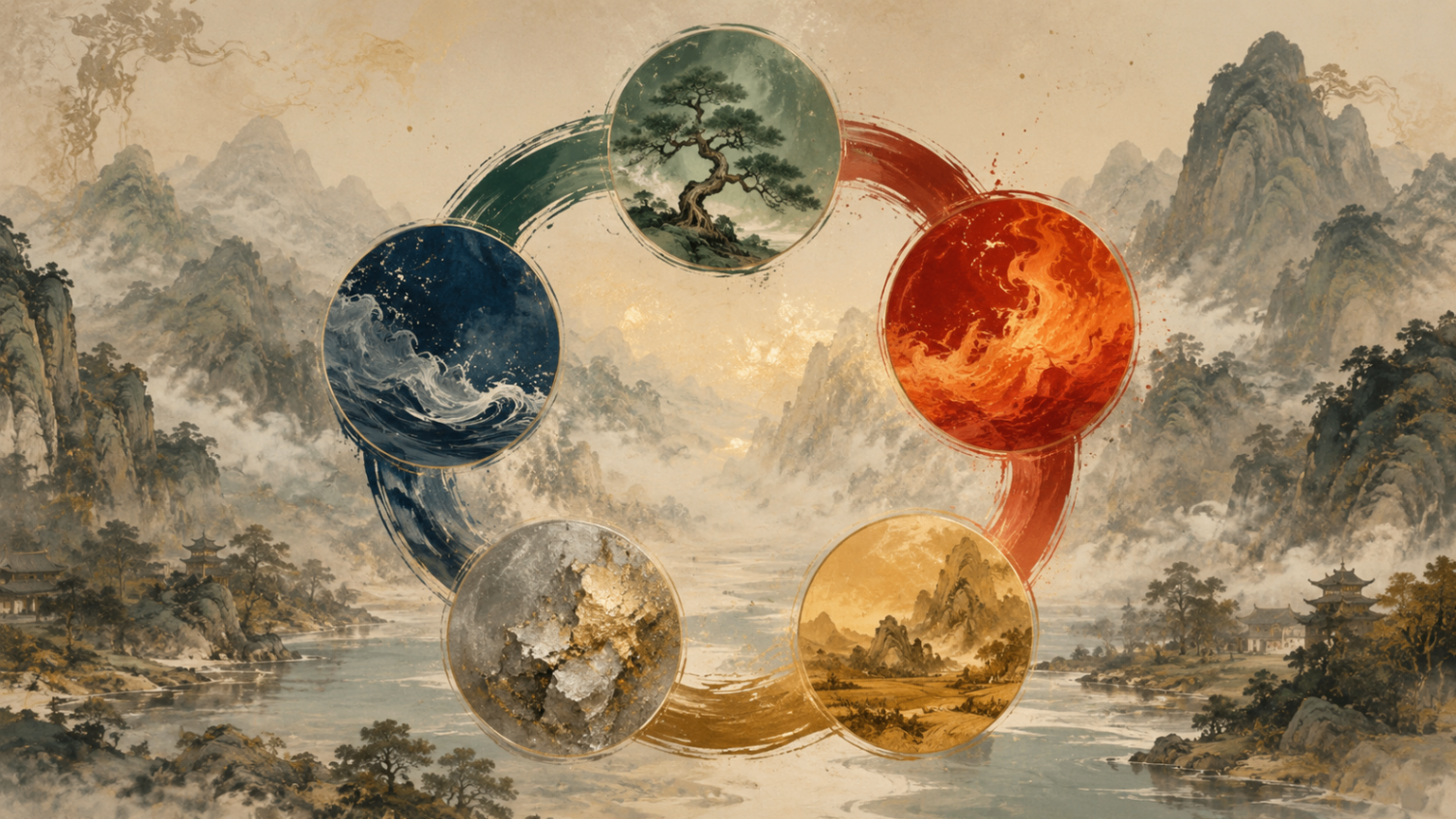
The Five Phases: What Ancient China Understood About Change That the Modern World Forgot
Wu Xing is not mysticism. It is one of history's most practical frameworks — used by emperors, physicians, and farmers for over two thousand years to understand the patterns that govern everything.
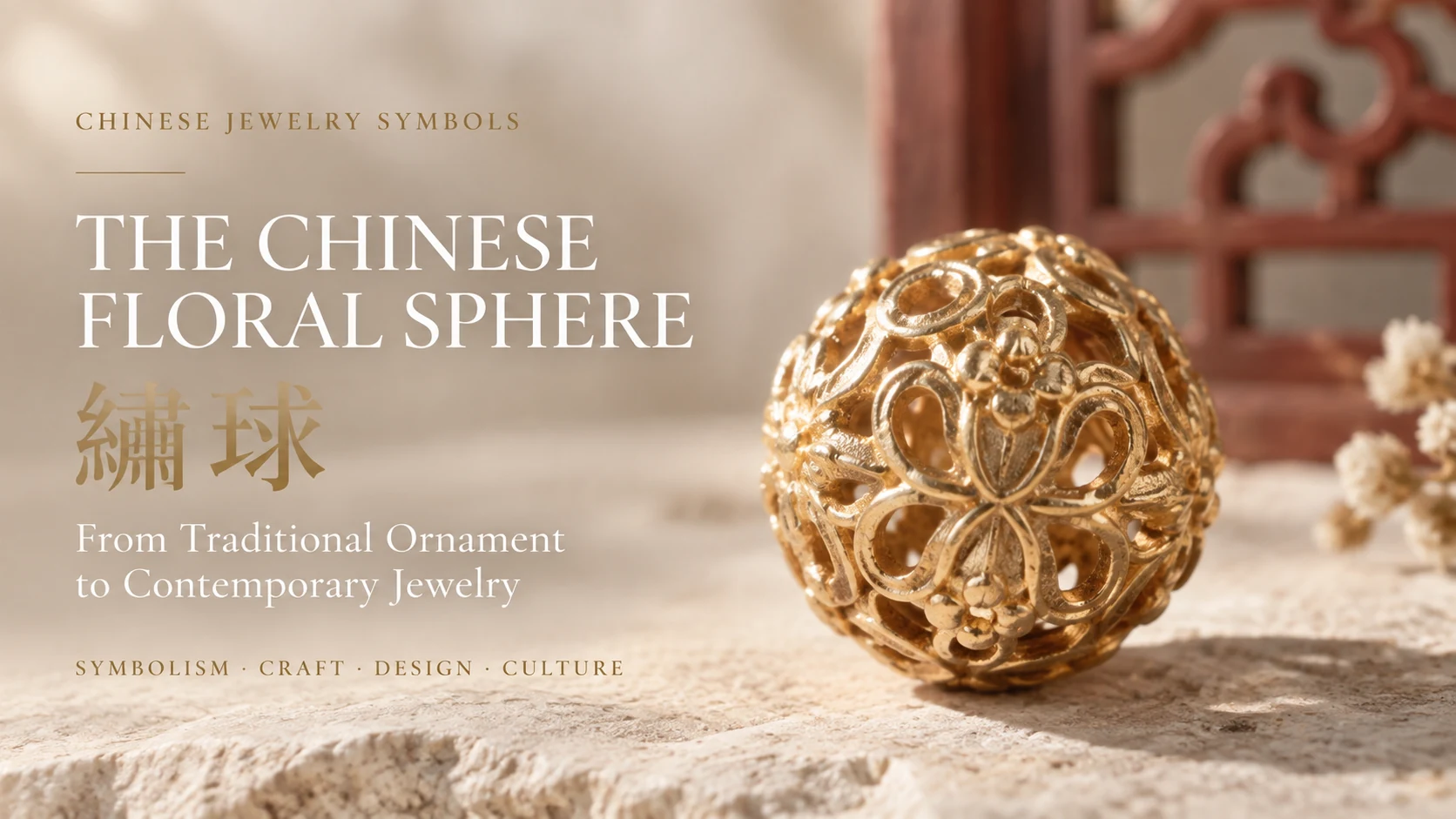
The Chinese Floral Sphere: From Xiuqiu to Contemporary Chinese Jewelry
In Chinese decorative art a flower is rarely just a flower. How the 繡球 (xiuqiu) tradition of floral ornament travels from textile and architecture into contemporary Chinese jewelry.